

Welcome to this guide to strength training for beginners, with simple steps to help you start safely and build strength week by week.
Why Strength Training Matters (Beyond Muscles)
Strength training — also called resistance training — means working your muscles against resistance: your body weight, dumbbells, resistance bands, or machines. It’s not just for bodybuilders. Regular strength training supports bone health, joint stability, balance, metabolism, mood, and everyday independence: carrying groceries, climbing stairs, and getting up from the floor all get easier.
The best part for beginners: you don’t need much to start, and the early gains come fast. The first weeks are mostly your nervous system learning the movements — which is why form and consistency matter far more than heavy weights.
How to Start: The 7 Basics
These basics make strength training for beginners safe, simple, and sustainable.

1. Train 2–3 days a week
Two to three full-body sessions per week, on non-consecutive days (for example Monday, Wednesday, Friday), is the sweet spot for beginners. It gives enough stimulus to get stronger while leaving recovery time between sessions. Two days a week is genuinely enough to build real strength — don’t let “only twice” feel like failure.
2. Focus on full-body, compound movements
Compound movements work several muscle groups at once, so you get more from fewer exercises. The beginner essentials:
- Squat — legs, glutes, core (start with bodyweight)
- Push-up (or knee push-up) — chest, shoulders, arms, core
- Row — back and arms (dumbbell row or resistance band row)
- Glute bridge — glutes and hamstrings
- Overhead press — shoulders and arms (light dumbbells or bands)
- Plank — core stability
Six movements cover your whole body. That’s a complete beginner program.
3. Master form before weight
Form is the foundation. A lighter weight done well beats a heavy weight done badly — badly done reps build bad habits and injuries. Move slowly and with control, use a full range of motion, and breathe naturally (exhale on the effort). If you’re unsure about a movement, ask a trainer or watch a reputable instructional video, and film yourself to check your form.
4. Use the right sets, reps, and rest
A good beginner recipe: 2–3 sets of 8–12 repetitions per exercise, with 60–90 seconds of rest between sets. The last two reps of a set should feel challenging but still doable with good form. If you can easily finish all sets, the weight is too light; if your form breaks down, it’s too heavy.
5. Warm up every time
Five to ten minutes of light movement — walking, gentle cycling, arm circles, leg swings — plus a few easy reps of your first exercise. Warm muscles move better and strain less. Skipping warm-ups is one of the most common beginner injuries in waiting.
6. Progress gradually
This is called progressive overload: slowly increasing the demand on your muscles over time. Once 3 sets of 12 reps feel manageable, add a small amount of weight (or one more set, or a harder variation). Small, steady increases beat big jumps — your muscles, tendons, and joints need time to adapt. Progress happens over months, not days.
7. Rest, eat, and sleep for recovery
Muscles grow during rest, not during workouts. Give each muscle group at least 48 hours before training it hard again, and prioritise sleep — recovery, soreness, and performance all suffer without it. Eat a balanced diet with enough protein across the day (eggs, beans, lentils, fish, chicken, yoghurt) and stay hydrated. You don’t need special supplements to start.
A Simple Beginner Workout (30–40 Minutes)
This simple plan is ideal for strength training for beginners because it uses basic movements you can do at home or in a gym.
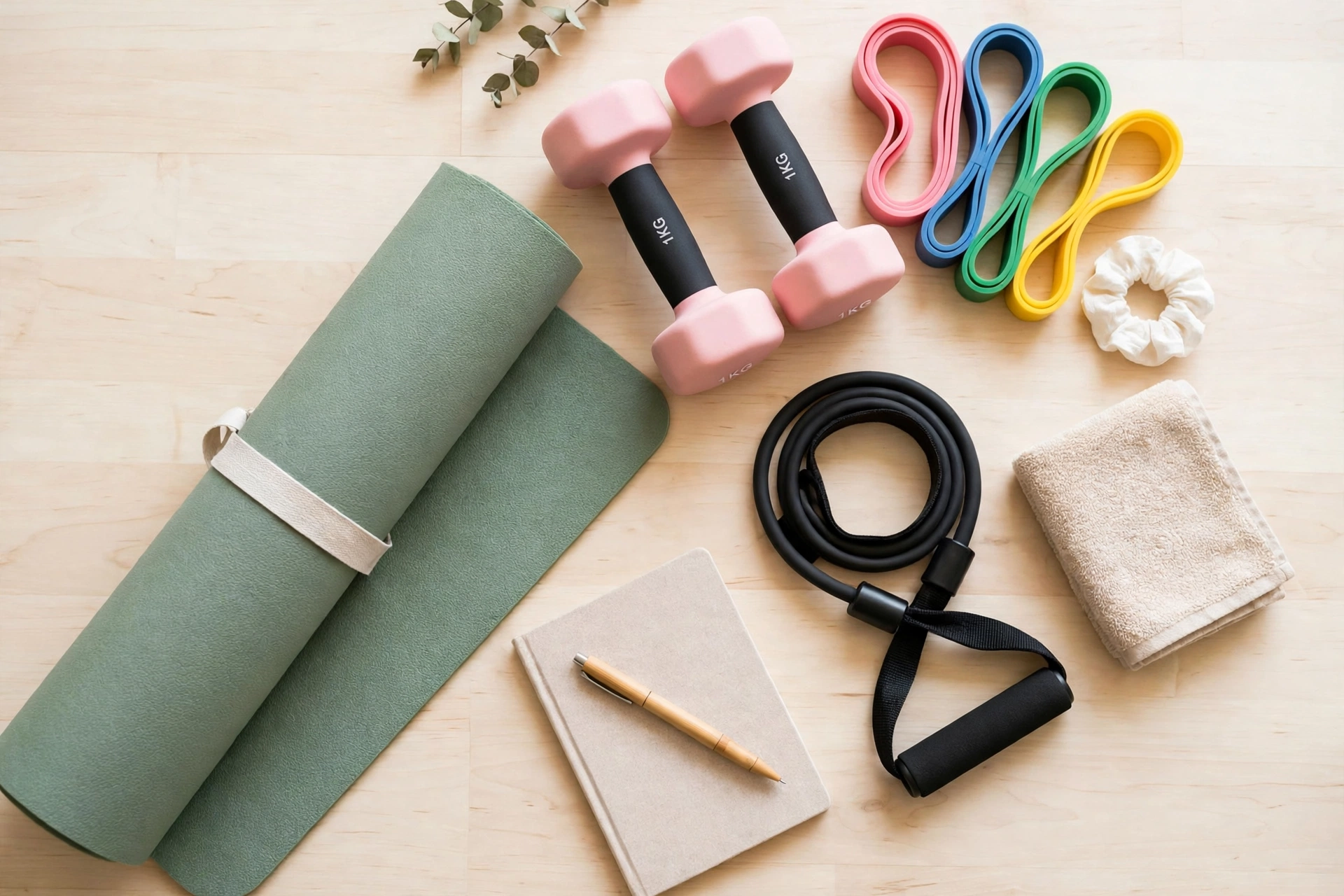
Warm up for 5–10 minutes, then do 2–3 sets of each:
| Exercise | Reps |
|---|---|
| Bodyweight squat | 10–12 |
| Knee push-up (or wall push-up) | 8–12 |
| Dumbbell or band row | 10–12 each side |
| Glute bridge | 12–15 |
| Overhead press (light) | 8–12 |
| Plank | 20–30 seconds |
Rest 60–90 seconds between sets, and finish with gentle stretching. Do this 2–3 times a week, and after a few weeks, increase reps or resistance slightly. That’s the whole plan — and it’s enough.
Active Recovery Days
For strength training for beginners, active recovery is just as important as the workouts themselves.

Rest days don’t mean sitting still. Walking, gentle stretching, or yoga on off days keeps you moving, eases soreness, and supports recovery. Walking is also an easy way to add cardio without complicating your routine — strength training plus walking is a complete, realistic fitness base for most beginners.
Beginner Mistakes to Avoid
- Lifting too heavy too soon — ego lifting breaks form and causes injuries. Start light; you can always add weight.
- Skipping warm-ups and cool-downs — cold muscles strain more easily.
- Training the same muscles every day — without 48 hours of recovery, you stall progress and risk overtraining.
- Only training “visible” muscles — skipping legs and back creates imbalance and injury risk. Train the whole body.
- Chasing soreness — soreness is not a sign of a good workout. Some soreness is normal when starting, but you don’t need to feel wrecked after every session.
- Doing the same thing forever — if nothing ever gets harder, progress stops. Add a little weight, reps, or difficulty over time.
- Comparing yourself to others — everyone in the gym started as a beginner. Your only competition is last week’s version of you.
- Ignoring sharp pain — muscle burn and mild soreness are normal; sharp, joint, or one-sided pain is not. Stop, rest, and get advice if it persists.
Final Thoughts
Strength training for beginners is simple: 2–3 full-body sessions a week, good form, gradual progress, and real rest. You don’t need a gym membership, fancy gear, or an hour a day — bodyweight and a pair of dumbbells or bands will take you a long way.
Done consistently, strength training for beginners builds strength, confidence, and healthy habits that last.
Start this week with the workout above. In a month, you’ll be surprised how much stronger — and more confident — you feel.
This article shares general fitness information, not medical advice. If you have an injury, a health condition, or you’re unsure whether an exercise is safe for you, talk to a clinician or qualified trainer before starting.