
Home organization for beginners starts with small, repeatable habits, not a whole-house overhaul.
Why Home Organization Should Be Small
Most home organization fails for one reason: it starts too big. A whole-weekend overhaul is exhausting, so it never gets repeated — and the clutter comes back. The homes that stay tidy are not cleaned more; they are reset a little, every day.
The seven habits below take 10–15 minutes a day combined. None needs new storage, a new system, or a free weekend.
Before You Start: 3 Ground Rules
- Declutter before you buy storage. Bins cannot fix too many belongings. Remove first, then decide what storage you actually need.
- Give everything a one-step home. If putting something away means moving three other things first, the system is the problem, not you.
- Consistency beats perfection. Ten minutes a day beats three hours on a Sunday, every time.
7 Easy Home Organization Habits
1. The 10-minute evening reset

Set a timer for 10 minutes after dinner: clear surfaces, put stray items back where they belong, and wipe the kitchen counters. Attach it to an existing habit — after dinner or before bed — so it becomes automatic. This one habit prevents most clutter from spiralling.
2. Create a drop zone
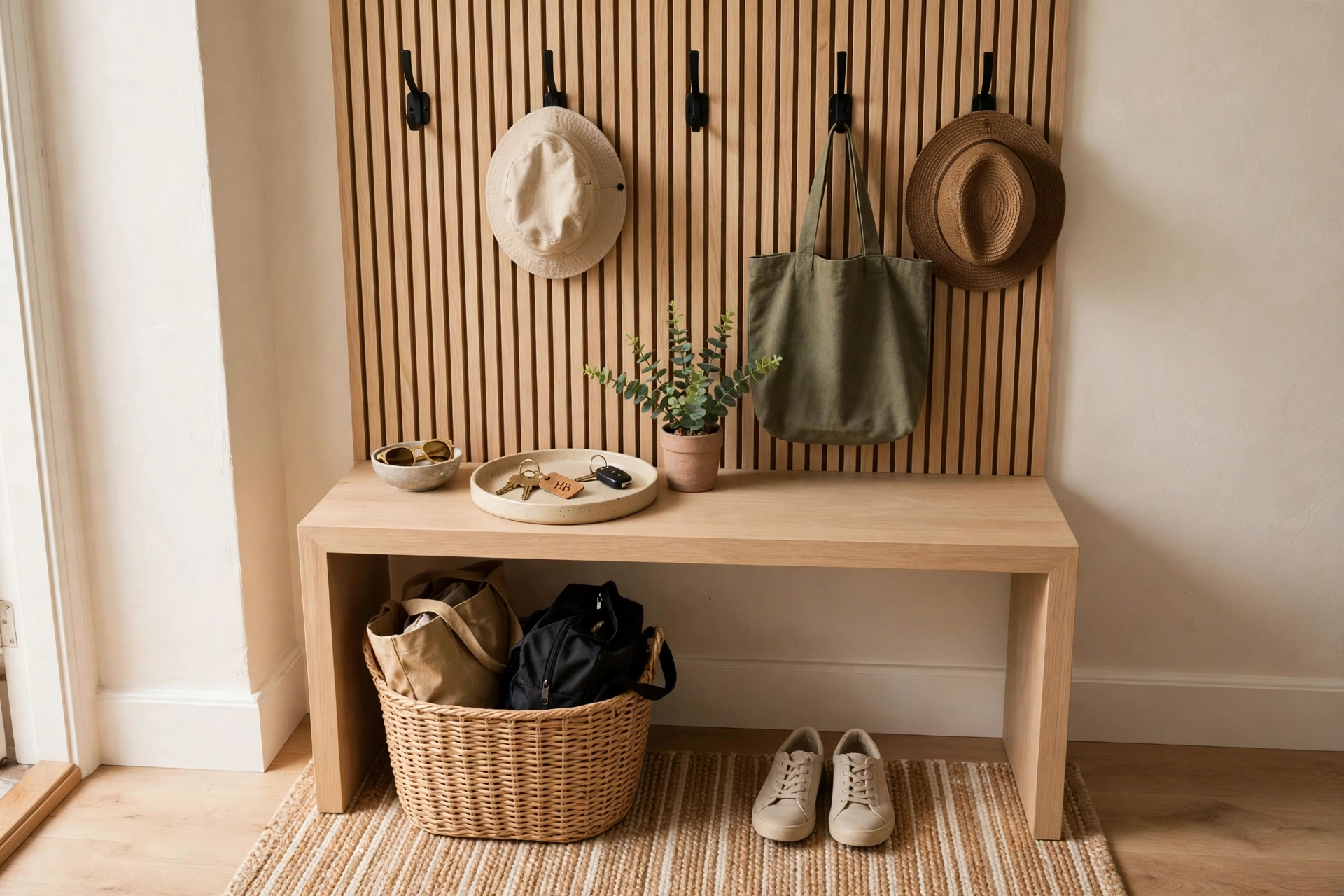
Give keys, bags, and mail one specific spot near the door. When everything incoming has a home, clutter stops spreading through the house. A small tray or a few hooks is enough.
3. Handle it once
Deal with mail, dishes, and laundry as they appear instead of moving them from pile to pile. “Handle it once” is the quiet habit that stops transitional spaces — counters, chairs, stairs — from becoming storage.
4. One in, one out
When something new comes home, one old item leaves. Buy a shirt, donate one you no longer wear. This single rule keeps the total amount of stuff from growing again.
5. Declutter one drawer at a time
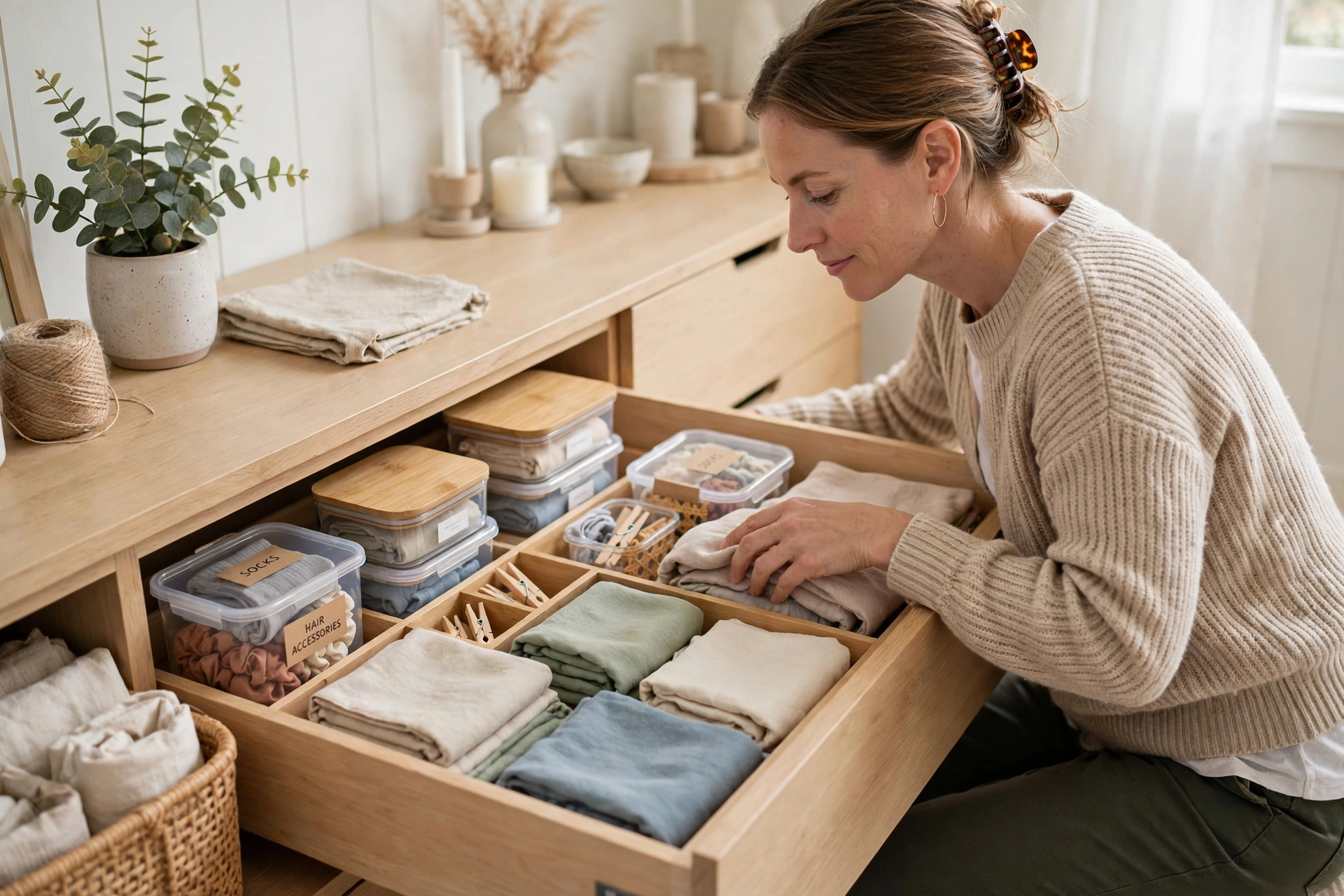
Forget whole rooms. Pick one drawer, one shelf, or one cupboard, and finish it in 15 minutes. Small wins are easier to finish and easier to repeat — and a box kept handy for donations makes the next round effortless.
6. Make storage easy to use
Open baskets, clear containers, and labels beat lids, tricky latches, and deep cupboards. Keep daily items at easy reach and seasonal items higher or deeper. If a system keeps failing, adjust the system, not the people.
7. A weekly 15-minute round
Once a week, spend 15 minutes on one small zone that the daily reset doesn’t cover: a shelf, the fridge, or a cupboard. Regular small rounds mean you never need another giant cleanup.
A Simple Weekly Plan
- Daily: 10-minute evening reset
- Daily: drop zone + handle it once
- Weekly: one 15-minute zone round
- Monthly: one bag of donations out of the house
That is the whole system. Start with habit 1 only, add the next when the first feels automatic, and let the routine grow slowly. That is why home organization for beginners can stay simple: one habit at a time, repeated daily.
Common Beginner Mistakes (and Easy Fixes)
- Trying to do everything in one day — it burns you out. Work 15 minutes at a time, one drawer at a time.
- Buying storage first — storage cannot solve a clutter problem. Declutter first, then buy only what you still need.
- Keeping things because they were expensive — the money is already spent. Keeping an unused item does not recover it. Ask: does this add value to my life today?
- Moving clutter room to room — relocating is not deciding. Every item needs a final decision: keep in its home, donate, or discard.
Final Thoughts
Home organization for beginners is not about a perfect home. It is about a calmer everyday life, built from a 10-minute reset, a drop zone, and small rounds of decluttering. Start tonight with the reset — by tomorrow morning, your home will already feel different. Home organization for beginners works best when the routine stays small and repeatable.