

Sleep and health are more tightly linked than almost anything else you do every day, yet sleep is usually the first thing sacrificed when life gets busy. It doesn’t feel as urgent as a deadline or as visible as a missed workout — you can skip it for a night, or several, and nothing seems to break.
The research says otherwise. Sleep and health interact through nearly every system in the body: the brain’s overnight cleanup process, the immune system’s ability to fight off a cold, how efficiently your body handles blood sugar, and even how long you’re likely to live. Here’s what large, recent studies actually show — not the folk wisdom, the mechanisms behind it.
What happens in your body when you sleep?
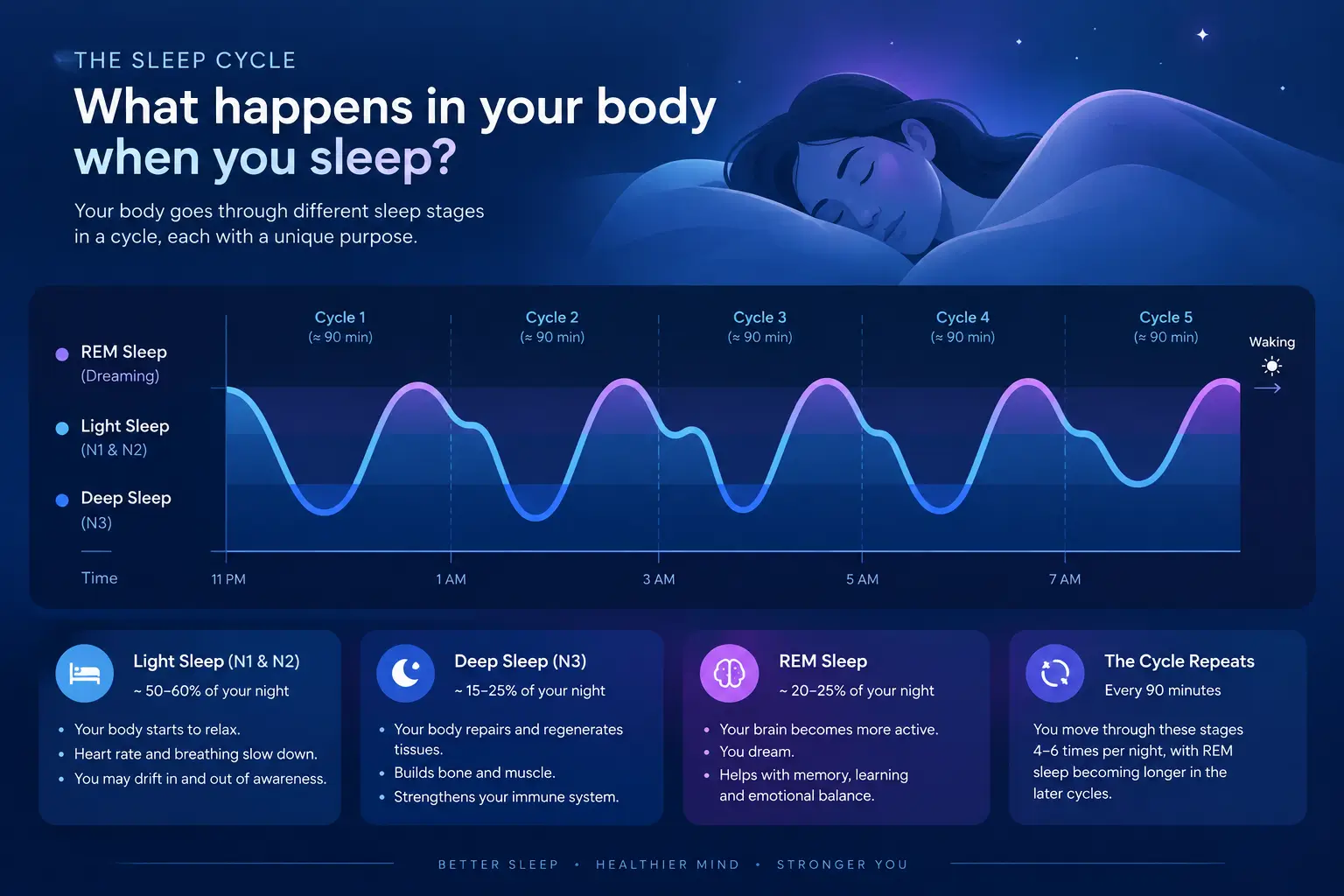
Sleep isn’t a single, uniform state — your body and brain move through distinct stages roughly every 90 minutes, repeating several cycles a night.
Light sleep
Making up roughly half of total sleep time, light sleep is the transition zone. Heart rate and breathing begin to slow, body temperature drops, and muscles relax. It’s easy to wake from, but it still plays a role in physical restoration.
Deep sleep (slow-wave sleep)
This is the stage most associated with physical repair. Growth hormone is released, tissue repair accelerates, and — critically — this is when the brain’s waste-clearance system is most active (more on that below). Deep sleep is concentrated in the first half of the night, which is part of why the sleep and health connection depends so much on when sleep is cut short, not just how much total time is lost.
REM sleep
Rapid eye movement sleep is when most vivid dreaming happens. Brain activity resembles wakefulness, but the body is temporarily paralyzed. REM sleep is heavily involved in emotional processing and consolidating procedural memory — skills and learned sequences rather than facts.
Cutting a night of sleep short doesn’t just mean less total sleep — it disproportionately cuts into REM sleep, which is concentrated in the later hours. This is one reason a short night feels cognitively and emotionally worse than the hour count alone would suggest.
Sleep and brain function

The relationship between sleep and health is nowhere clearer than in the brain, where two separate mechanisms are at work: waste clearance and memory consolidation.
The glymphatic system: your brain’s cleaning cycle
During deep sleep, the brain’s extracellular space physically expands, allowing cerebrospinal fluid to flow through brain tissue via what researchers call the glymphatic system — a waste-clearance pathway that flushes out metabolic byproducts, including amyloid-beta, a protein implicated in Alzheimer’s disease. This system is far more active during sleep than during wakefulness, which has led researchers to describe sleep partly as the brain’s dedicated maintenance window.
A 2026 study in Nature Communications used direct human measurements to confirm that sleep-active physiological processes enhance overnight clearance of Alzheimer’s-related proteins from the brain into the bloodstream — one of the clearest human-level confirmations yet of a mechanism previously demonstrated mainly in mice. A 2025 review in Frontiers in Neurology estimated that more than 15% of Alzheimer’s cases may be attributable to sleep disorders, underscoring how much this nightly cleanup matters over a lifetime.
Memory consolidation
This is another dimension of sleep and health working together: separately from waste clearance, sleep is when the brain transfers information from short-term to long-term storage. During slow-wave sleep, the hippocampus replays the day’s experiences, gradually transferring them into more permanent cortical storage — a process researchers call systems consolidation. Declarative memory (facts, events) benefits most from slow-wave sleep, while procedural memory (skills, sequences) draws more on REM sleep.
The practical upshot: studying or practicing a skill right before a full night of sleep measurably improves next-day recall compared with the same study session followed by sleep deprivation — the sleep isn’t just rest, it’s an active part of learning.
Sleep and immunity

The link between sleep and health shows up especially clearly in how well your immune system does its job — and one study demonstrates this with unusual precision.
The cold-virus study
Researchers at UC San Francisco, Carnegie Mellon, and the University of Pittsburgh Medical Center tracked the natural sleep habits of healthy adults using wrist actigraphy for a week, then exposed all of them to a live cold virus under quarantine. People who averaged six hours of sleep or less in the week beforehand were roughly 4.2 times more likely to develop a cold than those sleeping more than seven hours; those sleeping five hours or less were 4.5 times more likely. Put plainly: about 39% of short sleepers got sick, versus only 18% of adequate sleepers. The effect held up even after accounting for age, stress, smoking, and other health behaviors — sleep alone was the strongest single predictor.
Why sleep strengthens immune response
This is one of the clearest sleep and health mechanisms on record: adequate sleep — particularly slow-wave sleep — boosts interleukin-12 production and strengthens the interaction between antigen-presenting cells and T-cells, improving the body’s response to both natural infections and vaccines. Sleep deprivation, conversely, elevates pro-inflammatory cytokines like IL-6 and TNF and reduces the antibody response to vaccination, an effect documented across influenza, hepatitis A and B, and other vaccines.
If you’re already working on strengthening your immune system through diet and lifestyle, our guide to boosting immunity naturally covers the other pieces of that picture.
Sleep and metabolism
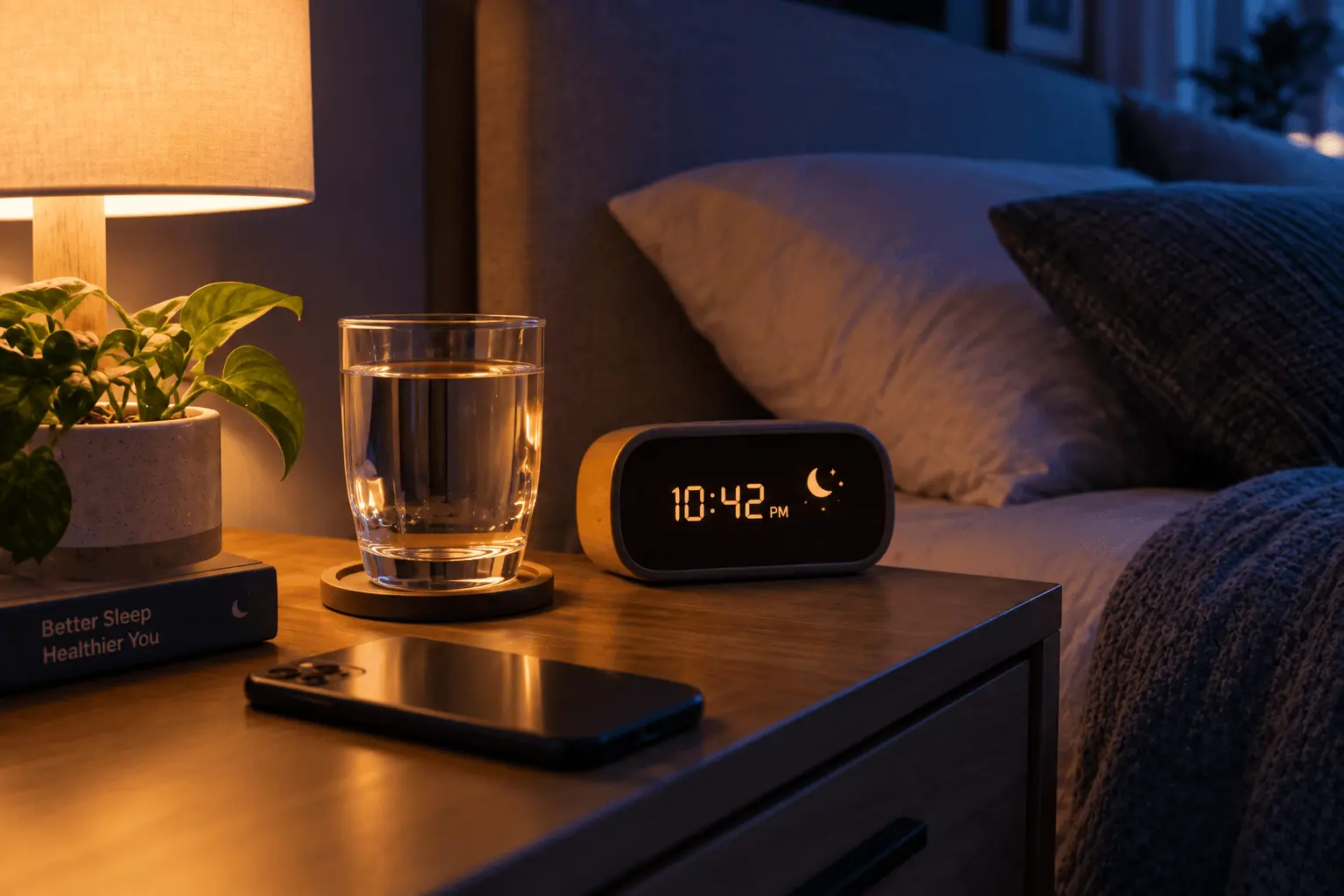
Metabolism is one of the more surprising places where sleep and health intersect, because the effects show up faster — and with smaller sleep deficits — than most people expect.
Insulin resistance can start in days
A landmark 2025 review in the Journal of Diabetes Investigation found that just four days of sleep restricted to 4.5 hours a night was enough to induce measurable insulin resistance in healthy adults: fat cells required nearly twice as much insulin to trigger the same glucose-uptake response. Even two days of roughly four hours of sleep reduced whole-body insulin sensitivity. This isn’t a slow-building effect from years of poor sleep — it happens within days.
Even mild sleep loss causes weight gain
A 2026 study from Columbia University, led by researcher Marie-Pierre St-Onge, pushed this further by testing a smaller, more realistic sleep deficit. Adults who normally slept 7–8 hours had their bedtime delayed by about 90 minutes a night for six weeks. That modest, chronic sleep loss was enough to produce an average weight gain of roughly one pound and to increase sedentary behavior by about 17 minutes a day — nearly 30 minutes a day in men and postmenopausal women specifically. A related analysis of the same participants found increased insulin resistance and signs of cardiac inflammation in women at elevated cardiometabolic risk, even from this mild, everyday level of sleep loss.
The sleep and health link extends to appetite too: sleep loss disrupts appetite-regulating hormones directly: leptin (which signals fullness) drops, while ghrelin (which signals hunger) rises — a hormonal combination that reliably increases hunger and overeating independent of any change in activity level.
Sleep and health work together here with nutrition; see our guide to balanced nutrition for the dietary side of metabolic health.
Sleep and heart health
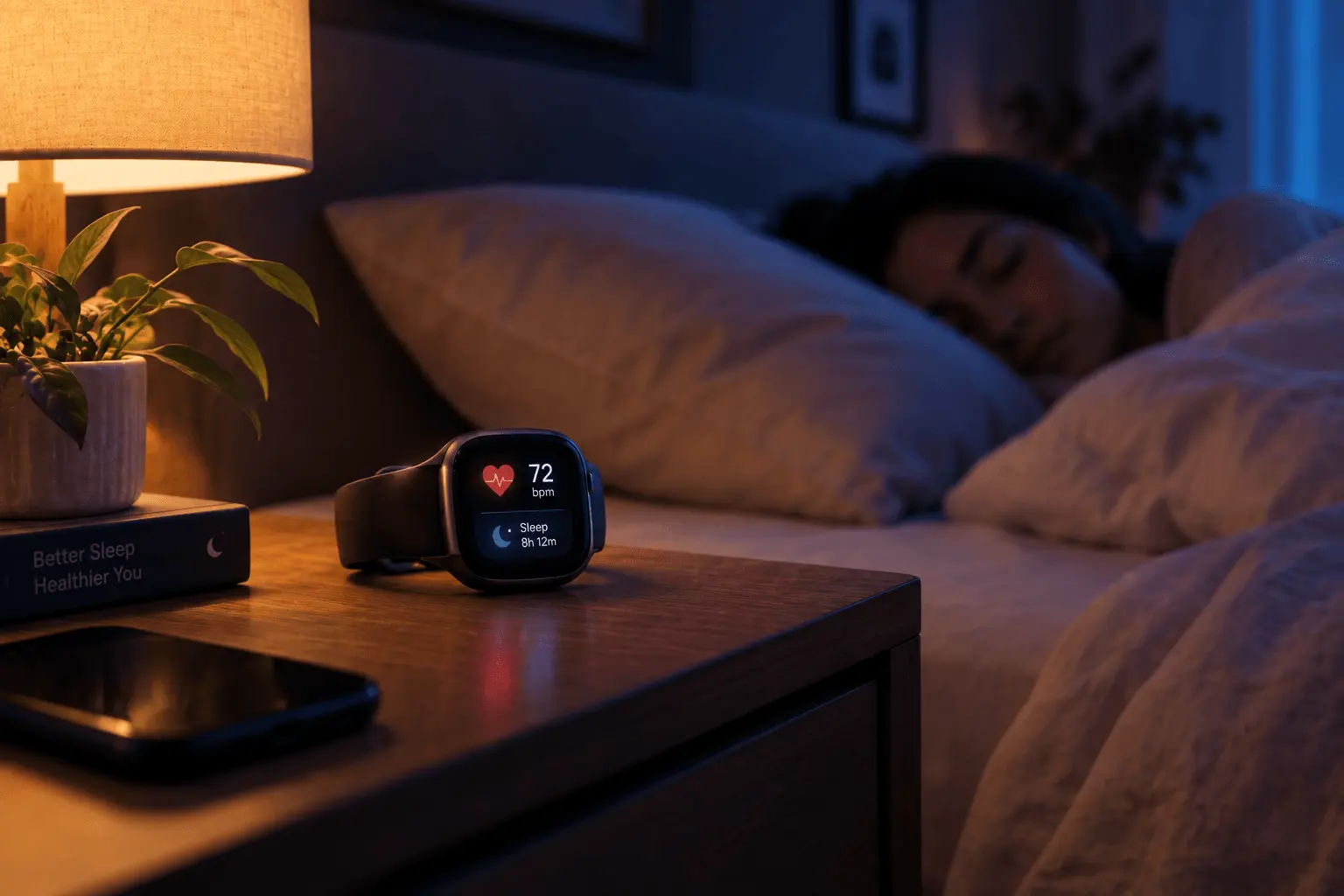
The relationship between sleep and health outcomes for the heart follows a distinctive U-shaped curve, rather than a simple “more is always better” pattern.
The U-shaped mortality curve
A 2025 meta-analysis in GeroScience, pooling 79 cohort studies, found that short sleep (under 7 hours) was associated with a 14% increase in all-cause mortality, while long sleep (9 hours or more) was associated with a 34% increase — with the long-sleep effect notably stronger in women. A separate dose-response meta-analysis published in the Journal of the American Heart Association found the lowest cardiovascular and mortality risk clustered around 7 hours of sleep per night, with risk rising on both sides of that point.
The sleep and health mechanism here runs through the nervous system: short sleep is thought to raise cardiovascular risk through elevated sympathetic nervous system activity, higher blood pressure, and increased systemic inflammation. Long sleep durations, meanwhile, may partly reflect underlying illness rather than cause it directly — a distinction researchers are still working to disentangle, since much of this evidence is observational.
| Nightly Sleep Duration | Relative Mortality Risk (vs. 7 hours) |
|---|---|
| 4 hours | ~55% higher |
| 5–6 hours | 4–7% higher |
| 7 hours | Reference (lowest risk) |
| 8 hours | 6–7% higher |
| 9–11 hours | 21–55% higher |
Based on pooled dose-response data from Shen et al. (2016, Scientific Reports) and related meta-analyses. Figures are approximate averages; individual risk varies with age and health status.
How many hours of sleep do you actually need?
Across nearly every major study on sleep and health outcomes — mortality, metabolism, immunity, and cognition alike — the number that keeps appearing as optimal is 7 hours for most adults, with a reasonable range of 7–9 hours depending on age and individual variation.
Both ends of the spectrum carry measurable costs. Consistently sleeping less than 6 hours is associated with higher rates of infection, insulin resistance, and cardiovascular disease. Consistently sleeping more than 9 hours is also associated with higher mortality risk — though this may partly reflect underlying health conditions driving both the long sleep and the elevated risk, rather than long sleep itself causing harm.
Practical takeaway: if you’re currently sleeping 5–6 hours a night, closing that gap toward 7 hours is where the evidence shows the largest, most consistent returns — bigger than the difference between 7 and 9 hours.
What happens when you don’t get enough sleep?
The sleep and health relationship breaks down quickly under debt. Sleep debt doesn’t stay contained to feeling tired. In the short term, even one night of poor sleep measurably impairs attention, reaction time, and emotional regulation — effects comparable in some studies to mild alcohol intoxication. Over weeks and months, the effects compound:
- Immune function drops — higher infection risk and weaker vaccine responses, as shown in the cold-virus and vaccination studies above.
- Insulin sensitivity falls — within days, not years, raising blood sugar and increasing type 2 diabetes risk over time.
- Appetite hormones shift — increased hunger and a preference for high-calorie foods, independent of willpower.
- Cardiovascular strain increases — elevated blood pressure, inflammation, and sympathetic nervous system activity.
- Memory and learning suffer — both the encoding of new information and the consolidation of what you learned the previous day.
Can you “catch up” on lost sleep? Partially. A weekend of extra sleep can restore some cognitive performance, but research suggests it doesn’t fully reverse metabolic effects like insulin resistance built up over a week of short sleep — consistency matters more than compensation.
What the latest research says

Sleep science has moved quickly in the past two years, with several findings reshaping how researchers think about sleep and health.
Human confirmation of glymphatic clearance (2026, Nature Communications)
For years, the brain’s overnight waste-clearance system was demonstrated mainly in mice. A 2026 human study used direct measurements to confirm that sleep-active physiological processes — specifically reduced brain parenchymal resistance during sleep — enhance the overnight clearance of Alzheimer’s-associated proteins into the bloodstream, strengthening the case that protecting deep sleep is a meaningful dementia-prevention strategy, not just a comfort measure.
Mild, realistic sleep loss and weight gain (2026, Columbia University)
Led by Marie-Pierre St-Onge, this study moved past older research that only tested extreme sleep deprivation (around 4 hours a night) and instead tested a delay most people would recognize — 90 minutes later to bed, sustained for six weeks. That modest change alone produced measurable weight gain and increased sedentary time, showing that everyday, mild sleep loss carries real metabolic costs, not just severe deprivation.
Updated mortality risk meta-analysis (2025, GeroScience)
Pooling 79 cohort studies, this analysis reaffirmed the U-shaped relationship between sleep duration and mortality while adding sex-specific detail: long sleep carries a notably stronger mortality association in women than in men, a distinction that could inform more personalized sleep guidance going forward.
Across all three, the throughline is consistent: sleep and health are linked through fast-acting, measurable biological mechanisms — not vague, hard-to-verify correlations. Most of this evidence remains observational, though, so causation in some associations (particularly long sleep and mortality) is still being untangled.
How to improve your sleep quality
The research points toward a short list of interventions with the strongest evidence behind them:
- Keep a consistent wake time, even on weekends. Circadian stability supports deeper, more efficient sleep more than total hours alone.
- Protect the first half of the night. Deep sleep — when glymphatic clearance and physical repair are highest — is concentrated early, so a late bedtime cuts disproportionately into this stage even if total sleep time looks similar.
- Limit alcohol before bed. It fragments sleep architecture and reduces deep and REM sleep even when total sleep time seems normal.
- Get natural light exposure during the day, particularly in the morning, to reinforce circadian rhythm.
- Keep the bedroom cool and dark. A modest drop in core body temperature helps trigger and sustain deep sleep.
- Move your body regularly. Independent of sleep itself, regular exercise appears to support glymphatic function and sleep quality — see our guide to healthy daily habits for how movement, hydration, and sleep reinforce each other.
- Manage stress before bed. Elevated cortisol delays sleep onset and reduces slow-wave sleep; our stress management guide covers techniques that pair well with a wind-down routine.
Taken together, the science behind sleep and health makes one thing clear: sleep isn’t downtime the body tolerates — it’s an active process the brain, immune system, and metabolism all depend on to function well the next day.
Most large studies on sleep and health point to around 7 hours a night as the point of lowest risk for adults, with a reasonable range of 7–9 hours depending on individual factors.
Consistently sleeping 9+ hours is associated with higher mortality risk in large studies, though this may partly reflect underlying illness driving both the long sleep and the risk, rather than long sleep itself being harmful.
Yes — in controlled studies, people sleeping 6 hours or less were over 4 times more likely to catch a cold after viral exposure compared with those sleeping 7+ hours, even after accounting for stress, age, and other factors.
Faster than most people expect. Studies show measurable insulin resistance after just two to four days of significantly restricted sleep, and even a modest 90-minute nightly sleep delay sustained for six weeks caused measurable weight gain.
Partially. Extra weekend sleep can restore some cognitive performance, but evidence suggests it doesn’t fully reverse metabolic effects like insulin resistance built up during a week of short sleep.
Keeping a consistent wake time every day, including weekends, is one of the most evidence-backed interventions — it stabilizes circadian rhythm, which supports deeper and more efficient sleep even without changing total hours.
This article summarises published research for general information. It isn’t medical advice. If you have a diagnosed sleep disorder, chronic insomnia, or a health condition affected by sleep, talk to your doctor about what’s appropriate for you.
Key sources
- Norepinephrine-mediated slow vasomotion drives glymphatic clearance during sleep. Cell. 2025;188:606–622.
- Sleep-active physiological processes enhance overnight glymphatic clearance of Alzheimer’s disease biomarkers into plasma in humans. Nature Communications. 2026.
- Prather AA, et al. Behaviorally assessed sleep and susceptibility to the common cold. Sleep. 2015;38(9):1353–1359.
- Rasmussen MK, et al. Sleep habits in the pathogenesis and management of diabesity. Journal of Diabetes Investigation. 2025.
- St-Onge MP, et al. Effects of mild, chronic sleep restriction on weight and cardiometabolic health. Columbia University Irving Medical Center. 2026.
- Imbalanced sleep increases mortality risk by 14–34%: a meta-analysis. GeroScience. 2025.
- Wang D, et al. Relationship of sleep duration with all-cause mortality and cardiovascular events. Journal of the American Heart Association. 2018.
- Shen X, Wu Y, Zhang D. Nighttime sleep duration, 24-hour sleep duration and risk of all-cause mortality. Scientific Reports. 2016;6:21480.