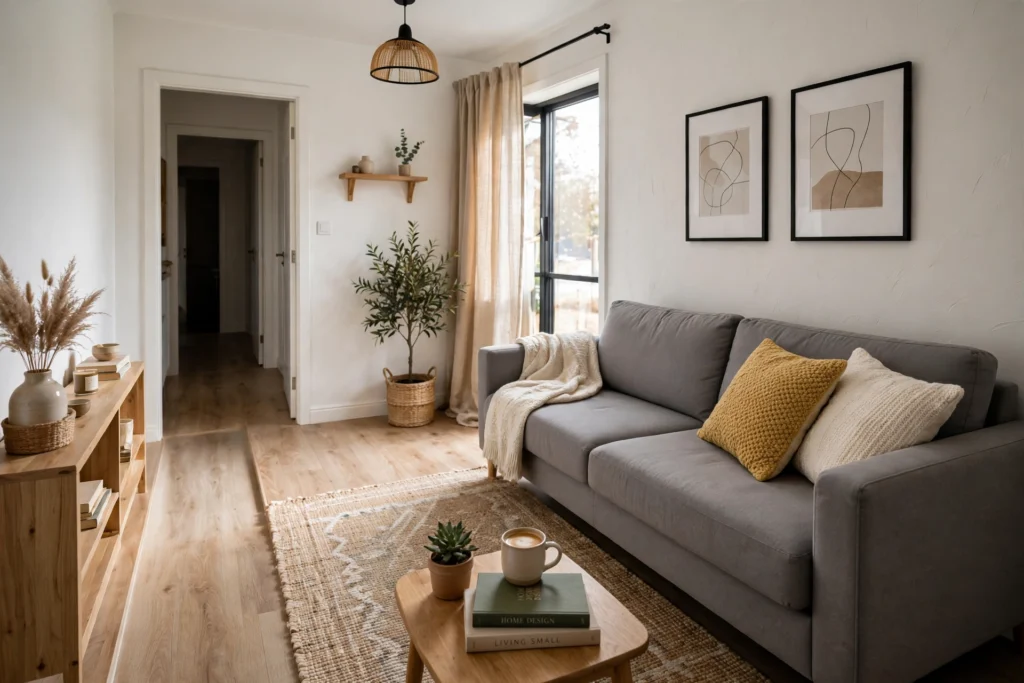
A small room usually feels cramped for a simple reason: the furniture is in the wrong place, not because there is too much of it. A sofa blocking the door, a bed pushed against the only window, or a table with no walking space around it can make even a tidy room feel hard to use.
This guide to small space furniture layout for beginners fixes that in order: measure first, place the biggest piece first, then build clear paths and zones around it. You do not need new furniture to start. Moving what you already have, in the right order, often changes the room completely.
1. Measure the Room and the Doorways First
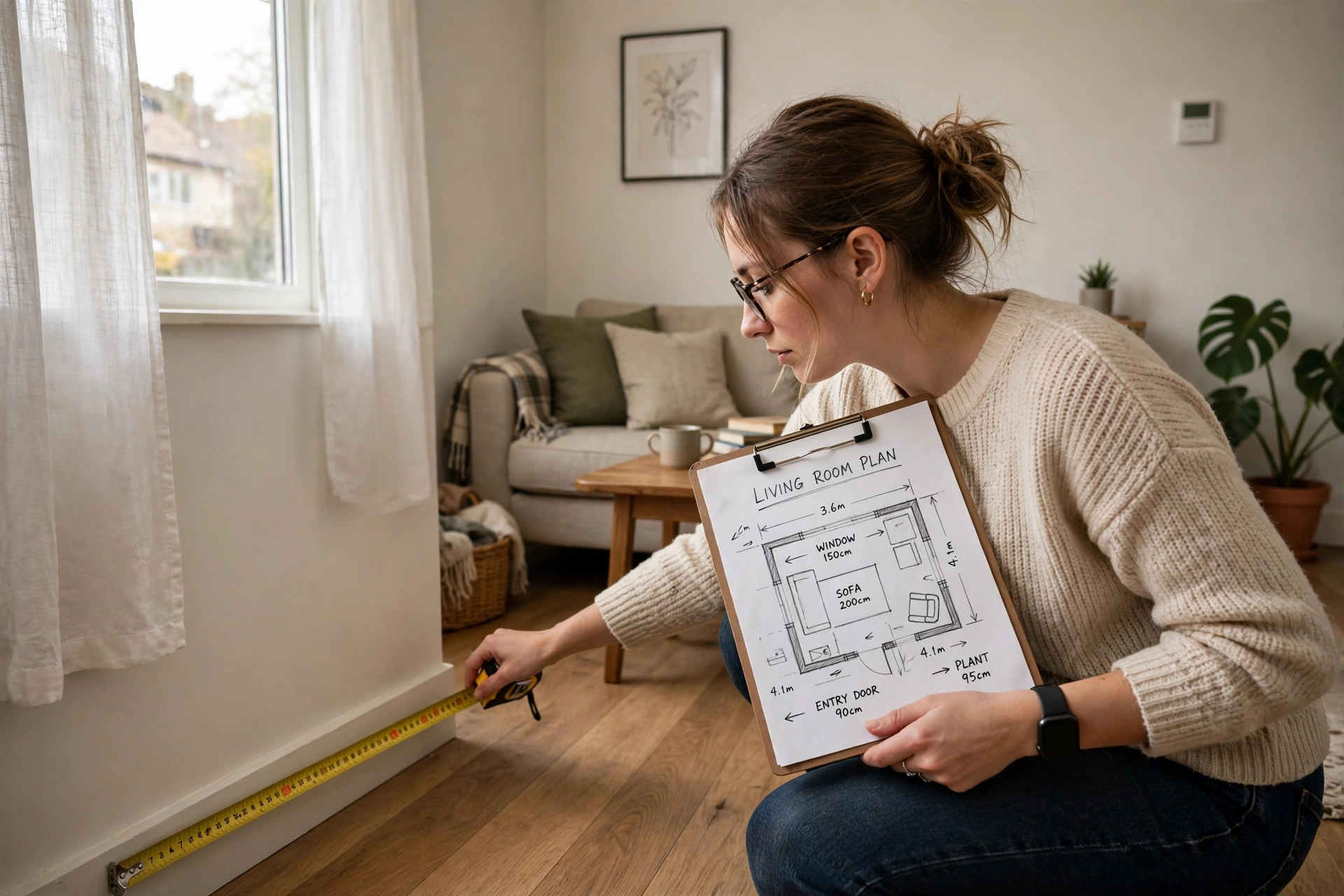
Before you move anything, measure the length and width of the room, the height of the windows, and the width of every doorway the furniture must pass through. Write the numbers down, or sketch a simple floor plan on paper with the doors, windows, and radiators marked.
Measuring is the first step in small space furniture layout for beginners because it stops the most common mistake: buying or moving a piece that looks right but blocks a door or leaves no room to walk past it. A tape measure takes ten minutes. Moving a sofa three times takes an afternoon.
2. Place the Biggest Piece First
Every room has one anchor piece: the sofa in a living room, the bed in a bedroom, or the table in a dining area. Place that piece first, against the longest clear wall if you can, and leave the rest of the room to work around it.
If the anchor piece goes in first, small space furniture layout for beginners becomes much easier, because every other choice has a fixed point to relate to. If you start with small tables and shelves, the big piece ends up squeezed into whatever space is left, which is usually the wrong space.
3. Keep Clear Walking Paths
Leave a clear path through the room, from the door to the window and between the main pieces of furniture. As a practical guide, aim for enough room to walk through without turning sideways or moving a chair out of the way.
This is where small space furniture layout for beginners most often goes wrong. A room with no clear path feels cramped even when it is tidy, because every trip across it becomes an obstacle course. If a path is blocked, move the smaller piece, not the person using the room.
4. Float Furniture Off the Walls When It Helps
Pushing everything flat against the walls feels like it should save space, but it often leaves a dead gap in the middle of the room and makes conversation awkward. Pulling the sofa a few inches off the wall, or floating a chair at an angle near a window, can make the room feel larger and easier to use.
Floating does not mean filling the middle of the room. It means giving each piece a little breathing room, so the room reads as a set of usable areas rather than a border of furniture around an empty centre. This builds on small space organization for beginners, because a room with clear zones stays tidy longer than a room where everything is pushed to the edges.
5. Zone the Room Without Building Walls
A small room often has to do more than one job: sleep, work, eat, or relax. Use a rug, a bookshelf turned sideways, or the back of a sofa to mark one zone from another, without blocking light or air.
Zoning is a core part of small space furniture layout for beginners. A rug under the sofa and coffee table says “this is the sitting area”, while a desk facing the window says “this is the work area”, even in the same room. The zones help you use the room on purpose, instead of letting every activity spread across the whole floor.
6. Choose Scale Over Size, and Let Legs Show
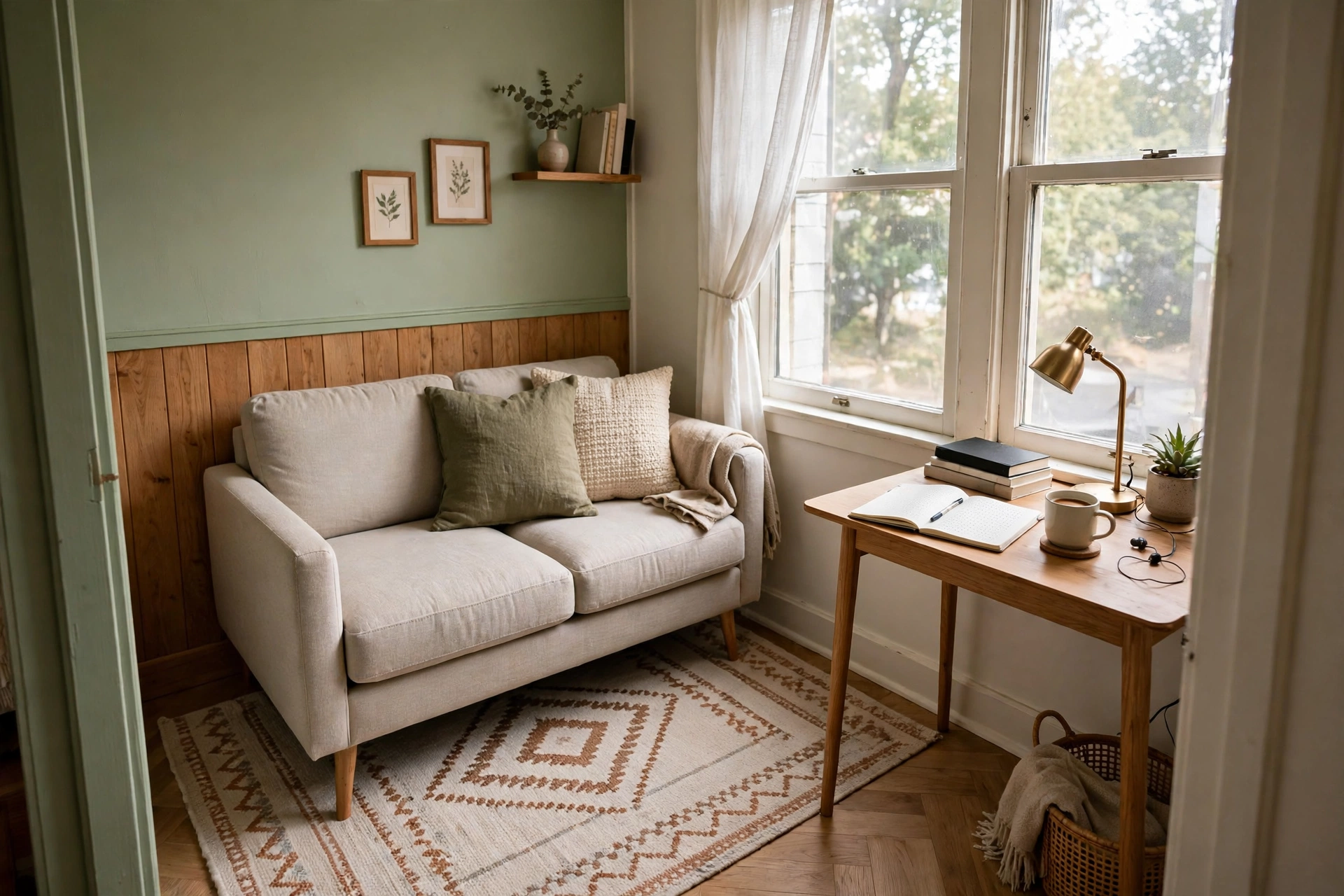
Oversized furniture swallows a small room. Choose pieces that fit the room: a two-seater instead of a three-seater, a round table instead of a long rectangle, or a narrow console instead of a deep cabinet. Where you can, choose pieces with visible legs, so you can see floor underneath them.
Seeing floor under furniture makes a room feel lighter, because the eye reads more open floor. That is one of the simplest home decor and design ideas for a small room, and it costs nothing if you already own the piece. Scale matters more than style: a plain chair that fits beats a beautiful sofa that blocks the door.
7. Test the Layout Before You Buy Anything New
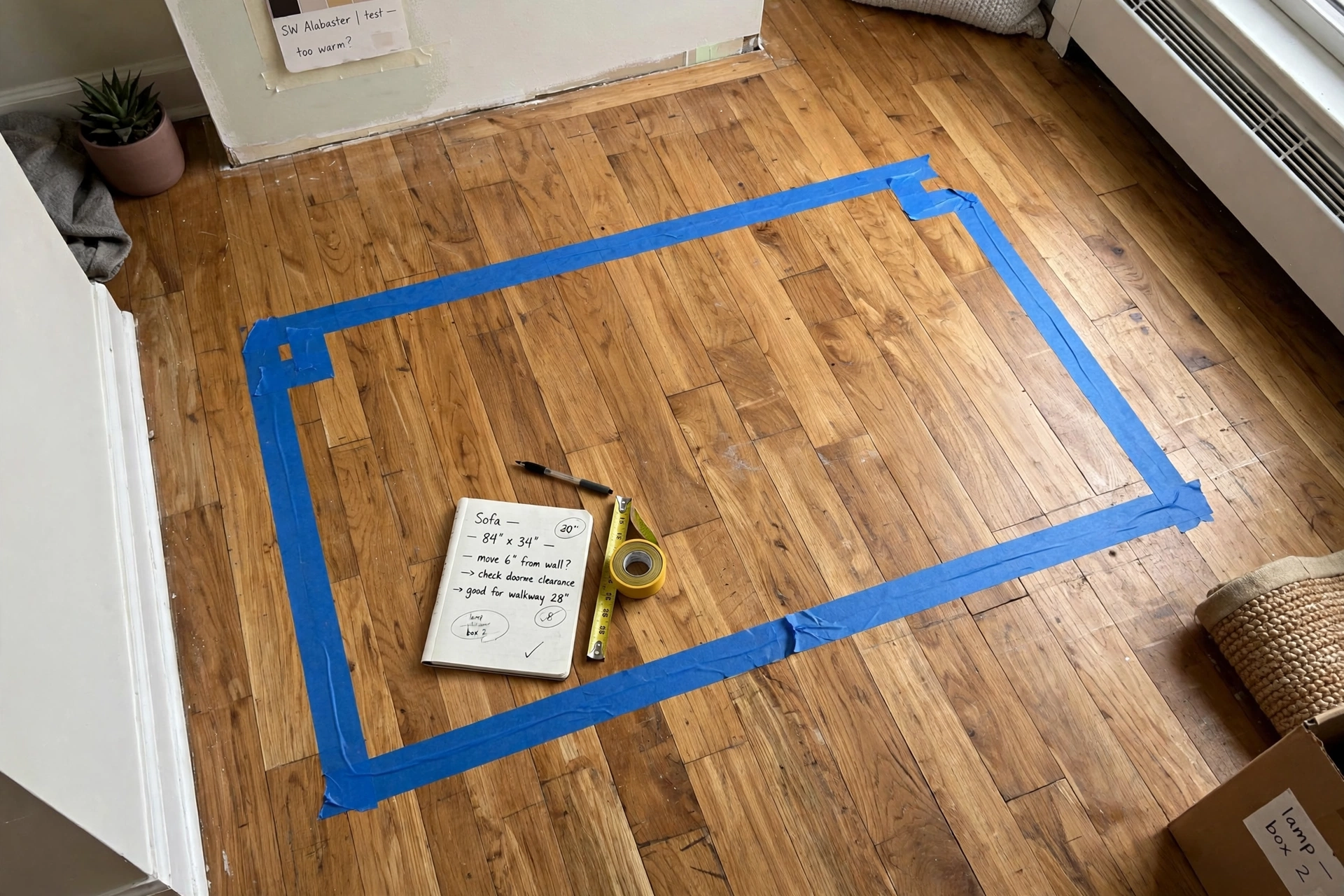
Before you buy a new piece, test its footprint on the floor. Mark the outline with painter’s tape, or lay out sheets of paper in the size of the piece, and live with that outline for a day. Walk around it, open the doors near it, and sit where you would sit.
Testing is the step in small space furniture layout for beginners that saves the most money and effort. Moving furniture costs nothing, which makes it the easiest budget home decor win in a small home: you learn what works before you spend anything. If the outline feels tight, the real piece will feel tighter.
Mistakes to Avoid
- Moving furniture without measuring the room and doorways first.
- Starting with small pieces and squeezing the sofa or bed into what is left.
- Blocking the main walking path with a table, chair, or plant.
- Pushing everything against the walls and leaving the middle empty.
- Buying a new piece before testing its footprint on the floor.
A Simple Weekend Plan
Saturday morning: measure the room and sketch the doors, windows, and anchor piece. Saturday afternoon: move the anchor piece first, then clear the walking paths. Sunday: add zones with a rug or shelf, test any new piece with tape on the floor, and sit in each area to check it works. One room finished beats three rooms half-moved.
If you remember one thing from this small space furniture layout for beginners guide, let it be this: biggest piece first, clear paths second, and test before you buy. A room arranged in that order feels larger without costing anything.