
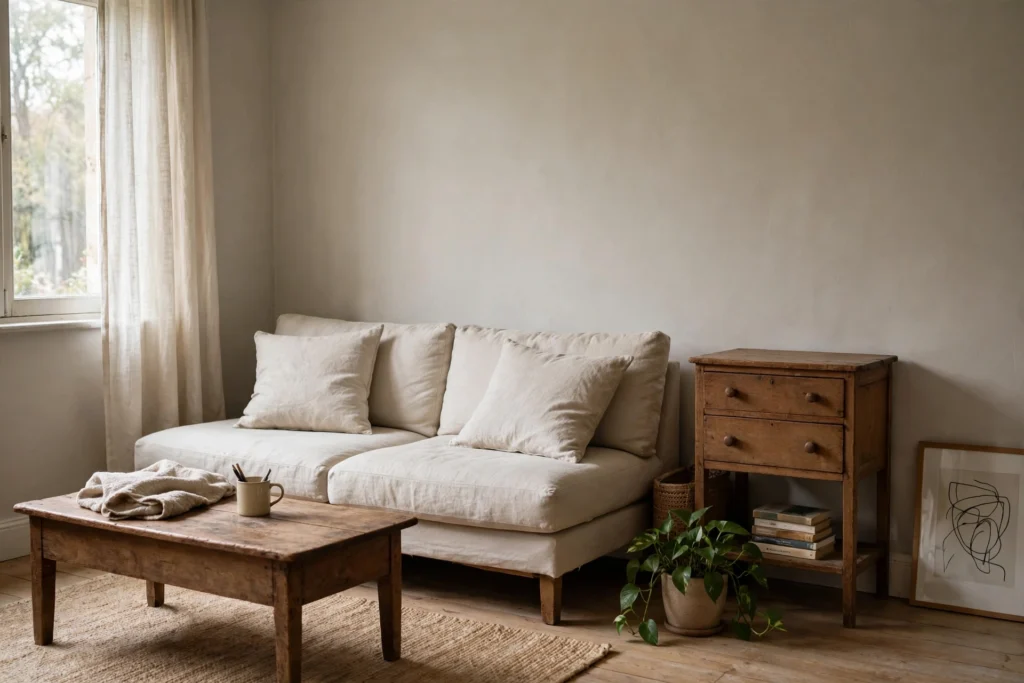
Minimalism and a tight budget are a natural match: fewer items means less spending by design. You do not need a renovation, a designer, or a shopping spree to get the calm, clean look. In fact, the most effective steps cost nothing at all. This guide to minimalist home decor on a budget gives you seven practical ideas, ordered from free to low-cost, so you can start today with whatever you already have and spend only where it actually shows.
1. Start Free: Declutter Ruthlessly
Decluttering is the single most cost-effective step in minimalist home decor on a budget — it costs $0, instantly makes rooms feel larger and lighter, and reveals what you truly love. Before buying anything, remove what does not earn its place.
Use the 90/90 rule as your filter: if you have not used an item in the last 90 days and will not use it in the next 90 days, donate, recycle, or sell it. Work room by room, starting with the easiest wins: kitchen counters down to daily-use items only, the living room down to two or three intentional objects on the coffee table, and the bedroom nightstand down to a lamp and a book. Sell the good pieces you remove and you may even fund the rest of this list. Our Home Organization for Beginners guide walks through the same room-by-room process in detail.

2. Paint Smart: One Room, One Neutral
Paint is the highest-impact budget upgrade there is. A single gallon can transform an entire room, and neutral walls make everything else — including secondhand furniture — blend seamlessly. Warm whites, soft greiges, and pale warm taupes are forgiving, timeless, and reflect natural light, which makes rooms feel bigger without any new furniture.
You do not need to repaint the whole house. Pick the room you spend the most time in, test two or three samples beside your existing floors and furniture, and look at them through the day before committing. One freshly painted room, with everything else decluttered, often looks more “done” than a whole house full of new decor.
3. Shop Secondhand First for Quality Pieces
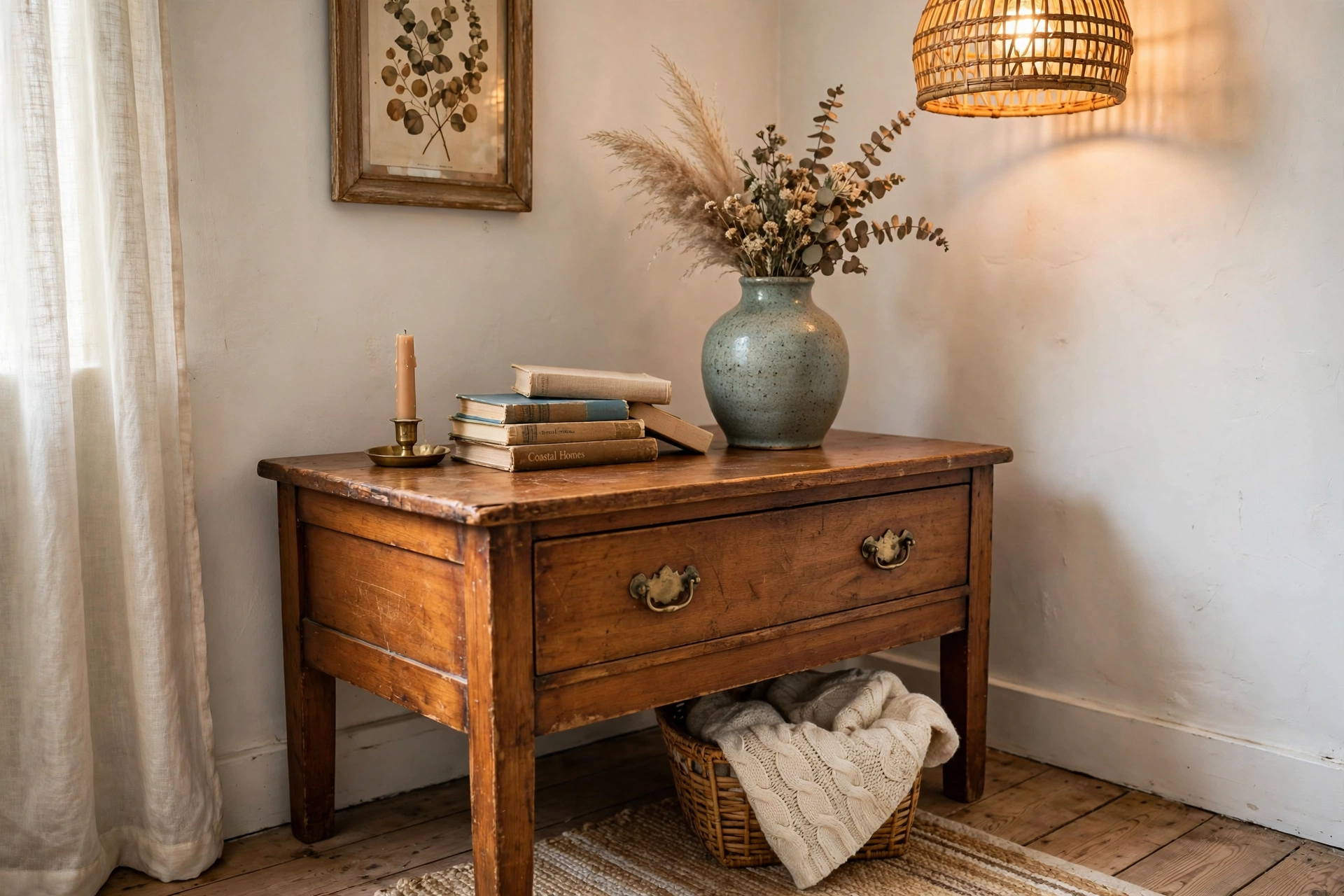
Minimalism is about quality over quantity, and secondhand shopping is how you get quality on a budget. Solid wood furniture, ceramic vases, woven baskets, and real linen show up in thrift stores and online marketplaces for a fraction of new prices — and older pieces are often better made than cheap new ones.
Check before you buy: solid joints, smooth drawers, no wobble, and no smell that will not air out. A wooden table with a scratched top is a bargain if you plan to sand and repaint it in a neutral tone. That patience is part of minimalist home decor on a budget — the room gets better slowly, without a big bill. Skip anything broken beyond a simple fix, and skip matching sets — a room built piece by piece over time looks more intentional than a showroom set bought in one afternoon.
4. Swap Textiles, Not Furniture
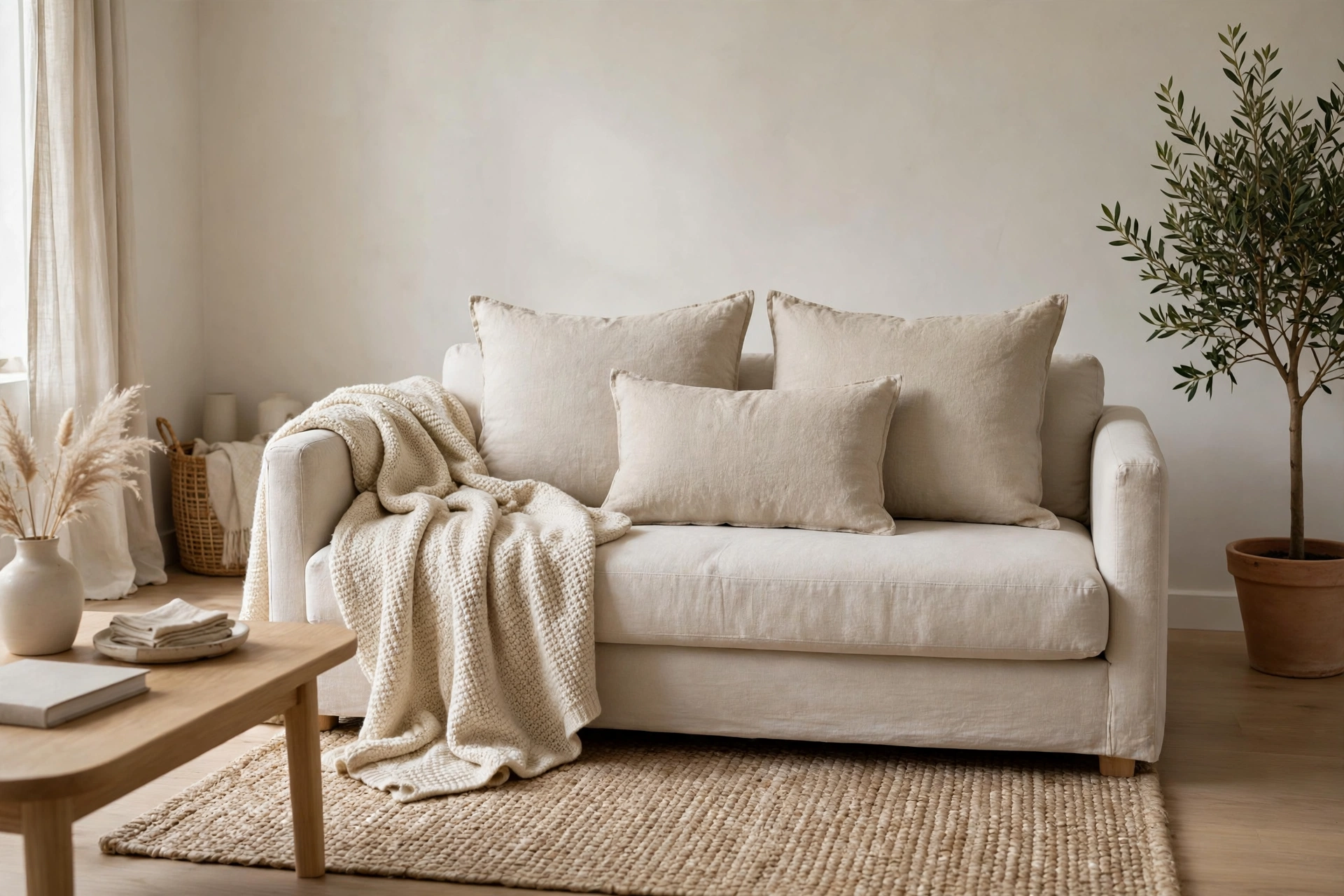
If your furniture is fine but the room feels tired, change the textiles — it is the cheapest transformation in the house. New cushion covers, a wool or bouclé throw, linen curtains, and a woven rug can change a room’s whole mood for far less than one new sofa.
Natural textures do most of the work here: linen, cotton, wool, and wood add warmth and visual interest without adding clutter. A linen throw over the sofa, a wooden tray on the coffee table, and a woven basket for blankets make a neutral room feel rich and lived-in rather than bare. Buy textiles in your room’s existing palette so every swap works with what you already own, and keep throw pillows to three or fewer per sofa. Those small swaps are the heart of minimalist home decor on a budget: maximum change, minimum spending.
5. Build Simple Storage Yourself
Good storage keeps minimalism affordable, because closed storage hides clutter that would otherwise tempt you to buy organizers you do not need. Two of the best budget moves are also the simplest: DIY floating shelves from reclaimed wood, and wall hooks for bags, hats, and keys.
Floating shelves cost little, use wall space instead of floor space, and display just a few intentional objects — books you actually read, one plant, one bowl. In the kitchen, open shelving with everyday dishes within reach keeps counters clear without new cabinets. In the bathroom, a single tray for products and matching towels does the same job as a remodel at a tiny fraction of the cost; our Bathroom Organization for Beginners guide has the full bathroom version of this idea. Simple, handmade storage like this is a quiet win for minimalist home decor on a budget, because it solves clutter without new furniture.
6. Shop Your Own Home First
Before spending anything, rearrange what you already own. Move the armchair to the window, swap art between rooms, move the plant from the crowded corner to the empty one, and take everything off one surface and add back only the three most meaningful items. You will be surprised how different a room feels when its pieces get new positions.
This is also the moment to use pieces you forgot about: the inherited wooden table, the ceramic bowl in a cupboard, the throw folded in a closet. Minimalist rooms feel personal when they are built from things with a story, not from a single shopping trip. If your rooms are small, our Small Space Organization for Beginners guide pairs well here, because rearranging matters even more when every inch counts.
7. Spend Only Where It Shows — In This Order
When you do spend, spend in priority order, not all at once. The order that gives the most visible return is: first, lighting (one good floor or table lamp with warm bulbs changes evenings completely); second, a rug that anchors the seating area; third, one piece of art or one large plant as the room’s focal point. Everything else can wait.
Set a simple rule for future purchases: one in, one out, and a short waiting list. If you still want an item after two weeks, it is probably worth it; most impulse decor is forgotten in two days. Fewer, better purchases is the whole philosophy — and it is also how a budget minimalist home stays minimalist. Our Minimalist Home Decor Essentials guide covers the full essentials list if you want to check what your rooms already have before buying anything new.
What Not to Spend On
- Matching furniture sets bought in one go — they look generic and cost more than collected pieces.
- Trendy decor that dates fast. Neutrals and natural materials do not.
- Cheap “filler” objects bought just to fill a shelf. An empty shelf is better than a cluttered one.
- Organizers and bins bought before decluttering. Remove first, then buy only what the remaining items need.
- A whole-house makeover at once. One finished room beats five half-finished ones.
A Simple Budget Plan by Room
Start with the living room, since it is the room you and your guests see most. Do the free steps first (declutter, rearrange, clear surfaces), then paint if the walls need it, then one textile swap, then one focal point. Move to the bedroom next with the same order: clear nightstands, neutral bedding, one lamp with warm light. The kitchen follows with clear counters and open shelving for daily dishes, and the bathroom last with matching towels and a single tray.
Work in this order and the home changes steadily without a big bill at any point. That is the real secret of minimalist home decor on a budget: it is not a style you buy, it is a sequence you follow — remove, simplify, and add back only what earns its place.