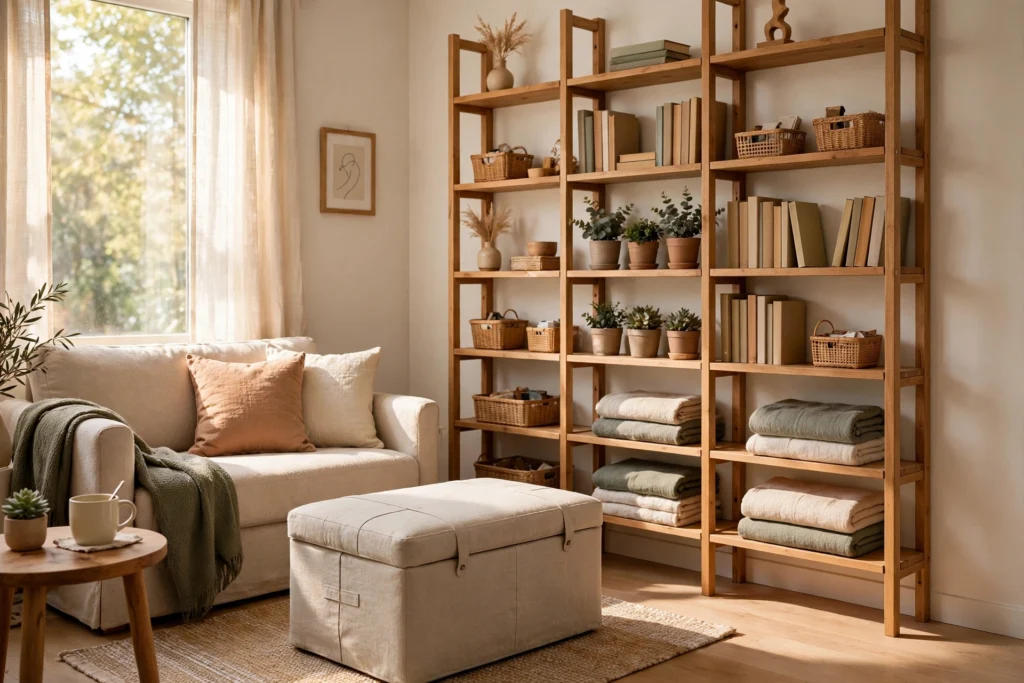
A small home does not feel cramped only because it is small. It feels cramped because too many things have no clear place, surfaces collect clutter, and every drawer is a mystery. The good news is that you do not need a bigger home, a full weekend, or expensive storage systems to fix that. This guide to small space organization for beginners gives you seven practical ideas that work in rented rooms, studios, and small apartments alike. Start with one idea, not all seven, and build from there.
1. Declutter Before You Buy Anything
The most common mistake in small homes is buying bins, baskets, and organizers before removing anything. Storage does not create space; it only hides the excess. Declutter first, then buy only what the remaining items actually need.
Three simple rules make decluttering less overwhelming:
- The 90/90 rule: If you have not used something in the last 90 days and will not use it in the next 90 days, let it go.
- One in, one out: For every new item that enters your home, one old item leaves. This keeps clutter from quietly growing back.
- The maybe box: If you cannot decide about an item, put it in a sealed box with a date six months away. If you never open the box, donate it without looking inside.
Work in one small area at a time — a single drawer, one shelf, or the top of a dresser — and finish it before moving on. A finished drawer beats a half-organized room.

2. Give Every Category a Home, Not Every Room a Pile
The first rule of small space organization for beginners is simple: every category of item needs one home. When clothes live in three places, chargers in five, and papers everywhere, no amount of tidying lasts.
Group items by how you use them, not just by room. Think in zones: an entry zone for keys, shoes, and bags; a cooking zone for everyday tools and ingredients; a work zone for your laptop, notebooks, and chargers; and a relaxation zone for books, blankets, and entertainment. When related items live together, you stop wasting time searching, and putting things back becomes automatic.
3. Go Vertical: Walls, Doors, and High Shelves
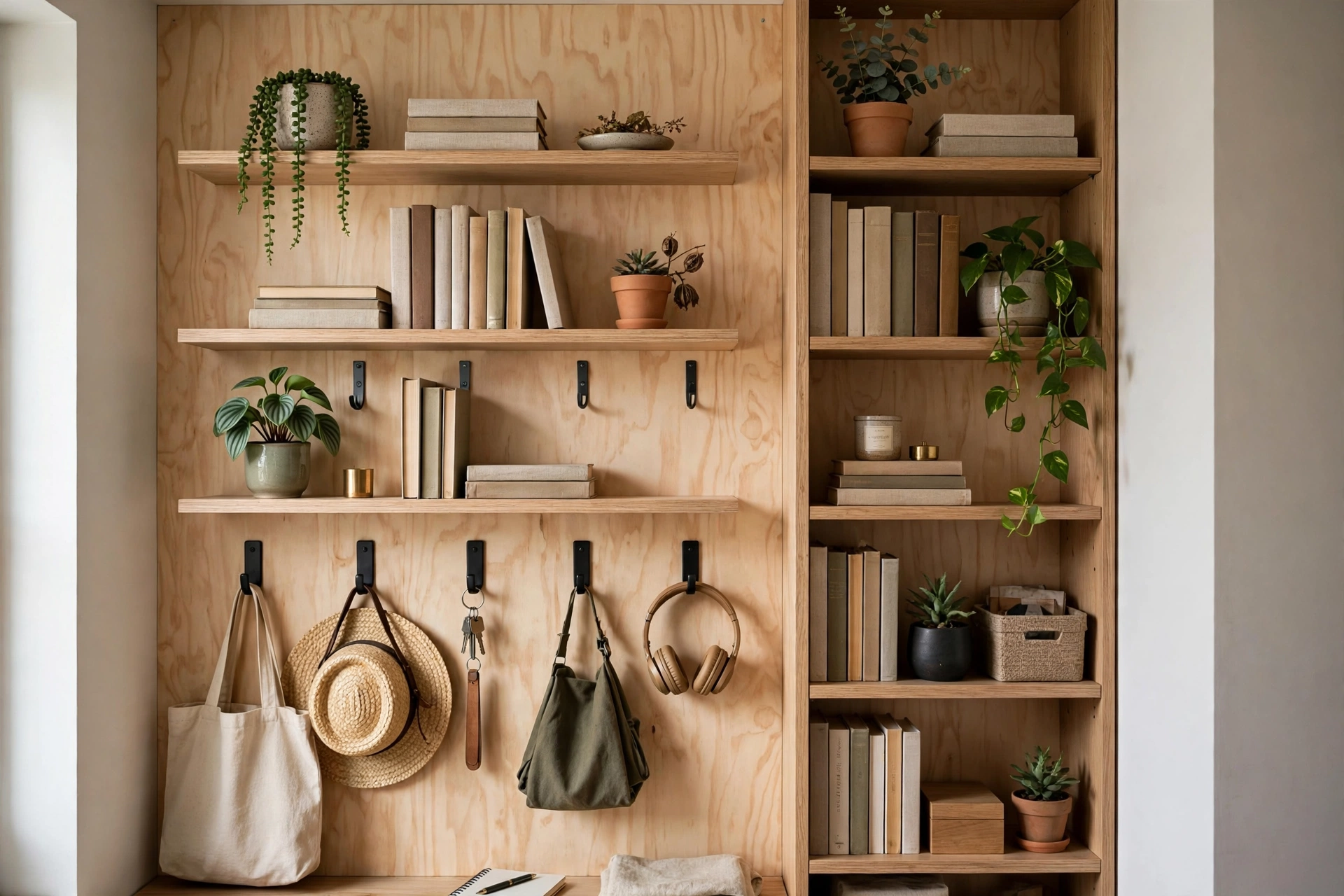
Floor space is limited in a small home, but wall space usually is not. In small space organization for beginners, walls are your best friend. Floating shelves, wall-mounted hooks, and tall shelving units draw the eye upward and free the floor, which instantly makes a room feel larger.
Use the backs of doors for hanging organizers for shoes, accessories, or cleaning supplies. Put rarely used items — seasonal clothes, spare bedding, luggage — on high shelves or above cabinets. Keep everyday items between knee and eye level so you never need a chair to reach your daily essentials.
4. Choose Furniture That Does Two Jobs
In a small home, every large piece of furniture should earn its floor space twice. A storage ottoman holds blankets and works as a seat. A bed with built-in drawers replaces a whole dresser. A folding or extendable table serves as a desk by day and a dining table when guests come.
Before buying a single-purpose item, ask one question: does it store something, fold away, or serve two uses? If the answer is no, it probably does not deserve space in a small home. Modular pieces — rolling carts, stackable cubes, adjustable shelving — are especially useful because they can shift from one role to another as your life changes.
5. Use Hidden and Underused Spaces
Small homes hide storage in places people forget to look. Under-bed containers on wheels hold off-season clothes or spare linens. The space above kitchen cabinets fits items you use only a few times a year. Narrow gaps beside the fridge or washing machine can hold a slim rolling cart.
Label simply — “winter clothes,” “spare bedding,” “cleaning” — so you can find things without opening every box. Clear bins help for pantry and linen storage, but for bedrooms and living areas, closed containers look calmer and reduce visual noise.
6. Keep Surfaces Clear With a Landing Spot
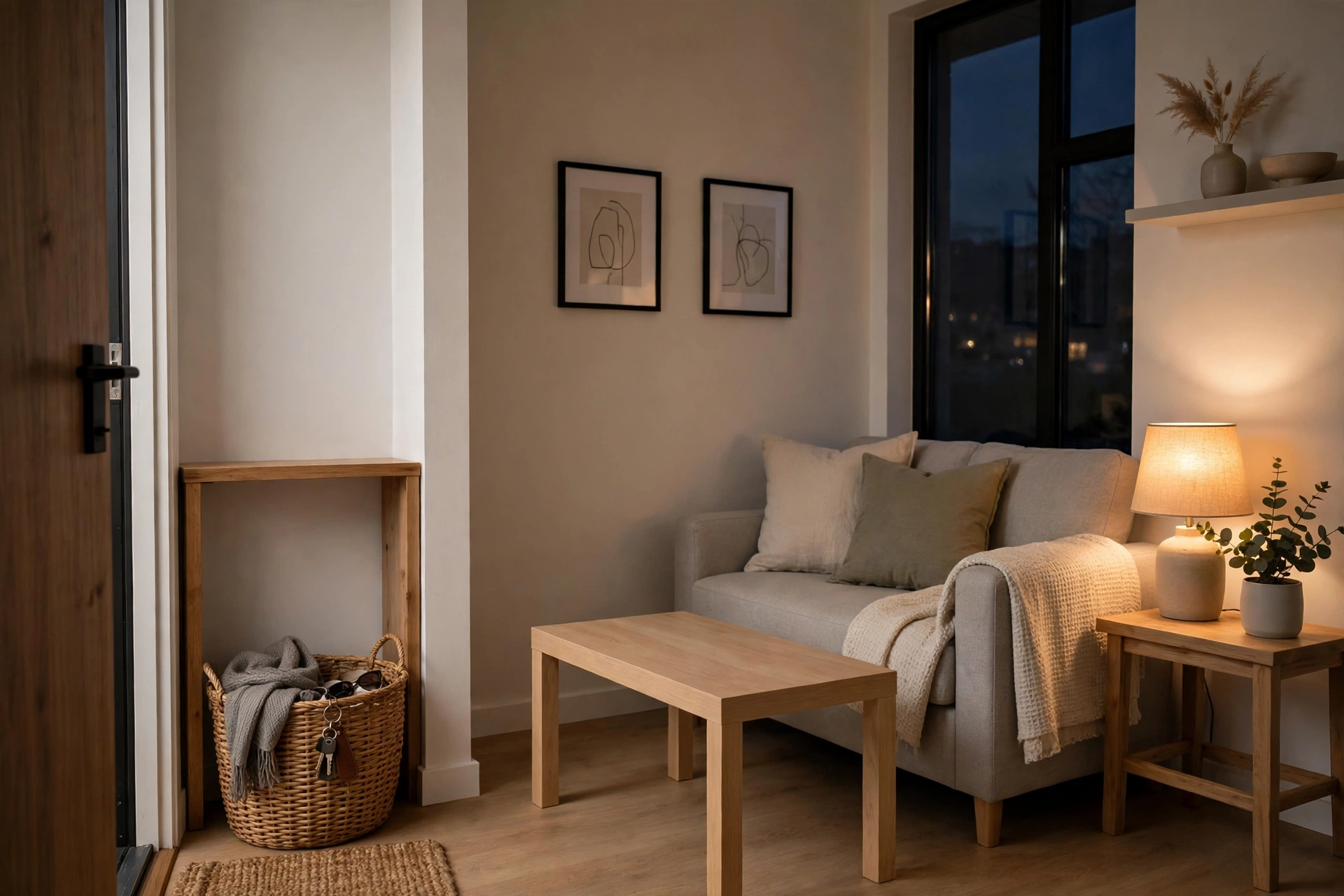
Clutter is what makes a home feel dirty even when it is technically clean. The fix is a landing spot: one basket or tray near the entrance where mail, keys, chargers, and loose items go during the day. Each evening, everything in the basket goes to its real home in one short trip.
Apply the same idea to other surfaces. Limit each table or counter to one decorative anchor piece and clear the rest. When a surface is mostly empty, one stray item is obvious and easy to deal with; when it is already covered, one more item disappears into the mess.
7. Build a 10-Minute Daily Reset
No organization system survives without a maintenance habit. The habit that makes small space organization for beginners stick is the 10-minute daily reset: every evening, spend ten minutes returning items to their homes, wiping the kitchen counters, and clearing the living area. It is faster than it sounds, and it prevents small messes from becoming weekend projects.
Rotate one deeper task through the week so nothing piles up: floors one day, bathroom the next, dusting after that, laundry, then the fridge. Each task takes 15 to 20 minutes on its own, but together they mean the home never needs a full-day rescue.
Mistakes to Avoid
- Buying storage before decluttering.
- Keeping things you never use “just in case.”
- Organizing for looks instead of function.
- Filling every empty space — an empty shelf is not wasted space, it is breathing room.
- Trying to organize the whole home in one day. Start small, finish one zone, and repeat.
A Simple Way to Start This Weekend
Pick one drawer or one shelf. Take everything out, wipe it clean, sort items into keep, donate, and discard, and put back only what belongs there by how often you use it. That is the whole system in miniature: remove, sort, assign a home, and maintain it with a short daily reset.
If you remember one thing from this small space organization for beginners guide, let it be this: you do not need a bigger home to feel more organized. You need fewer things competing for space, a clear home for each category, and a routine you can actually keep. Small space organization for beginners is not about owning less for its own sake — it is about making the space you have work for your real everyday life.
Related reading: Home Organization for Beginners, Bathroom Organization for Beginners, Morning Routine, Home Workout Routine for Beginners, GuideVora small spaces guide, Xela Andrews declutter guide.