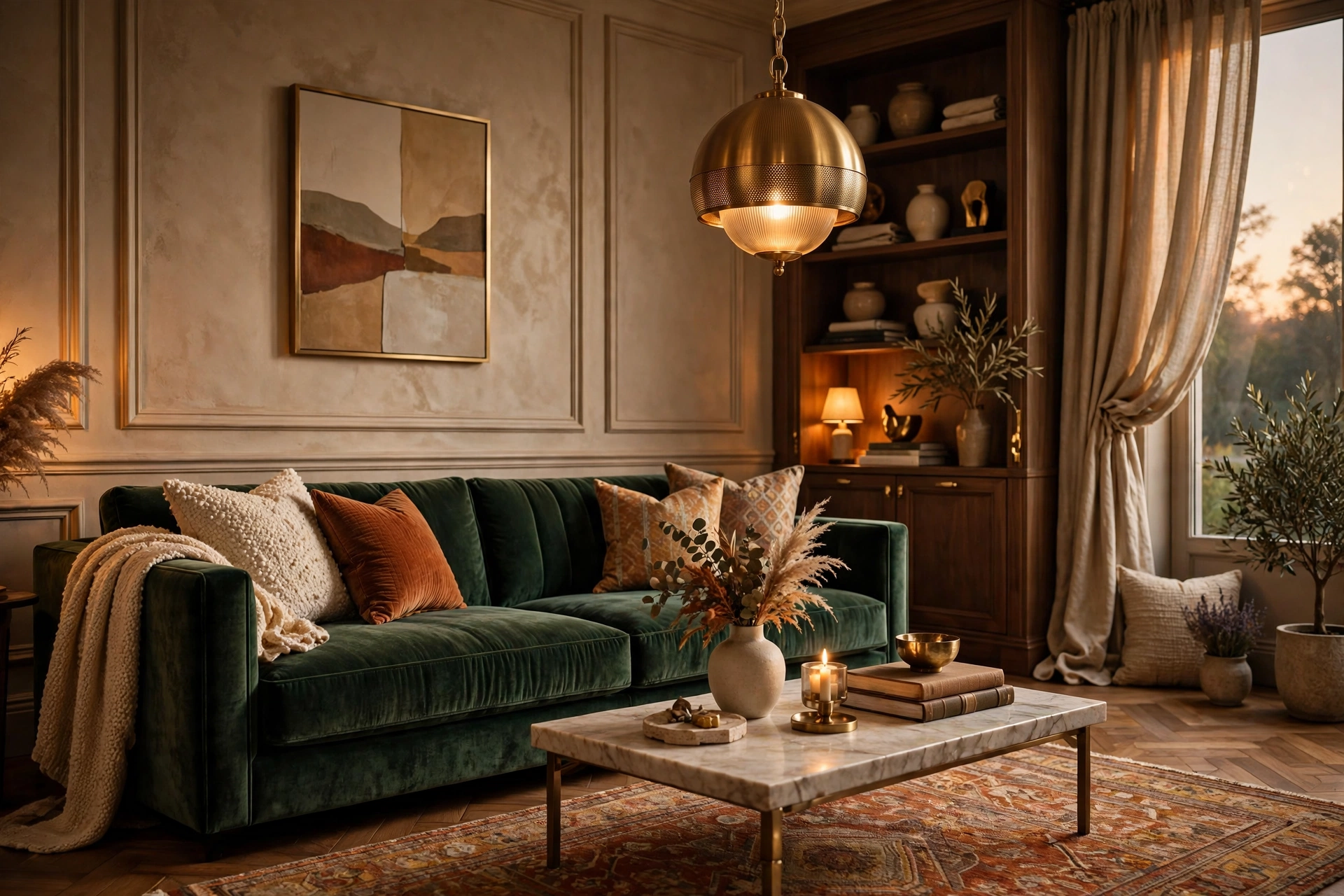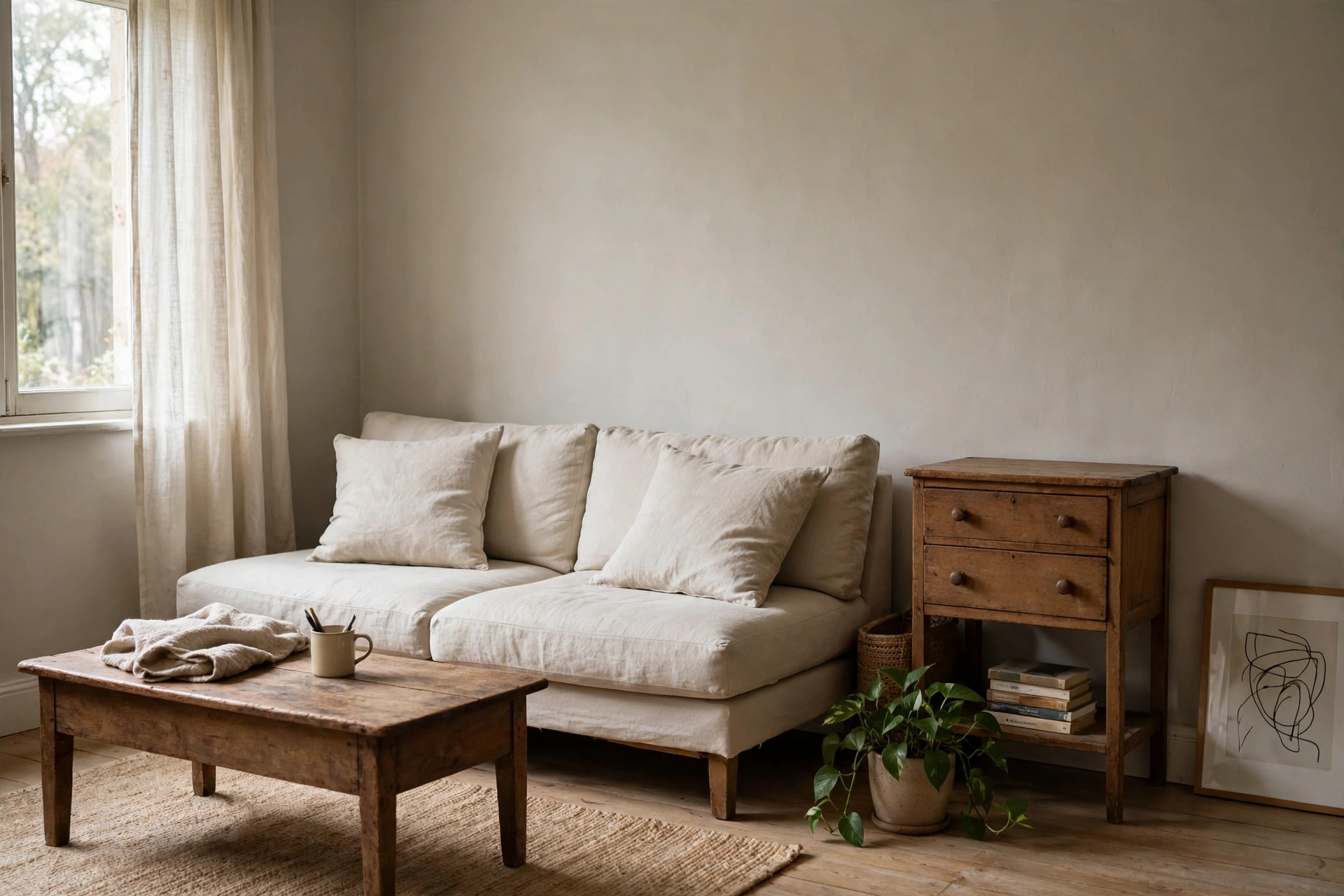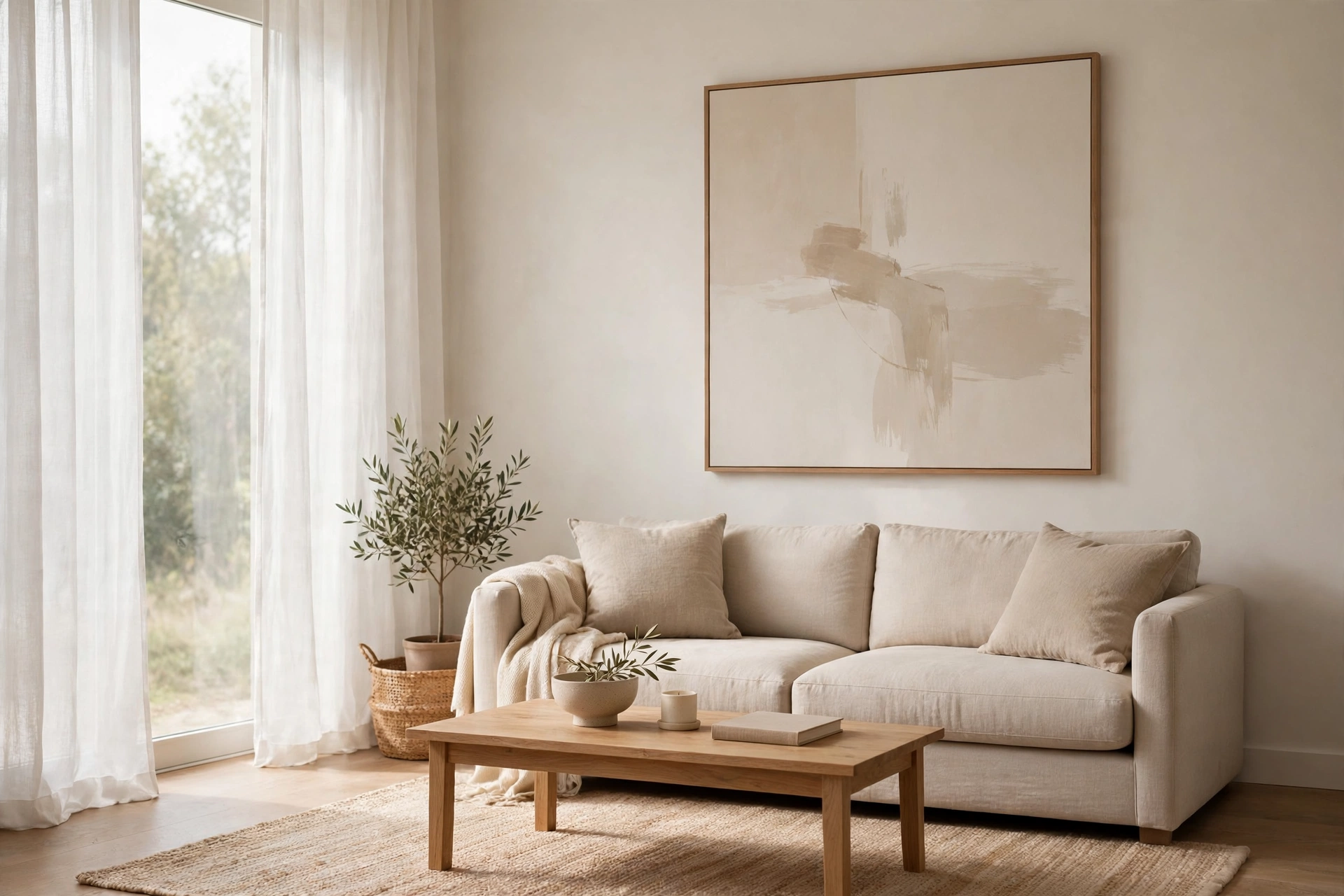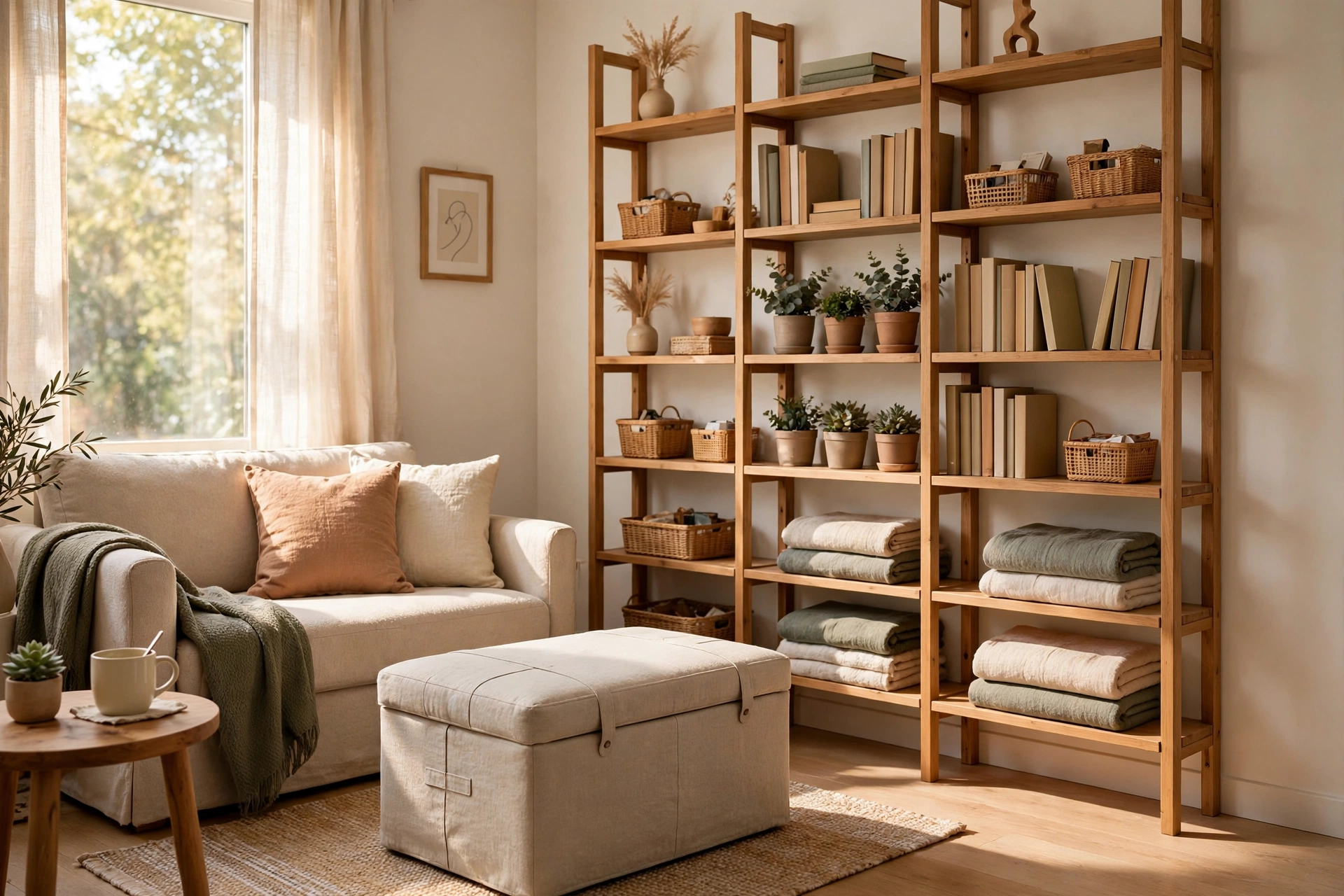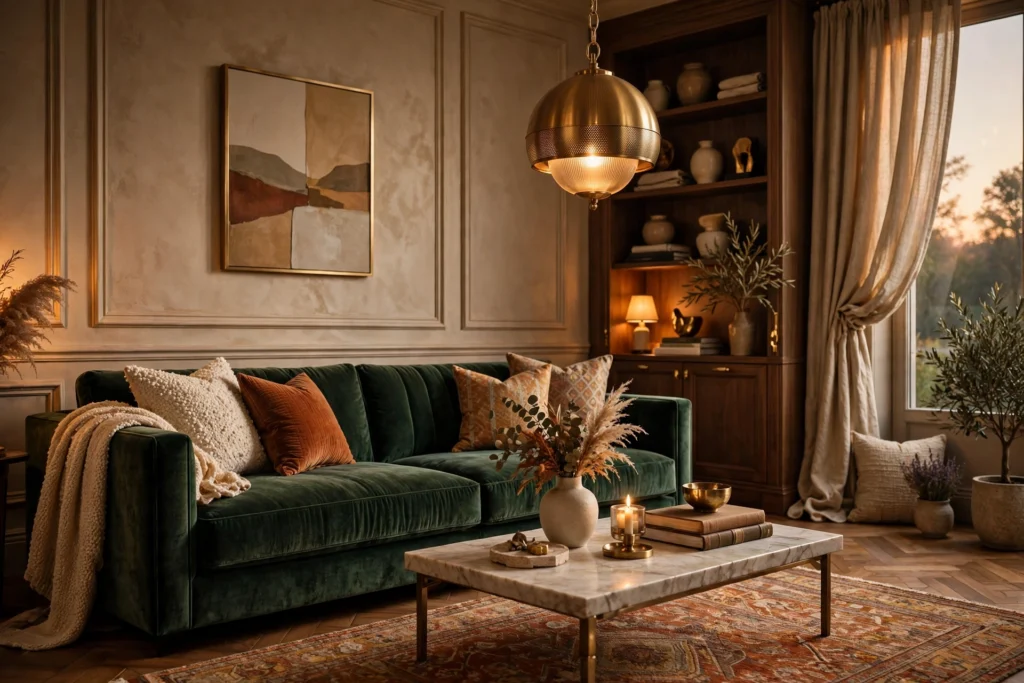
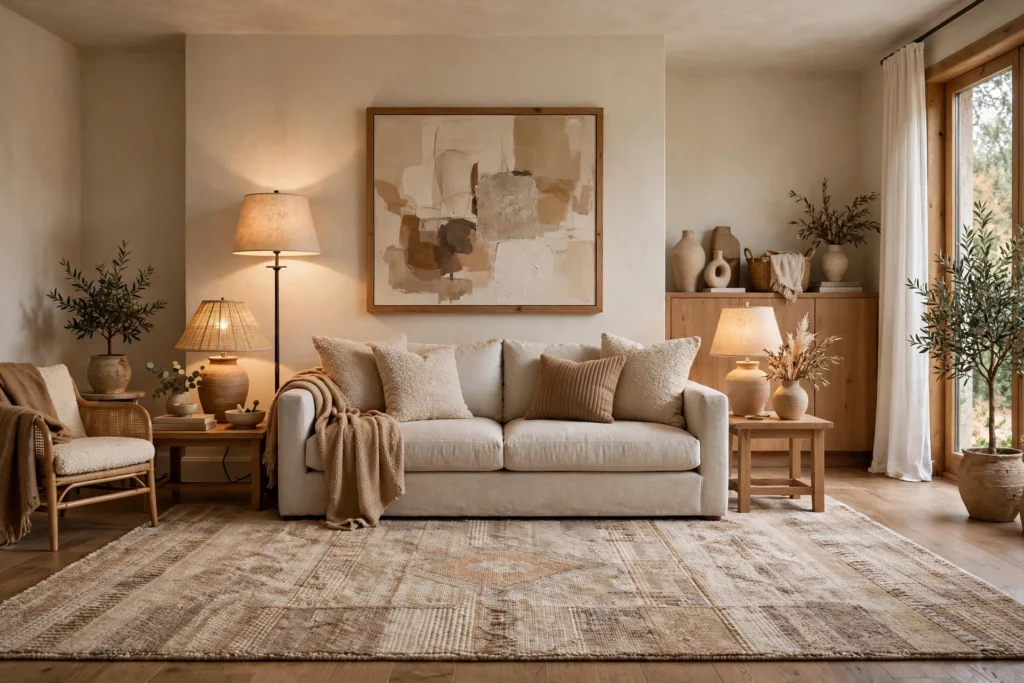
Picture a living room where every piece is nice. The sofa was a good buy, the lamp was on sale, the art is something you actually like. And yet the room feels unfinished, like a waiting room with better furniture.
That is the most common decorating problem, and it is rarely about taste or money. It comes from decisions made in the wrong order, or skipped entirely: lighting nobody planned, a rug two sizes too small, art hung a foot too high, a palette that grew by accident.
This guide covers the home decor and design ideas that fix those problems. We start with planning, then move through color, lighting, layout, style, walls, greenery, room-by-room ideas, budget upgrades, seasonal refreshes and a simple weekend plan you can follow. Nothing here requires a designer or a big spend. Most changes can be done in a weekend, and many in an hour.
Plan the Room Before You Shop
Professional designers spend more time deciding than buying. A single hour of planning will save you from the returns pile and the why did I buy this corner of the closet.
Write a one-sentence brief
Living room is not a brief. This is: We watch TV most nights, the kids do homework here on weekends, and we host six people a couple of times a year. Now the needs are clear: comfortable seating, a surface for laptops, flexible extra seats, and storage that hides clutter quickly.
Write yours down and keep it on your phone. When you are standing in a store tempted by a gorgeous but impractical chair, the brief settles the argument. That one sentence is the starting point of all good home decor and design ideas, because it turns vague taste into clear needs.
Choose a mood instead of a style
Labels like modern farmhouse or Scandinavian can push you into buying things you do not love just to stay on theme. Pick two or three feeling words instead: calm and airy, warm and layered, crisp and bright. Then test every purchase against them. If a throw pillow is loud and your mood is calm, it goes back. Testing purchases against feeling words is one of the simplest home decor and design ideas, and it prevents impulse buys.
Edit first, then add
Remove everything that does not earn its place and live with the emptier room for a day. You will often find that three or four well-chosen additions finish the room, not twenty. This is also the cheapest form of budget home decor, because it costs nothing. Editing first is also the cheapest of all home decor and design ideas, because it costs nothing and often finishes the room on its own.
Measure everything
Measure the room, the doorways, and the stairs the furniture has to pass through. Then sketch a rough floor plan on paper or use a free room-planner app. Tape the outline of a sofa or table on the floor with painter’s tape and walk around it for a day. It is a low-tech way to catch scale problems before they cost you money. Measuring first is one of the most practical home decor and design ideas, since scale mistakes are the most expensive ones to fix.
Color and Texture
Color changes how big a room feels, how bright it looks, and how you feel in it. It is also one of the easiest things to change.
How do you choose a color palette for a room?
Use the 60-30-10 rule: about 60% of the room in a dominant color (walls, large furniture), 30% in a secondary color (curtains, chairs, rug), and 10% in an accent (pillows, art, a vase). It works because the eye gets a calm base, a supporting layer, and a few points of interest.
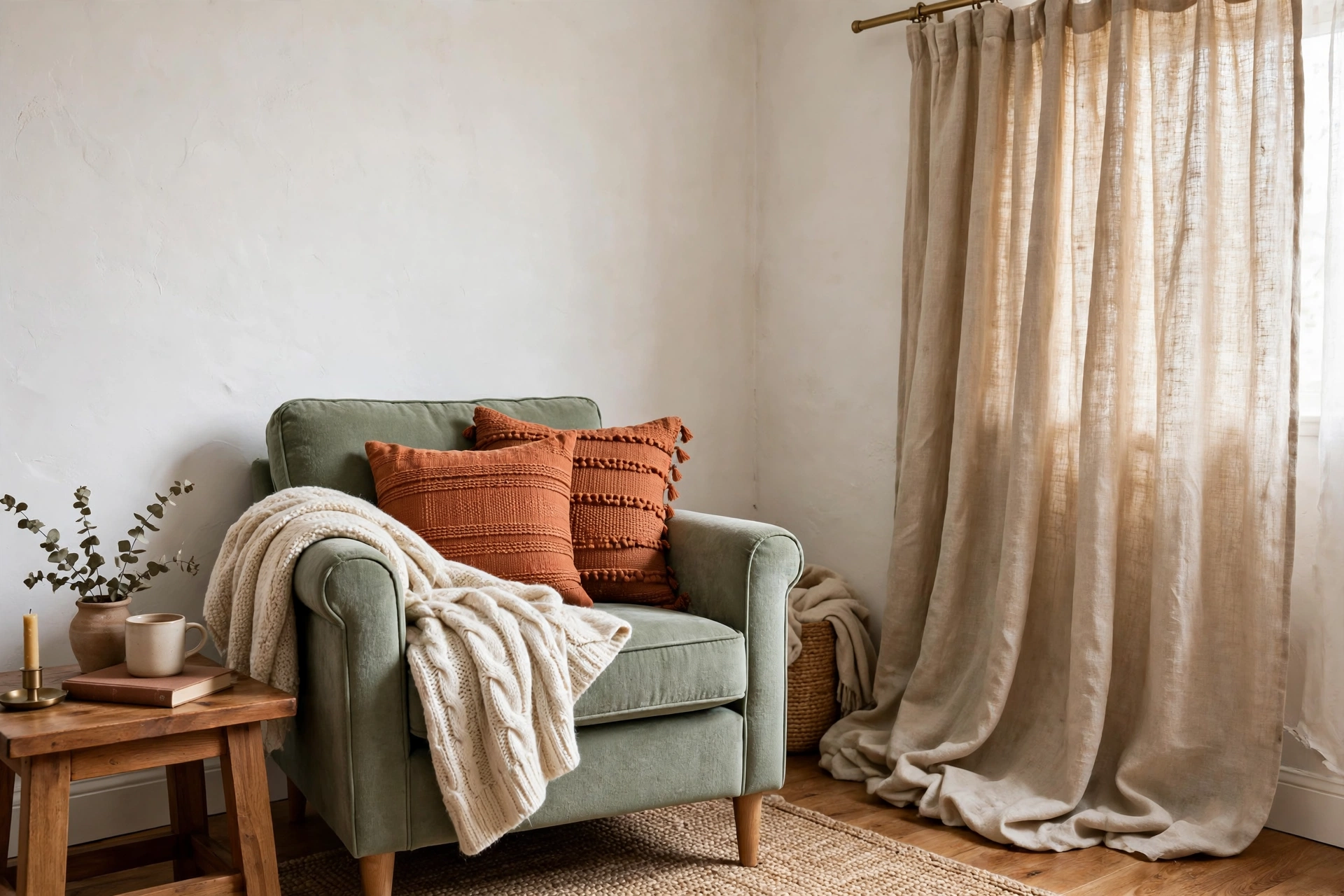
Example: warm white walls and a light oak floor make up the 60. A sage-green armchair and curtains are the 30. Rust-colored pillows and a brass lamp are the 10. Everything else, such as books, frames and plants, can pull from those three families without further thought. This ratio is a classic among home decor and design ideas because it gives the eye a calm base and a few points of interest.
Three tips that save mistakes:
- Test paint on the wall, not on a card. Paint a large sample, about two feet square, and watch it in morning light, afternoon light and under lamps at night. A north-facing room can turn the same gray cold and blue.
- Do not fear dark colors. Deep green, navy or charcoal can make a small bedroom feel cozy and wrapped rather than cramped. Dark colors work best when you commit, including trim and ceiling, rather than painting one dark wall.
- Match undertones. If your floor leans yellow, a cool blue-gray wall will clash. Hold sample swatches next to your biggest fixed element, usually the floor or countertop.
What colors make a room look bigger?
Light, warm neutrals and soft tones reflect more light, which makes walls feel farther away. Painting the walls, trim and ceiling in closely related shades also blurs edges, so the room reads as one calm space. Glossy finishes on small pieces, like a mirror frame or lamp base, add sparkle without overwhelming the room.
Add texture so neutrals do not go flat
An all-neutral room looks dull only when everything is smooth. Combine at least three textures: something soft (wool throw, linen curtains), something natural (wood, rattan, stone) and something with a slight shine (glazed ceramic, glass, metal). That combination is what makes a simple room look expensive.
A quick test: squint at the room. If you cannot tell where one object ends and another begins, you need more contrast in texture or tone. Texture is what separates flat rooms from finished ones, which is why it appears in nearly every list of home decor and design ideas.
Lighting
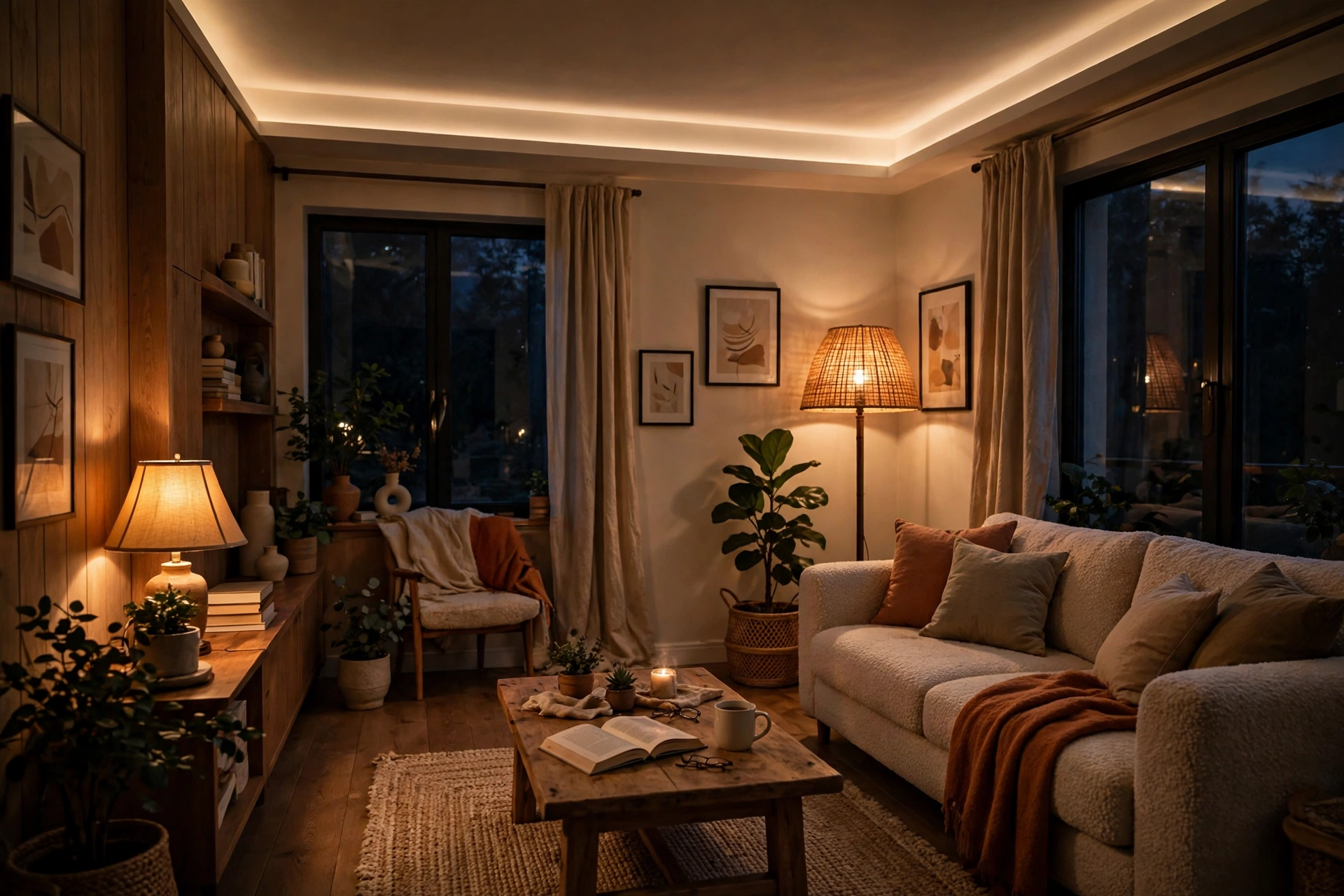
A single ceiling light makes every room look flat. Lighting is the upgrade people skip most often and the one that changes the most. Of all home decor and design ideas, lighting is the one people skip most and notice most once it is fixed.
What are the three layers of lighting?
Interior designers combine three types of light:
- Ambient: the general glow from ceiling fixtures
- Task: focused light for reading, cooking or working, such as a desk lamp or under-cabinet strip
- Accent: decorative light that adds depth, like a small lamp on a shelf or a picture light
Aim for at least three light sources in each room, at different heights. A floor lamp and a table lamp will do more for a living room than a new sofa. In the evening, switch off the overhead light and use only lamps. Most rooms instantly feel warmer and more relaxed. Three sources at different heights are the backbone of good home decor and design ideas for any room.
What bulb color is best for home?
For living rooms, bedrooms and dining areas, choose warm white bulbs around 2700K. For kitchens, bathrooms and home offices, 3000K to 3500K is easier to work under. Keep bulbs in the same room at a similar temperature, because mismatched bulbs make a space feel patchy. Add dimmers where you can; they let one room work for dinner, homework and a quiet evening.
Do not forget natural light
Light from windows is free and powerful. Keep window areas clear of bulky furniture, wash glass regularly, and choose sheer or light-filtering curtains for rooms where privacy matters but brightness does too. Hang curtain rods close to the ceiling and wide enough that the fabric clears the glass when open, so windows look larger and let in more light. Natural light is free, which makes it the easiest of all home decor and design ideas to use well.
Layout and Scale
When a room feels off and you cannot explain why, the cause is usually layout or scale, not decor.
Furniture placement rules that work:
| Guideline | Value |
|---|---|
| Main walkways | 30 to 36 inches wide |
| Coffee table to sofa | 14 to 18 inches |
| Rug size (living room) | At least the front legs of all seating on the rug |
| Art height | Center about 57 inches from the floor |
| Art above furniture | 6 to 8 inches above the sofa or console |
| Dining pendant | 30 to 36 inches above the table |
| Curtain rod | Close to the ceiling, extending 8 to 12 inches past the window frame |
Beyond the numbers, a few habits help. Pull furniture a few inches off the walls, since floating pieces look deliberate. Choose a rug large enough to connect the seating area, because a small rug makes the whole room look smaller. And choose art with some size to it. One large piece usually beats a cluster of tiny frames. These measurements are the quiet rules behind most home decor and design ideas, and they explain why a room feels off when they are ignored.
Create zones in open spaces
In an open-plan home, define each area with a rug, a change in lighting, or the back of a sofa. A reading corner with a chair, a lamp and a small table gives the eye a destination. Without zones, big rooms feel like furniture drifting in a warehouse. Zoning is one of the most useful home decor and design ideas for open-plan homes, where rooms need definition without walls.
Group objects instead of scattering them
Odd-numbered groups look natural. On a shelf or tray, combine something tall, something round and something low. Leave empty space around the group. Negative space is not wasted space; it is what lets the objects be noticed.
Finding Your Style Without Being Boxed In
You do not have to pick one style and stick to it forever. Most homes that feel personal combine a few.
Common styles and what they actually mean
- Modern: clean lines, minimal ornament, simple color schemes
- Scandinavian: light woods, white walls, soft textiles, a focus on function and coziness
- Mid-century: tapered legs, warm woods, geometric shapes
- Traditional: classic shapes, symmetry, rich fabrics and patterns
- Boho: layered textiles, plants, handmade pieces and mixed patterns
- Industrial: metal, raw wood, exposed materials, darker tones
How to mix styles without chaos
Pick one style as the anchor, roughly 70% of the room, and let the rest be supporting influences. Keep one thread constant across everything: a wood tone, a metal finish, or a color. A modern sofa, a vintage wooden side table and a woven basket can sit together comfortably if their tones and proportions relate.
If you are not sure what you like, look at the last twenty images you saved. Notice the repeating colors, materials and shapes. That is your style, whatever name it has. Keeping one thread constant is one of the most reliable home decor and design ideas for mixing styles without chaos.
Wall Decor Ideas That Add Personality
Bare walls are one of the biggest reasons rooms feel unfinished. Walls are also the largest surface in most rooms, so they deserve attention.
Gallery walls that do not look messy
Lay your frames on the floor first and arrange them until the spacing feels even. Keep gaps of about two to three inches between frames, use one or two frame colors, and mix photos, prints and small objects. Start from the center and build outward. Trace each frame on paper, tape the paper to the wall, and adjust before you make a single hole. A planned gallery wall is one of the most personal home decor and design ideas, because it turns bare walls into a story.
Mirrors, shelves and textiles
A large mirror adds light and depth. Floating shelves display books and small objects without taking floor space. Woven wall hangings or framed fabric add softness and absorb sound, which helps in echoing rooms. Even a coat of paint in a bold color behind a bed or sofa gives the room a focal point.
Do not ignore the space above doors and windows
A slim shelf or a row of small frames above a door fills awkward empty wall and draws the eye up, making ceilings feel taller.
Bring in Plants and Natural Elements
Greenery is one of the cheapest ways to make a room feel alive.
Easy plants for beginners
Pothos, snake plants, ZZ plants and spider plants tolerate low light and irregular watering. If you travel often or have a dark apartment, these are forgiving choices. Group plants in odd numbers and vary heights, with one large plant on the floor, a medium plant on a table, and a trailing plant on a shelf. Plants are among the cheapest home decor and design ideas, and they make a room feel alive in a way objects cannot.
Good faux plants, if real ones are not practical
Choose faux plants with matte leaves and varied sizes, and place them in real pots with a little soil or stones on top. Dust them occasionally. Avoid glossy, perfectly uniform leaves, which look obviously fake.
Other natural touches
Wood bowls, stone coasters, woven baskets, dried branches and linen fabrics bring in organic texture. They also tend to age well and do not date as quickly as trend-driven pieces.
Room-by-Room Home Decor Ideas
Living room decor ideas
Plan the seating around how you actually use the room, then add a large rug and layered lighting. Use one or two oversized artworks instead of a busy gallery wall unless you have planned it carefully. Keep at least one surface completely clear so there is always a place to put a cup down. If the TV dominates the room, consider painting the wall behind it a deep color so the black screen blends in rather than stands out. Seating, rug and light are the three decisions that anchor most living room home decor and design ideas.
Bedroom decor ideas
The bedroom should be the quietest room in the house. Use lower-contrast colors, layer bedding in two or three tones, and place bedside lamps at roughly eye level when you are sitting up in bed. Lined or blackout curtains improve sleep more than any accessory. Keep the view from the pillow tidy, since it is the last thing you see at night and the first in the morning.
Kitchen and dining ideas
A kitchen can feel new without a renovation. Change the cabinet hardware, replace a builder-grade light fixture, add a runner rug, and style open shelves with a few everyday dishes rather than every plate you own. Keep countertops mostly clear, with only the items you use daily and one or two decorative pieces like a cutting board or a bowl of fruit. Over a dining table, a single statement pendant gives drama without eating floor space.
Bathroom ideas
New towels in a consistent color, a good mirror, a small plant and a tray for soaps change a bathroom more than expected. Replace dated light fixtures and swap a plastic shower curtain for fabric. If you rent, peel-and-stick floor tiles and a new showerhead are removable upgrades.
Entryway ideas
The entryway takes the most daily abuse, so choose function first: a slim bench, sturdy hooks, a mirror and a washable rug. A small tray for keys will end the daily hunt. Add a small lamp or wall light, because a warm entry feels welcoming from the moment someone opens the door.
Home office ideas
Place the desk where you get natural light but avoid glare on your screen. Add a task lamp, a comfortable chair, and storage that closes so work clutter disappears at the end of the day. If your office shares a room, use a rug or a bookcase to separate it visually from the rest of the space.
Small space design ideas
In small rooms, choose furniture with visible legs so the floor continues underneath. Place a mirror opposite a window to bounce light, stay within one color family so the eye does not stop at every edge, and hang curtains close to the ceiling to add height. Pieces with a second job, like storage ottomans and drop-leaf tables, earn their space. Keep decor to a few bigger items instead of many small ones, since small clutter makes a small room look smaller.
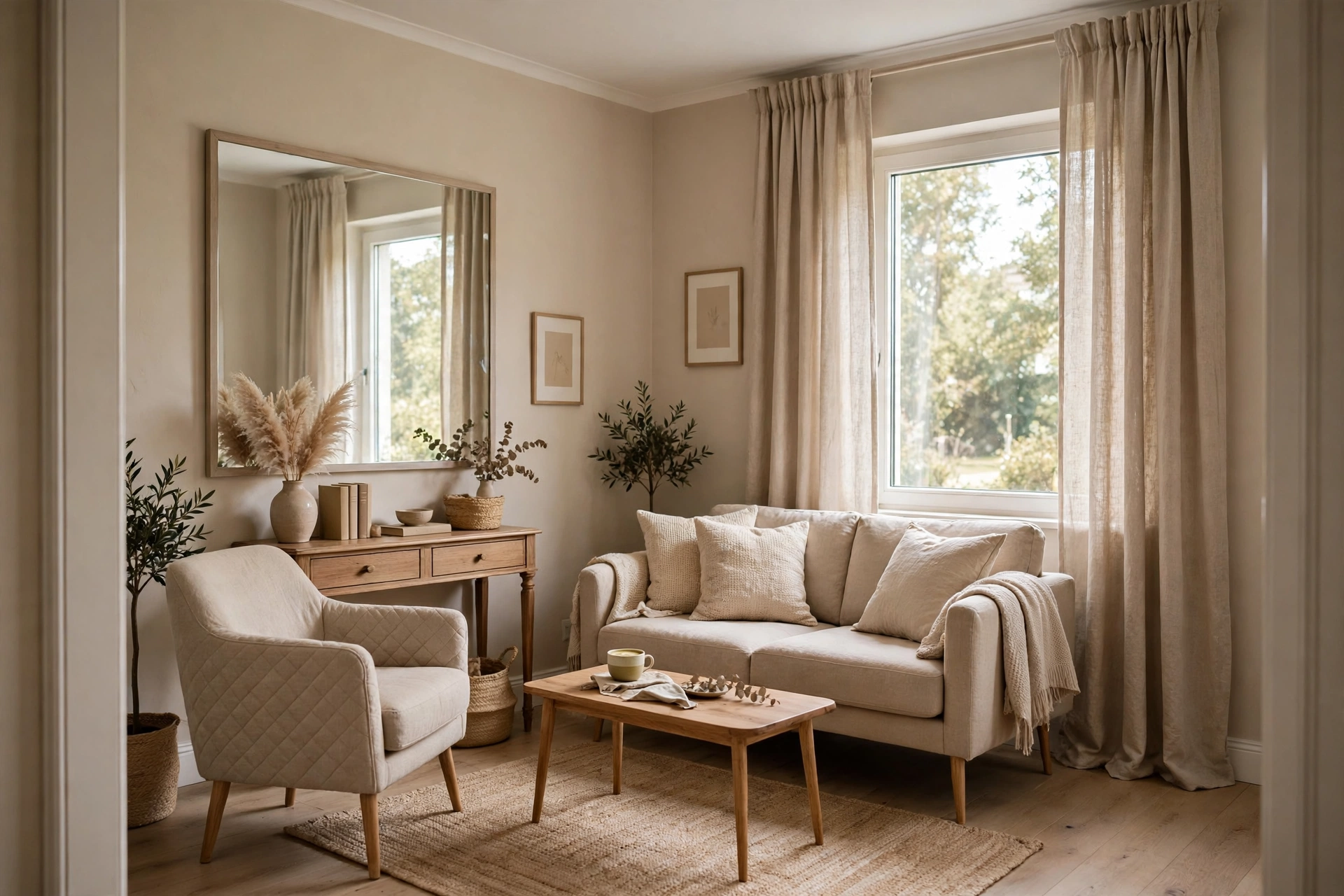
A Worked Example: Fixing a Tired Living Room in One Weekend
Here is how these ideas come together in a real situation. Imagine a 12 by 14 foot living room with beige walls, a gray sofa, a small rug, one ceiling light, and a bare wall above the sofa.
Saturday morning: Remove half the accessories and move the sofa about six inches off the wall. Replace the cool white bulbs with warm 2700K bulbs.
Saturday afternoon: Paint the walls a warm off-white or a soft sage. Swap the small rug for an 8 by 10 foot rug so the front legs of the sofa and chairs sit on it.
Sunday morning: Add two lamps, one floor and one table, so you have three light sources. Hang curtains high and wide.
Sunday afternoon: Hang one large piece of art above the sofa, centered 57 inches from the floor, with six to eight inches above the sofa back. Add a plant and two pillows in an accent color.
Total spend can stay modest if you use secondhand finds, and the room goes from nice things in a room to a designed space.
Budget Home Decor: Where to Spend and Where to Save
Good design is mostly about spending in the right places.
Spend on: what you touch and use daily, such as a sofa, mattress and curtains, plus lighting. These shape comfort and the overall look far more than accessories do.
Save on: side tables, frames, pillow covers, vases and most accessories. Secondhand shops, online marketplaces and estate sales often have solid wood furniture that needs only paint or new handles. Spending where you touch daily and saving on accessories is the core of smart home decor and design ideas on a budget.
Ten-minute to one-hour upgrades
- Swap cool or harsh bulbs for warm ones
- Replace lampshades that are dingy or too small
- Change cabinet and drawer pulls
- Frame prints, fabric scraps or pages from old books
- Add one plant per room, real or good-quality faux
- Paint a single wall, door or piece of furniture
- Rehang art at the right height
- Wash windows and steam or iron curtains
Renter-friendly ideas
If you cannot paint or drill, use large rugs, plug-in wall sconces, removable wallpaper, leaning mirrors and art, and curtains to change a room’s feel. Cover dated light fixtures with a new shade, or swap them out and keep the originals to reinstall when you move.
Mistakes that make a room look unfinished
- Buying a full matching set. It looks like a showroom and has no personality. Mix sources, materials and eras.
- Following trends in big pieces. Put trendy colors in pillows and art, and keep the sofa timeless.
- Hanging art too high. This is the most common error, and it disconnects art from furniture.
- Wrong scale. Tiny accessories vanish on big surfaces, and an oversized sofa swallows a small room.
- Too much clutter or too much emptiness. Rooms need breathing space, but also some warmth and personality.
- Leaving out personal items. Photos, travel finds and books you love are what make a house a home.
Refresh Your Home Through the Seasons
You do not need to redecorate four times a year. A few small swaps keep a home feeling current.
In spring and summer, switch to lighter bedding, linen curtains and fresh flowers, and open up windows. In autumn and winter, bring in heavier throws, wool rugs, darker candles and warmer lighting. Store seasonal items in labeled boxes so changing them takes ten minutes. Keep your permanent pieces neutral so these swaps feel easy and inexpensive. Seasonal swaps are the easiest home decor and design ideas to repeat, because the permanent pieces stay neutral.
A Simple 30-Day Plan to Finish Your Home
If the whole house feels overwhelming, work in short steps.
Week 1: Edit and declutter. Write a brief for each room.
Week 2: Fix lighting and layout. Replace bulbs, move furniture and add lamps.
Week 3: Add color and texture. Paint, rugs, curtains and bedding.
Week 4: Finish with walls, plants and personal touches.
One room at a time, with one finished before the next begins, beats ten half-done rooms. This one-room-at-a-time order is why these home decor and design ideas work even when the whole house feels overwhelming.
Conclusion
A finished-looking room comes from a handful of decisions made in the right order. Know how the room is used, keep the palette restrained, layer your lighting, get layout and scale right, and then add walls, plants and personal touches. That order is what ties all these home decor and design ideas together.
Do not try to do the whole house at once. Pick one room, make three changes from this guide, and live with them for a week. For your next step, read our guide to choosing paint colors for your light, or the small-space furniture layout guide. If the project is large, a short consultation with a designer can prevent expensive mistakes.