Core training for beginners is not about chasing a six-pack. It is about building the muscles that keep you steady — the deep abdominals, back, glutes, and hips that support every squat, walk, and lift you do. A strong core means better posture, better balance, and fewer everyday aches.
The good news: you need no equipment, no gym, and only 15 minutes, 2 to 3 days a week. Five simple moves, done slowly and with control, are enough to start.
This core training for beginners guide gives you the full routine — what each move does, how to do it right, and how to progress — plus the mistakes that hold most beginners back.
Note: this is general wellness information, not medical advice. If you have back pain, an injury, or a health condition, check with a qualified health professional before starting.
What Is Your Core, Really?
Your core is far more than your abs. It includes the deep abdominal muscles, the muscles along your spine, your glutes, your hip muscles, and your pelvic floor — everything that connects your upper and lower body. These muscles work together to keep your trunk steady while your arms and legs move.
That is why control matters more than burn. A slow dead bug that keeps your lower back flat trains your core better than 50 fast sit-ups with a swinging back. In core training, quality beats quantity every time.
Understanding that your core is a stabiliser, not just a show muscle, is the first lesson of core training for beginners, because it changes how you judge every exercise.

The 15-Minute Beginner Core Routine
Do this routine 2 to 3 days a week, on non-consecutive days. Complete 2 rounds, resting 30 to 60 seconds between exercises. Start with 1 round in your first week if 2 feels like too much.
- Dead bug — 6 to 8 reps per side. Lie on your back, arms straight up, knees bent at 90 degrees. Slowly lower one arm and the opposite leg toward the floor, keeping your lower back flat, then return. Switch sides.
- Bird dog — 6 to 8 reps per side. On hands and knees, extend one arm forward and the opposite leg back. Hold 2 to 3 seconds, keeping your hips level, then return. Switch sides.
- Glute bridge — 10 to 12 reps. Lie on your back, feet flat, knees bent. Press through your heels to lift your hips, squeeze your glutes at the top for 2 seconds, then lower slowly.
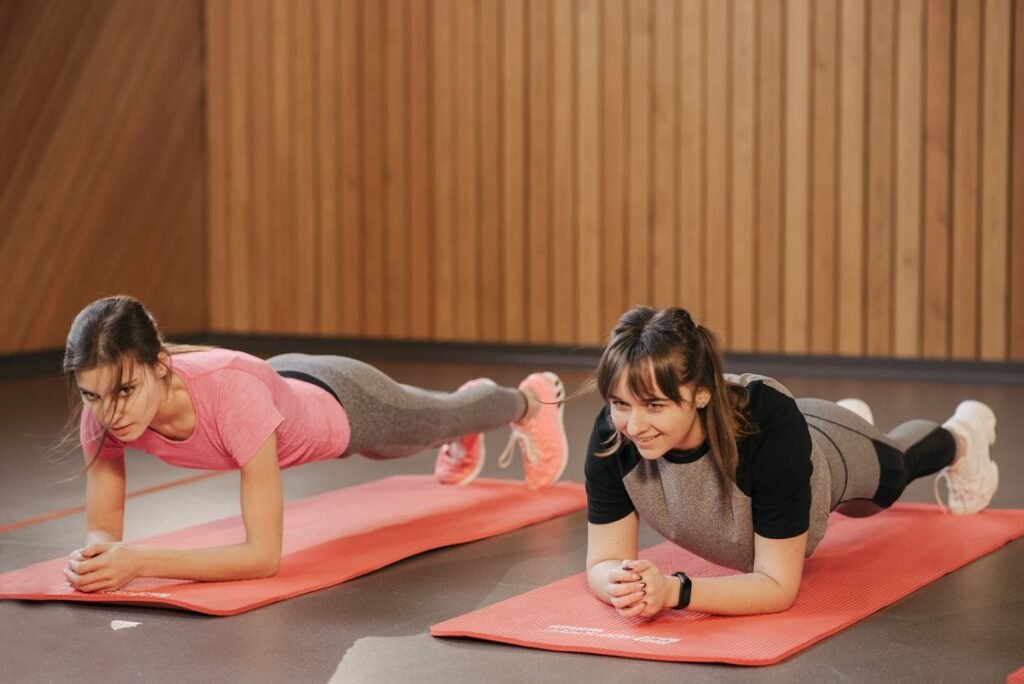
- Knee plank — 15 to 25 seconds. On forearms and knees, keep a straight line from head to knees. Do not let your hips sag or pike up. Breathe normally.
- Bent-knee side plank — 10 to 20 seconds per side. Lie on your side, elbow under your shoulder, knees bent. Lift your hips into a straight line and hold.
Moving slowly enough to notice whether your ribs, pelvis, and lower back stay steady is the golden rule of core training for beginners, because that steadiness is exactly what you are training.

How to Progress Week by Week
- Weeks 1 to 2: 1 round, easy targets, focus on form and breathing.
- Weeks 3 to 4: 2 rounds, and add a few seconds or reps to each move.
- Weeks 5 to 6: try the full plank instead of the knee plank, and the straight-leg side plank instead of the bent-knee version.
- After that: add a third round, or slow each rep down further — a 3-second lowering phase makes the same move much harder.
Finish each set while you could still do about 2 more controlled reps. That is the right effort level: challenging, but with form intact.
Adding difficulty only when your form stays steady is the safest way to progress in core training for beginners, because sloppy reps train bad habits instead of strength.
Mistakes to Avoid
- Holding your breath — breathe normally and brace gently, like preparing for a light tap on the stomach.
- Letting your lower back arch in dead bugs — shorten the reach until your back stays flat.
- Rushing reps — slow, controlled movement builds more stability than fast, sloppy ones.
- Training core every day — muscles need rest; 2 to 3 days a week is plenty to start.
- Only training the front — your back and glutes are core too, which is why bird dogs and bridges are in the routine.
Core Training and the Rest of Your Week
Core work fits neatly into any beginner plan. Do it after a short walk or before your main workout, or on its own as a 15-minute session. Pair it with walking on other days, and keep one full rest day each week.
Like our bodyweight exercises for beginners, this routine needs no equipment and works in a small space. It also pairs perfectly with exercise snacking for beginners — a 5-minute plank or dead bug set makes an ideal movement snack. And when you want a full session, our home workout routine for beginners builds on the same foundations.
Trying one progression at a time is the best way to learn core training for beginners, because the base routine stays the same while one thing changes.
If you remember one thing from this core training for beginners guide, let it be this: slow, steady, and consistent beats fast, sloppy, and occasional — every time.