

Why Bodyweight Training Is the Best Place to Start
You do not need a gym membership, dumbbells, or a spare hour to get stronger. Bodyweight training uses the resistance you always carry with you, and for beginners it builds real strength, balance, and confidence — in a living room, a park, or a small flat.
Bodyweight exercises for beginners work because they train movement patterns, not isolated muscles: squatting, pushing, lunging, hinging, and bracing. Learn a handful of these patterns well, and every other workout gets easier. This guide gives you seven moves, one complete 20-minute session, and the form rules that keep your joints happy. You can also follow a structured beginner bodyweight workout and explore bodyweight exercises for strength as you build the habit.
Note: this is general wellness information, not medical advice. If you have pain, an injury, or a medical condition, or you are unsure whether exercise is safe for you, talk to a qualified clinician before starting. Stop immediately if you feel sharp pain or dizziness — muscle soreness is normal, sharp pain is not.
Before You Start: Warm Up for 5 Minutes
Never skip the warm-up. Five minutes of easy movement — marching in place, arm circles, leg swings, and a few slow squats — raises your heart rate and prepares your joints. Think of it as telling your body a workout is coming, instead of surprising it.
The 7 Moves
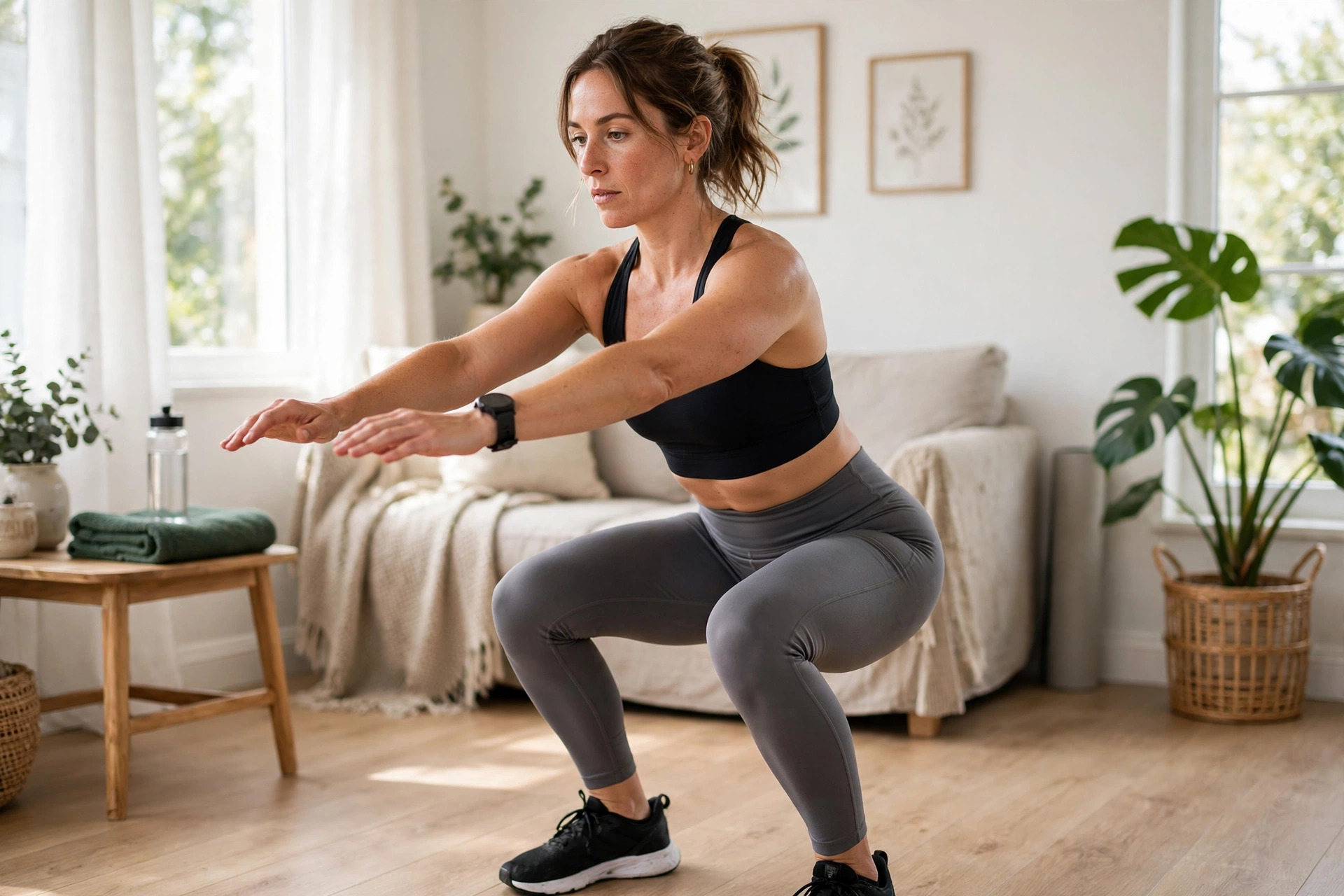
1. Bodyweight squat
Stand with feet hip-width apart, toes slightly out. Sit your hips back as if lowering onto a chair, then stand up, pushing through your heels. Keep your chest up and your knees tracking over your toes. Do 10–15 reps. Easier version: chair squat — lower until you lightly touch a chair, then stand.
2. Incline push-up
Place your hands on a sturdy table, bench, or counter, arms straight, body in a line from head to heels. Lower your chest toward the surface, then press back up. Do 6–10 reps. Easier version: wall push-up — the steeper the angle, the kinder the load, and it still counts.

3. Glute bridge
Lie on your back, knees bent, feet flat on the floor. Push through your heels to lift your hips until your body forms a straight line from knees to shoulders. Hold for a second, then lower slowly. Do 10–15 reps. Easier version: use a shorter range of motion and build up gradually.
4. Reverse lunge
Stand tall, step one foot back, and lower your hips until both knees are bent at roughly right angles, front knee above the ankle. Push back to standing and switch legs. Do 6–10 reps per side. Easier version: hold a chair or wall for balance and take a shorter step.
5. Bird dog
On hands and knees, extend one arm forward and the opposite leg back, keeping your hips level. Hold briefly, return, and switch sides. Do 6–8 reps per side. Easier version: extend only the arm or only the leg, and hold for less time.
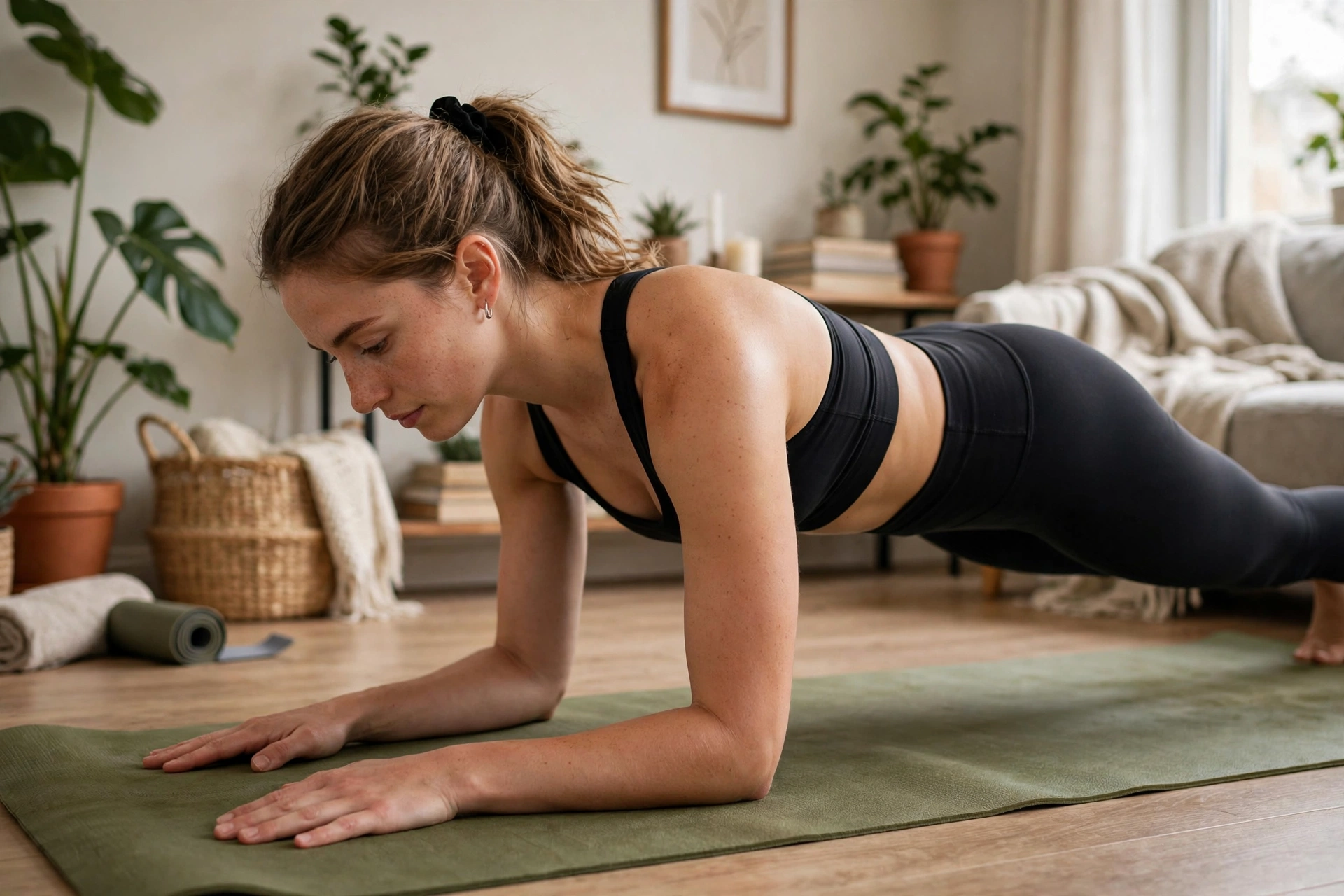
6. Plank
Rest on your forearms and toes, body in a straight line from heels to head, core braced. Breathe normally — do not hold your breath. Hold 15–30 seconds. Easier version: knee plank, with knees on the floor and the same straight line from knees to head.
7. Step-up
Stand facing a low, sturdy step or the bottom stair. Step up with one foot, bring the other foot up, then step back down, alternating the lead foot. Do 8–10 reps per side. Easier version: use a lower step and hold a wall for balance.
Your 20-Minute Beginner Session
Do the moves in order, as a circuit: Warm-up: 5 minutes; Circuit: 2 rounds of all 7 moves (rest 45–90 seconds between rounds); Cool-down: gentle stretching for a few minutes.
The whole session takes about 20 minutes. That is why bodyweight exercises for beginners are best done as a circuit, not as random moves. Train 2–3 days a week, with at least one rest day between sessions, because muscles adapt during recovery, not during the workout itself. Keep 1–2 good reps "in reserve" on each set — the last reps should feel challenging, but your form should never fall apart. That consistency is why bodyweight exercises for beginners work so well for building a lasting routine.
A Simple Weekly Plan
Monday: Full 20-minute session; Tuesday: A walk or easy cardio; Wednesday: Rest; Thursday: Full 20-minute session; Friday: A walk or easy cardio; Saturday: Optional third session; Sunday: Rest.
Bodyweight exercises for beginners progress best when you change only one thing at a time. When the top of a rep range feels easy with perfect form, add a few reps, add a third round, slow the tempo, or move to a slightly harder variation — never all at once. Write down what you did each session; next session’s job is simply to nudge one number.
Common Mistakes and Easy Fixes
Most problems with bodyweight exercises for beginners come from doing too much, too soon. The fixes are simple:
- Rushing reps. Fix: move slowly and control every phase — quality reps beat quantity.
- Skipping the warm-up. Fix: five easy minutes first, every time.
- Holding your breath. Fix: exhale on the effort, inhale on the return.
- Advancing too fast. Fix: perfect the easier version before trying a harder one.
- Training the same muscles daily. Fix: leave at least one rest day between full-body sessions.
- Ignoring pain. Fix: mild soreness is fine, but sharp or joint pain means stop and rest.
For more beginner fitness guidance, see our guides to strength training for beginners and stretching for beginners, and pair your sessions with a steady morning routine and enough water — our guide on how to stay hydrated explains why that matters for energy.
Start today with the chair squat and the wall push-up if those are your level. Bodyweight exercises for beginners meet you where you are — and in a few weeks of steady sessions, you will feel the difference in strength, balance, and everyday energy.