
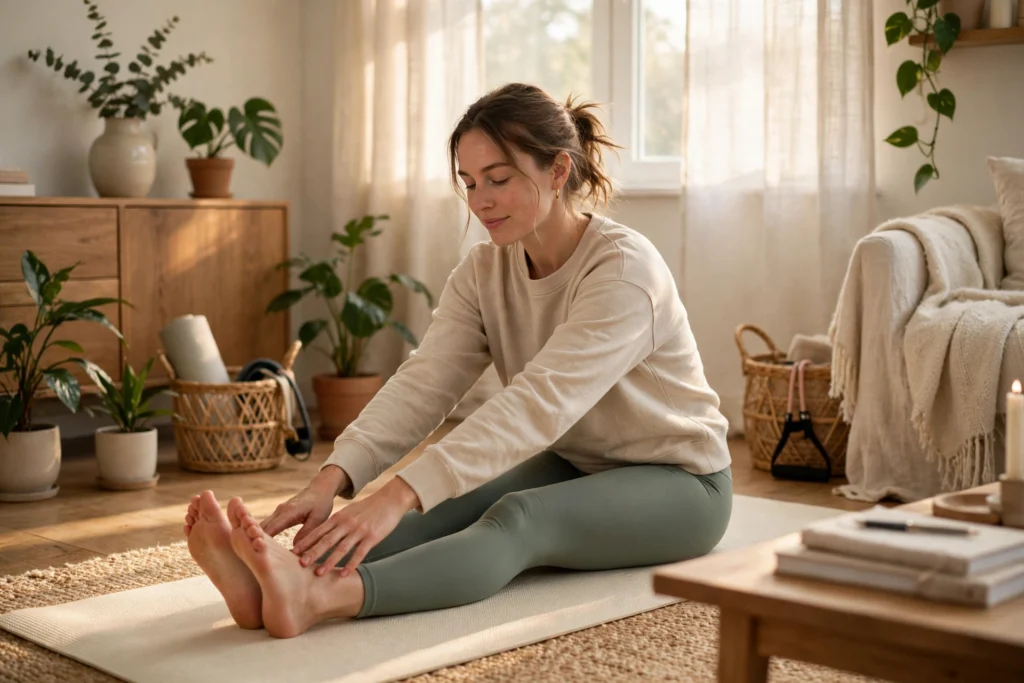
Stretching for beginners starts with gentle, unhurried movement — a simple daily habit that makes it easier to move, sit, and stand with less tension.
Why Stretching Matters
Stretching keeps your joints moving freely and your muscles supple — which makes everyday life easier: reaching, bending, sitting, walking, and exercising all feel better when your body moves well. Regular stretching eases tension from long sitting, supports posture, and helps you relax at the end of the day.
But stretching is often done wrong: cold muscles, bouncing, forcing past pain, and one marathon session a month. Done gently and consistently, it works. Done aggressively and rarely, it mostly frustrates. Here’s how to do it right.
That is why stretching for beginners works best as a short, gentle daily habit rather than a rare, intense session.
Dynamic vs Static: Know the Difference
Dynamic stretching means moving through a range of motion — leg swings, arm circles, walking lunges. It’s for warming up, before exercise or activity.
Static stretching means holding a muscle in a lengthened position — a hamstring stretch, a shoulder stretch. It’s for cooling down after exercise, or as its own gentle practice when muscles are warm.
The rule is simple: dynamic before activity, static after. Static stretching cold muscles first thing is less effective and less comfortable — if you stretch in the morning, keep it gentle and dynamic, and save deeper holds for later in the day when your body is warmer.

For stretching for beginners, the safest approach is to start with light dynamic movement and add deeper static holds only once you feel warm.
The 7 Rules of Safe Stretching
- Warm up first
Never stretch cold muscles. Five to ten minutes of light movement — a brisk walk, marching in place, arm circles — raises blood flow and makes muscles more pliable. Warm muscles stretch safely; cold muscles strain. - Move to mild tension, never pain
Stretch until you feel gentle tension, then stop. Mild discomfort is fine; sharp, pinching, or joint pain is not. Stretching should never hurt — pain means you’re pushing too far, and pushing through it risks strains and micro-tears. - Hold, don’t bounce
Bouncing (ballistic stretching) triggers your muscles to tighten protectively and can cause strains. Ease into a stretch slowly, hold it steadily, and breathe. For general flexibility, hold each static stretch for 20–30 seconds, and repeat 2–3 times. - Breathe normally
Don’t hold your breath. Slow, even breathing helps muscles relax into a stretch. If you catch yourself holding your breath, you’re probably pushing too hard. - Stretch both sides evenly
Always stretch both sides of your body, even if one side feels tighter. Uneven stretching builds imbalance. Give the tighter side a little extra time, but never skip the other side. - Be consistent, not extreme
A little most days beats one long session a month. Even 10 minutes a day, or 2–3 sessions a week, builds flexibility over a few weeks. Consistency matters far more than intensity — and far more than how deep you can go. - Don’t stretch injured muscles
If a muscle is injured, inflamed, or sharply painful, don’t stretch it — rest it and get advice. Stretching damaged tissue can prolong healing.
Together, these habits make stretching for beginners safe, steady, and easy to keep up.
A Simple 10-Minute Beginner Routine
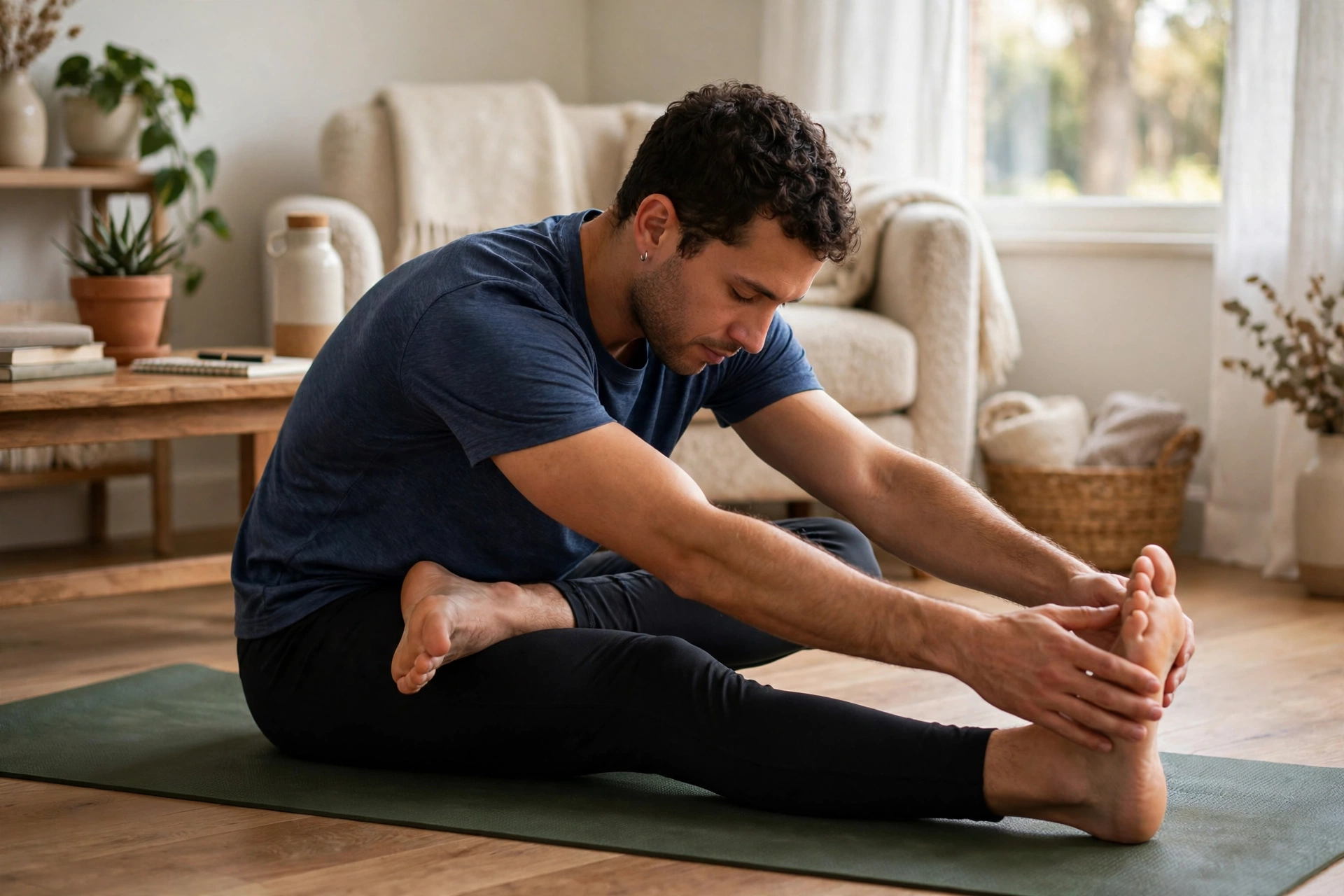
Warm up for 2–3 minutes first (walk in place, arm circles, leg swings), then hold each stretch 20–30 seconds per side, breathing normally:
This routine is designed for stretching for beginners, so keep every hold gentle and comfortable.
| Stretch | What it helps |
|---|---|
| Neck tilts and turns | Neck and upper-back tension from screens |
| Shoulder cross-body stretch | Shoulders and upper back |
| Chest opener (hands behind back) | Tight chest from sitting |
| Cat-cow | Spine mobility and back ease |
| Hip flexor lunge stretch | Hips tightened by sitting |
| Seated hamstring stretch | Back of thighs |
| Standing calf stretch | Calves and ankles |
| Standing quad stretch (hold a chair if needed) | Front of thighs |
That’s it — eight stretches, ten minutes, done. Do it after a walk or workout, or in the evening when your muscles are warm. Morning version: keep it shorter and gentler, with dynamic movements instead of deep holds.
This simple plan shows that stretching for beginners does not need special equipment or a long workout.
Stretching at Your Desk
If you sit for long hours, your hips, neck, and shoulders take the brunt. Every hour or so, stand up and do three quick moves: shoulder rolls, a chest opener, and a standing hip flexor stretch. Thirty seconds each is enough to break up stiffness — and it pairs well with a short walk. Small, frequent movement beats one heroic evening session.
Even at work, stretching for beginners can be as simple as standing, rolling your shoulders, and opening your chest for thirty seconds.

Stretching Myths to Ignore
- “Stretching prevents all injuries.” Stretching reduces risk in some situations, but it’s not a magic shield. Warm-ups, strength, and good technique matter just as much.
- “The longer you hold, the better.” Beyond about 20–30 seconds per hold, extra time adds little for beginners — and forcing longer, deeper holds risks overstretching.
- “You have to be flexible to benefit.” Flexibility is a tool, not a talent contest. You only need enough range to move well in daily life and your chosen activities.
- “Stretching cures soreness.” Stretching doesn’t reliably reduce next-day muscle soreness. Its real benefits are flexibility, eased tension, and relaxation — valuable on their own.
Keeping these myths in mind helps stretching for beginners stay realistic and enjoyable.
Final Thoughts
Stretching for beginners is simple: warm up, move to gentle tension, hold without bouncing, breathe, do both sides, and repeat often. You don’t need special equipment, a class, or contortionist flexibility — just ten minutes and a little patience.
Start tonight with the routine above. In a few weeks of consistent stretching, you’ll notice the difference every time you bend, reach, and stand up.
With that routine, stretching for beginners becomes a habit you can actually look forward to.
This article shares general wellness information, not medical advice. If you have an injury, persistent pain, or a condition affecting your joints or muscles, talk to a clinician or physical therapist before starting a stretching routine.