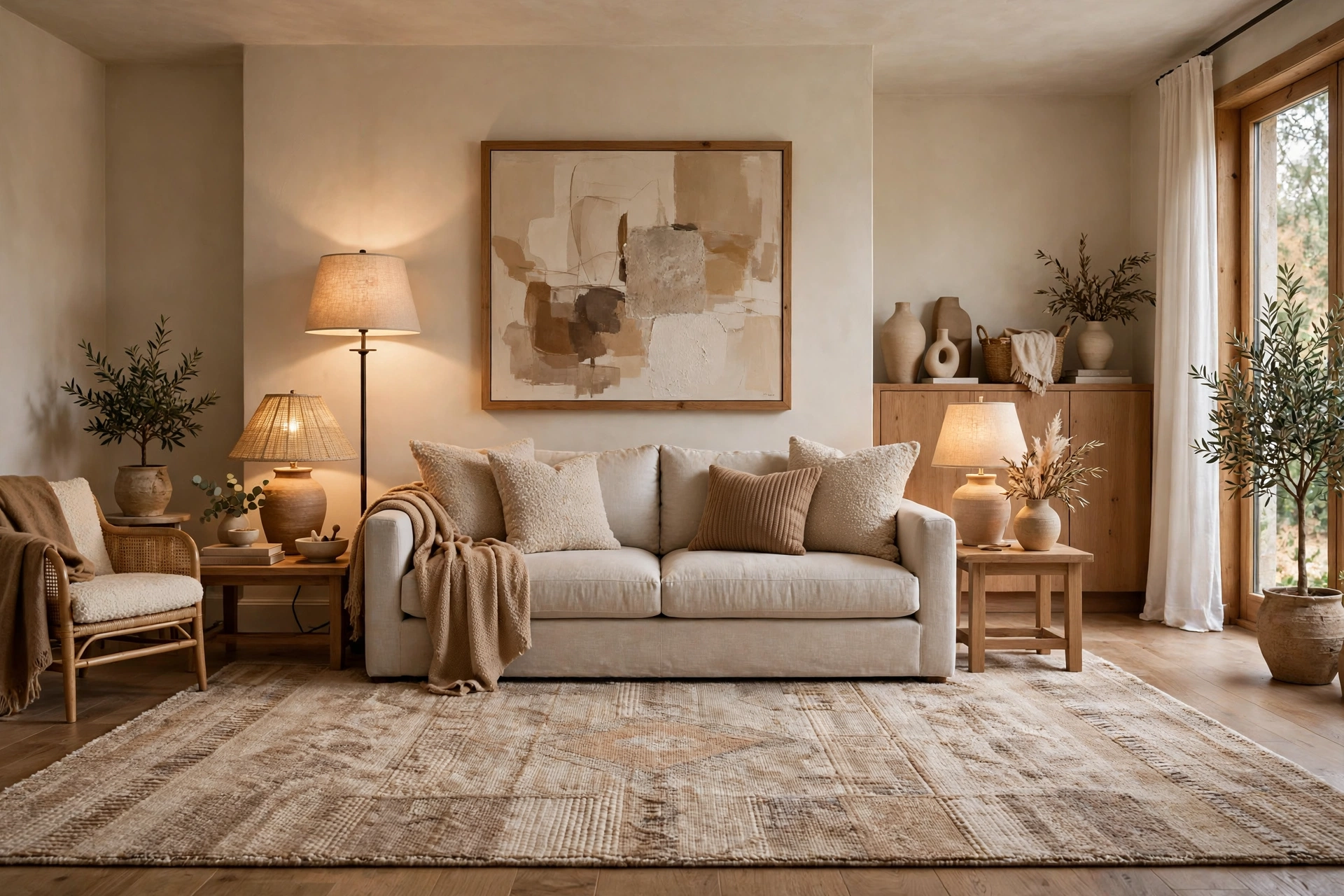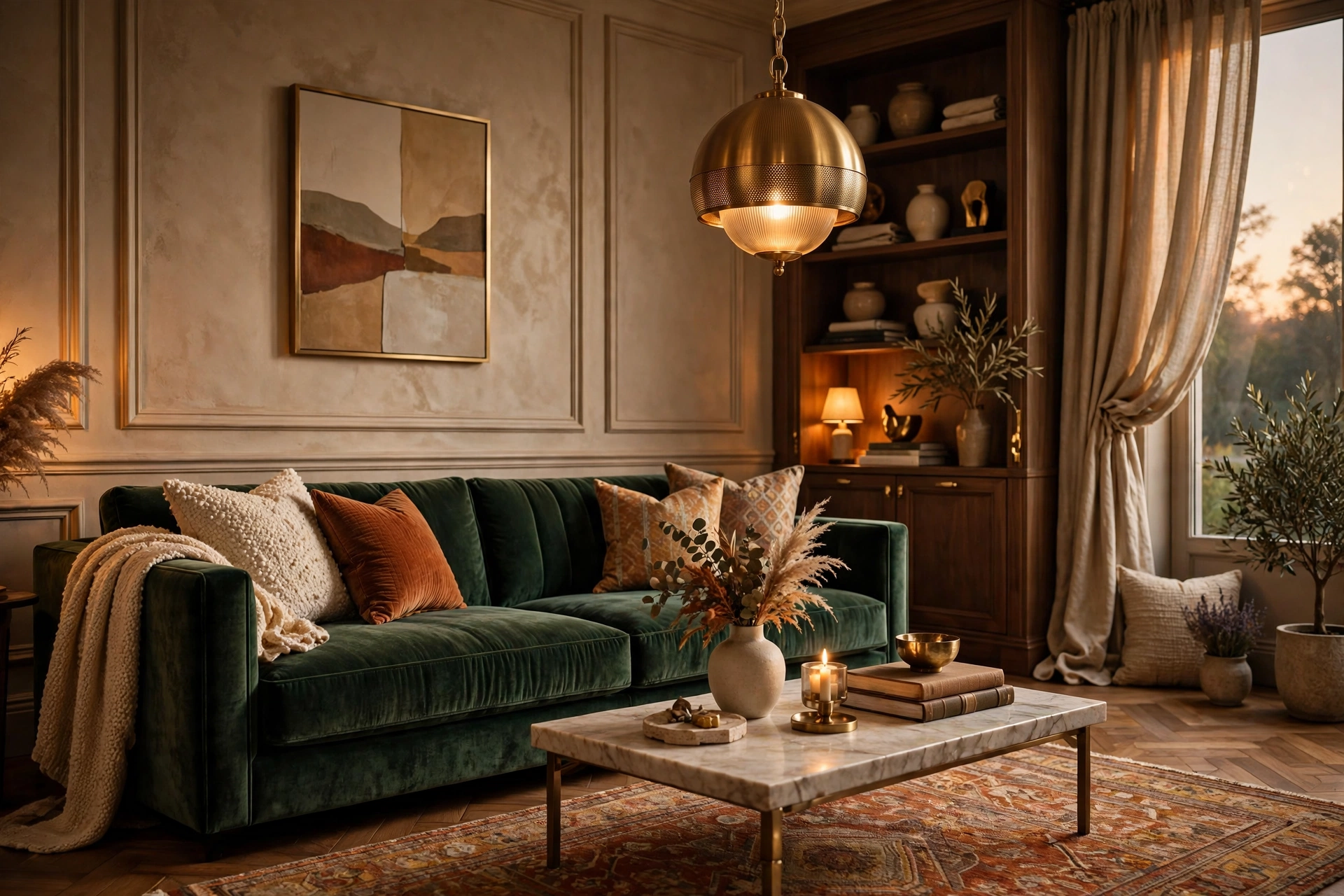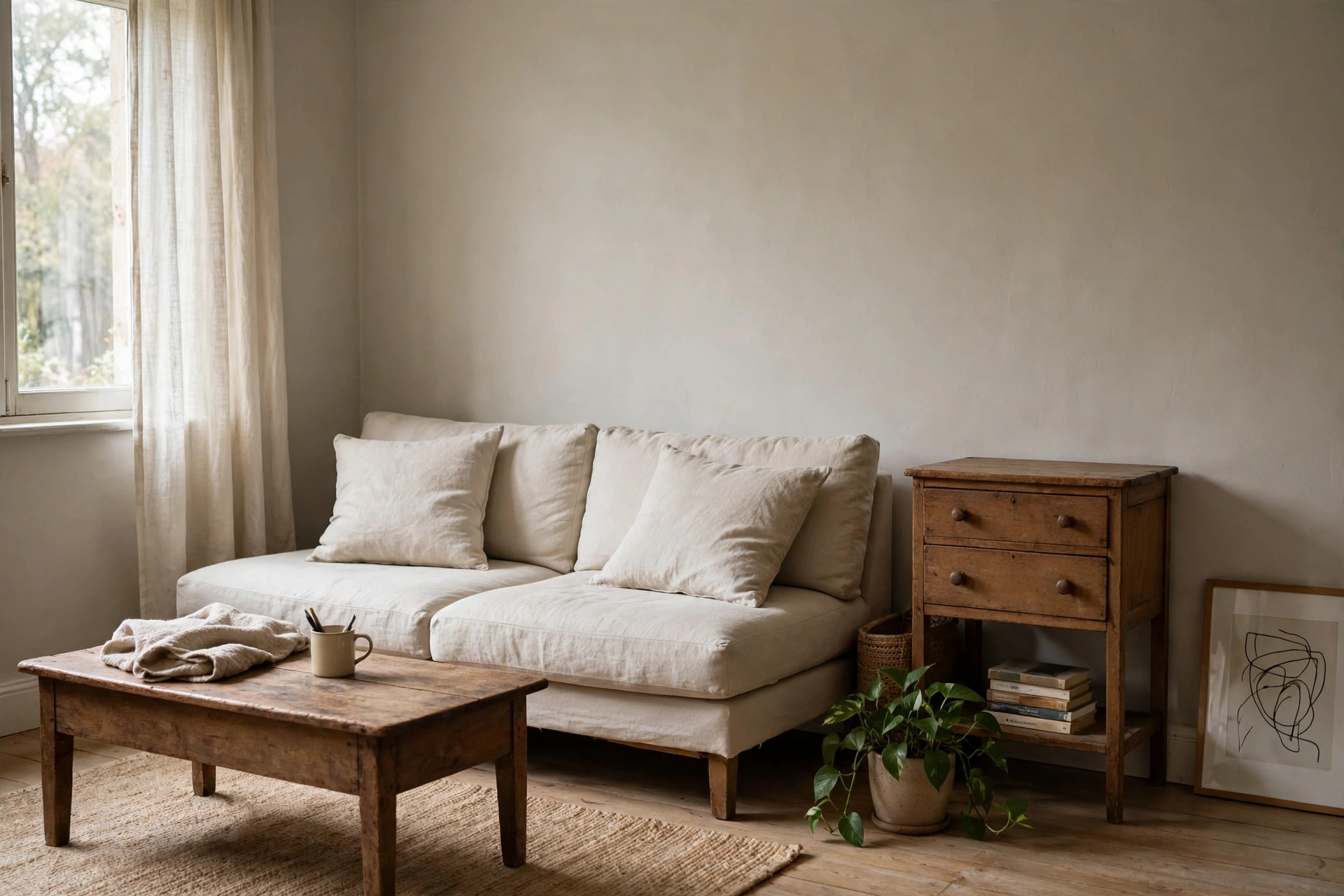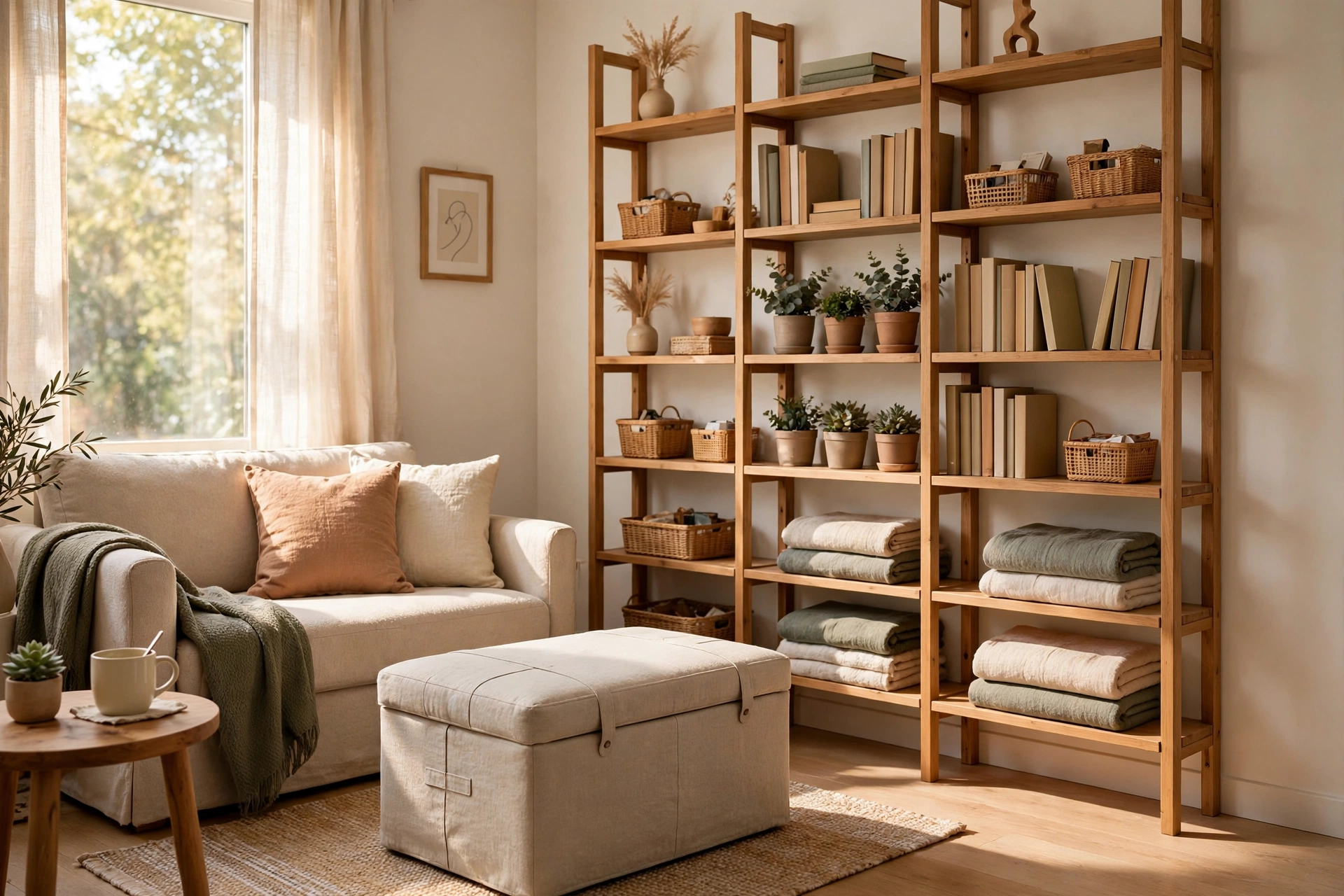
Minimalism is often misunderstood as empty rooms and white walls. Real minimalism is simpler than that: every item in the room earns its place, either because it is useful or because you genuinely love seeing it. The result is a home that is easier to clean, easier to relax in, and easier to keep tidy. These minimalist home decor essentials cover the seven pieces every calm home needs — no renovation, no big budget, and no need to throw away everything you own.
1. A Calm, Connected Color Palette
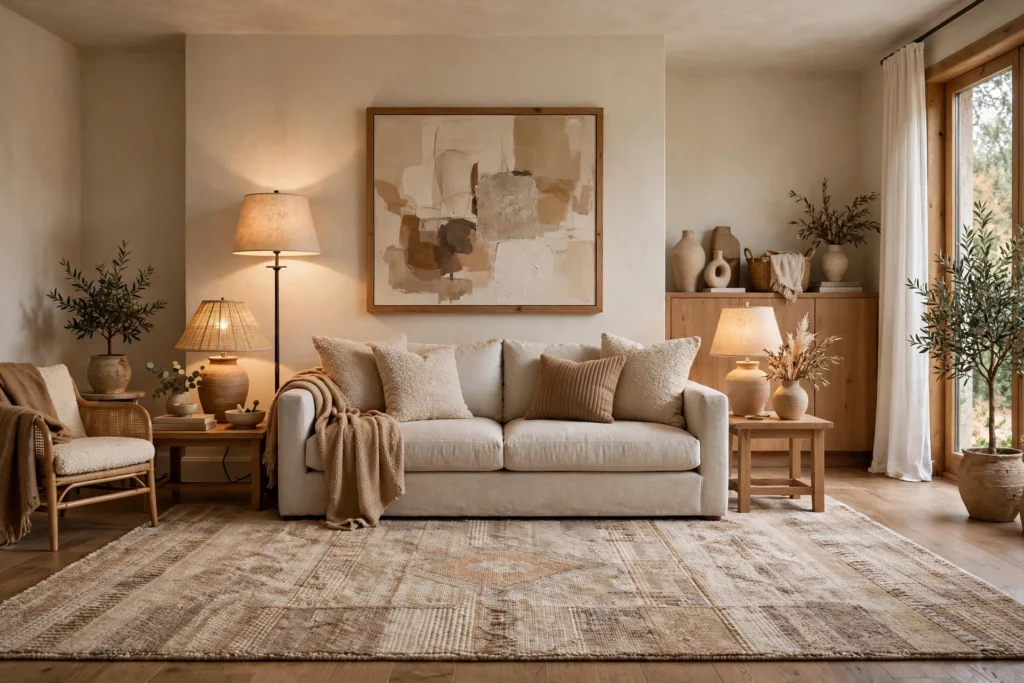
Every minimalist room starts with color, not shopping. Choose a base of warm neutrals — cream, soft beige, warm white, or muted gray — and repeat it across walls, curtains, and larger furniture. The key is connection: shades should relate to each other and to the finishes you already have, like wood floors or existing cabinets.
A room feels flat when every surface is exactly the same tone, so add gentle contrast. Pale walls with a medium-brown table and olive cushions, or a touch of charcoal against lighter furniture, gives each piece definition without breaking the calm. Test paint samples beside your existing materials and look at them through the day, because daylight and lamps change how a color reads. You do not need an all-white interior; you need a palette that feels intentional.
2. Furniture With Clean Lines That Does Two Jobs
Minimalist furniture is simple, well-made, and often multi-use. A storage ottoman holds blankets and works as a seat. A sofa bed hosts guests without a spare room. Nesting tables tuck away when you need floor space and pull out when you need it.
Before buying, ask two questions: does it serve a clear function, and does it have clean lines without ornate detail? Choosing furniture this way is one of the most practical minimalist home decor essentials, because every piece you keep has to justify its floor space. If a piece only collects clutter — a chair that holds clothes, a table covered in objects nobody uses — it is working against the room. Quality beats quantity here: one solid, comfortable piece you use daily is worth more than three cheap ones you do not. If your rooms are small, our guide to Small Space Organization for Beginners pairs well with this section, because furniture choices matter even more when floor space is limited.
3. Layered, Warm Lighting
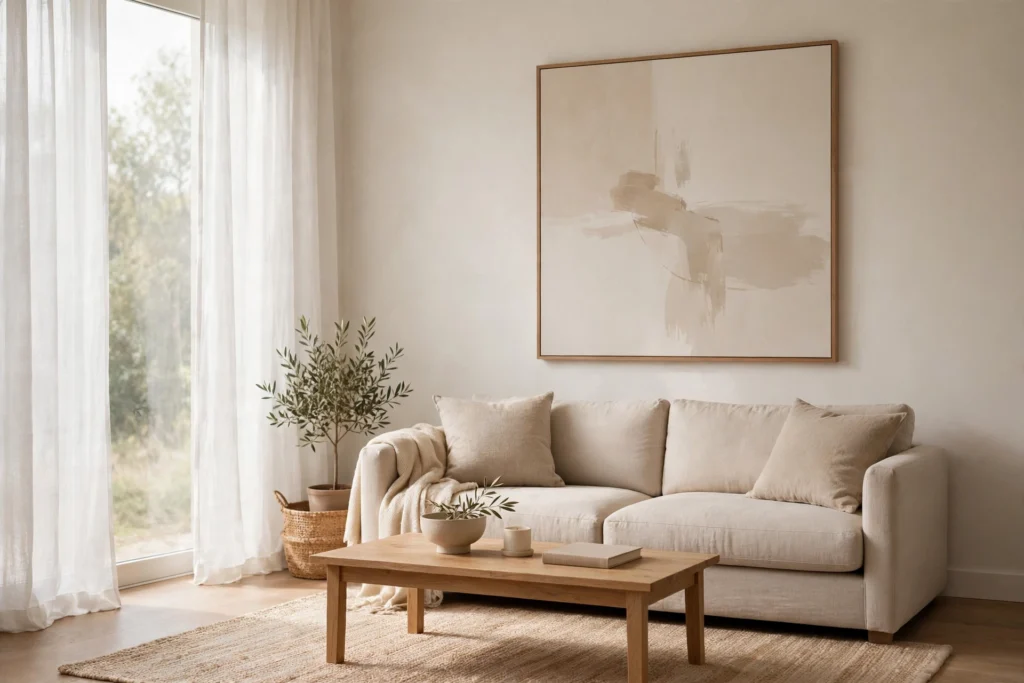
Natural light is the most important minimalist home decor essential, and it costs nothing. Keep windows as bare as privacy allows, or use sheer curtains that soften light instead of blocking it. Place a mirror opposite or beside a window to bounce daylight deeper into the room.
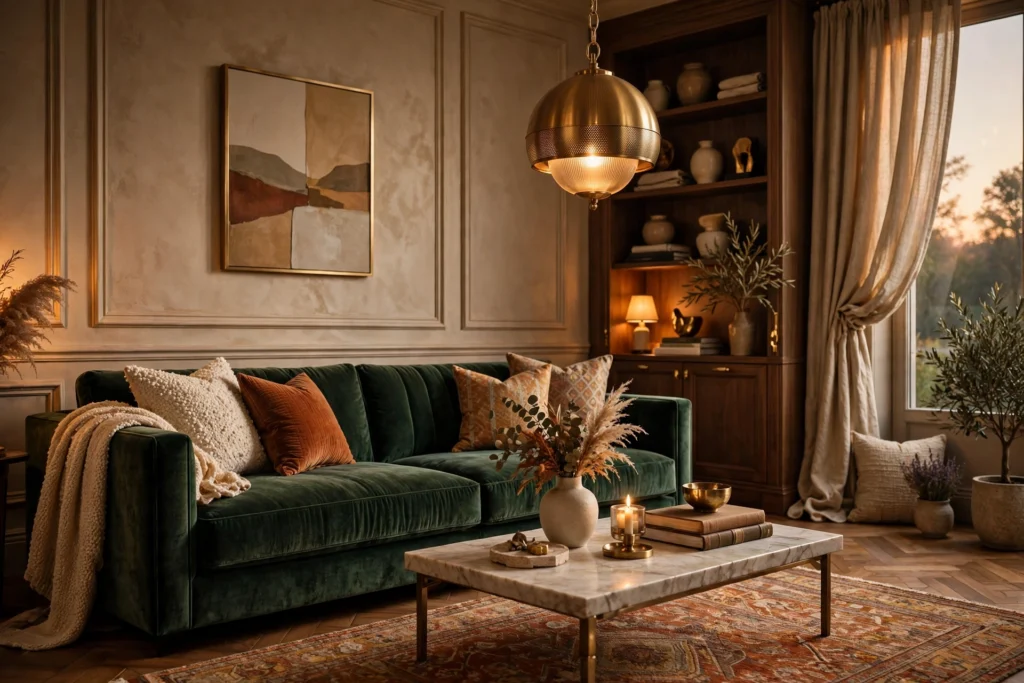
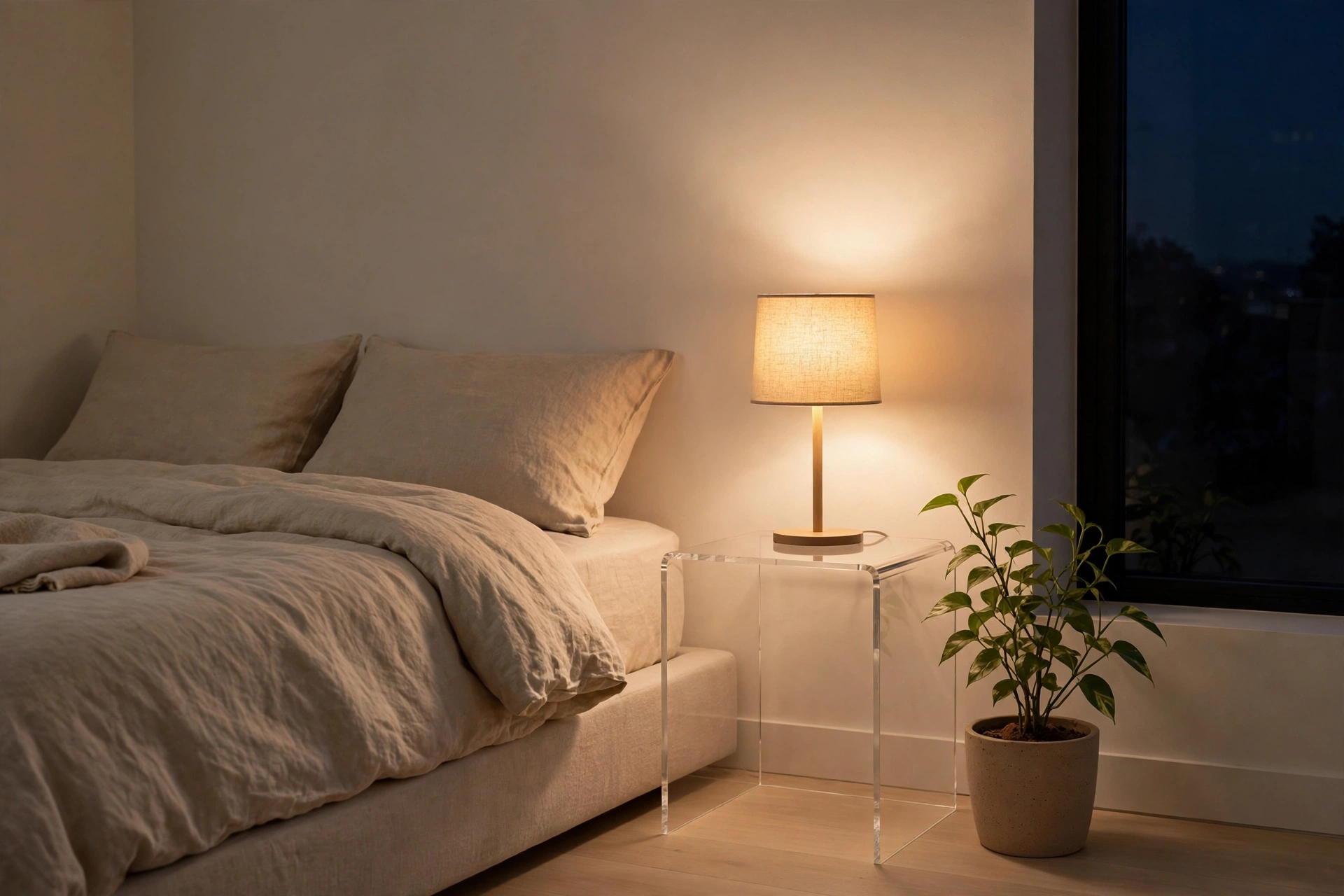
For evenings, layer three kinds of light instead of relying on one harsh ceiling fixture: a ceiling light for general brightness, a floor or table lamp for reading and relaxing, and a small warm accent, like a candle or a low lamp, for atmosphere. Choose simple fixtures in matte black, brushed brass, or white, and warm bulbs (around 2700K to 3000K) so evenings feel cozy rather than clinical. Good lighting is what stops a simple room from feeling cold.
4. Natural Texture for Warmth
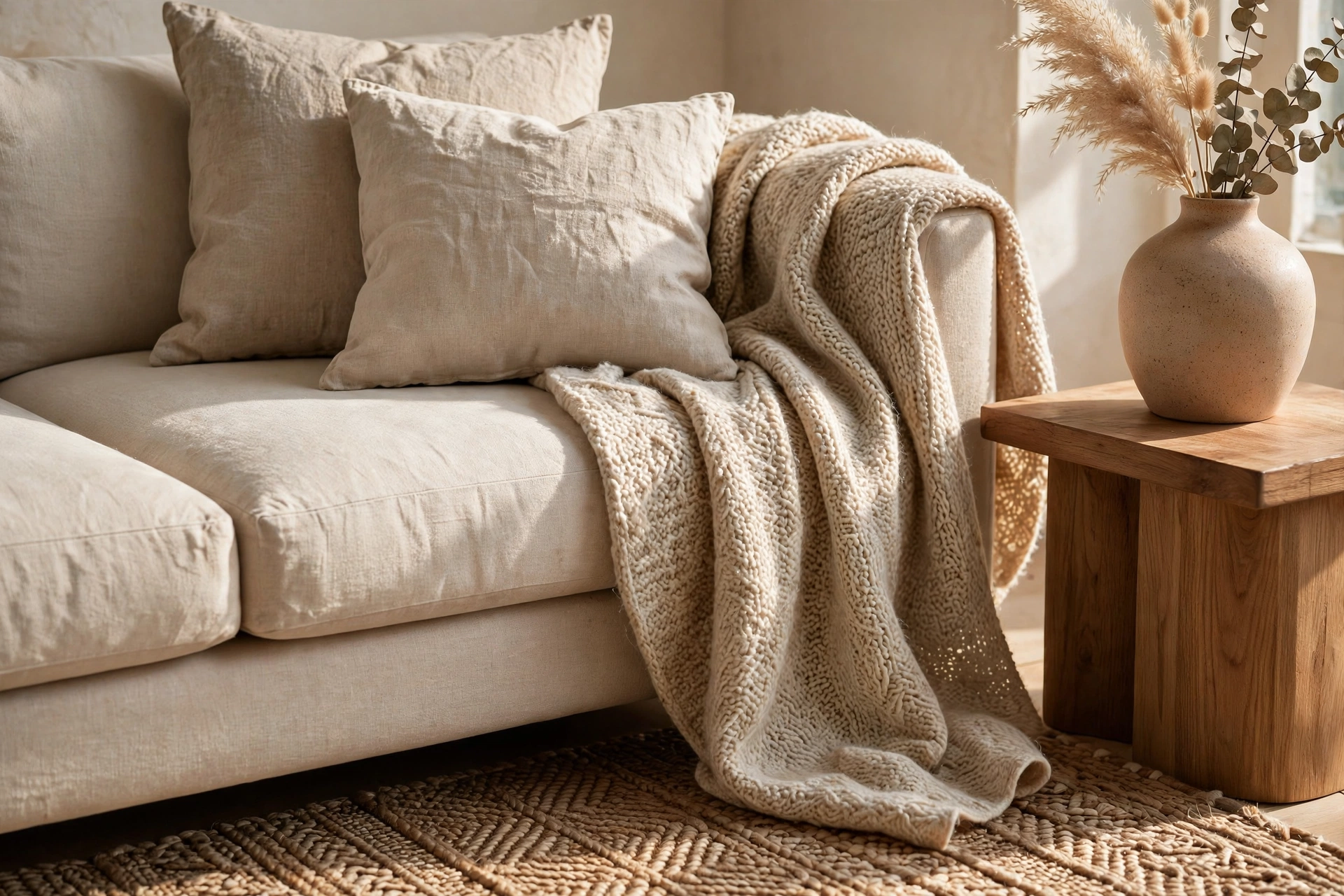
Texture is the secret that keeps minimalism from feeling bare. A room with only smooth, flat surfaces feels empty; a room that layers natural materials feels warm even with very few objects. Combine linen bedding, a wool throw, a woven rug, warm wood, and a ceramic vase, and the same room suddenly feels lived-in.
Texture is often forgotten on lists of minimalist home decor essentials, yet it is what stops a simple room from feeling cold. The rule is layering, not adding: one rug under the seating area, one throw on the sofa, one set of linen curtains. Each texture should repeat somewhere else in the room so the space feels connected. Natural fibers and materials — wood, stone, cotton, wool, clay — age well and look better over time than shiny, synthetic finishes.
5. Smart, Hidden Storage
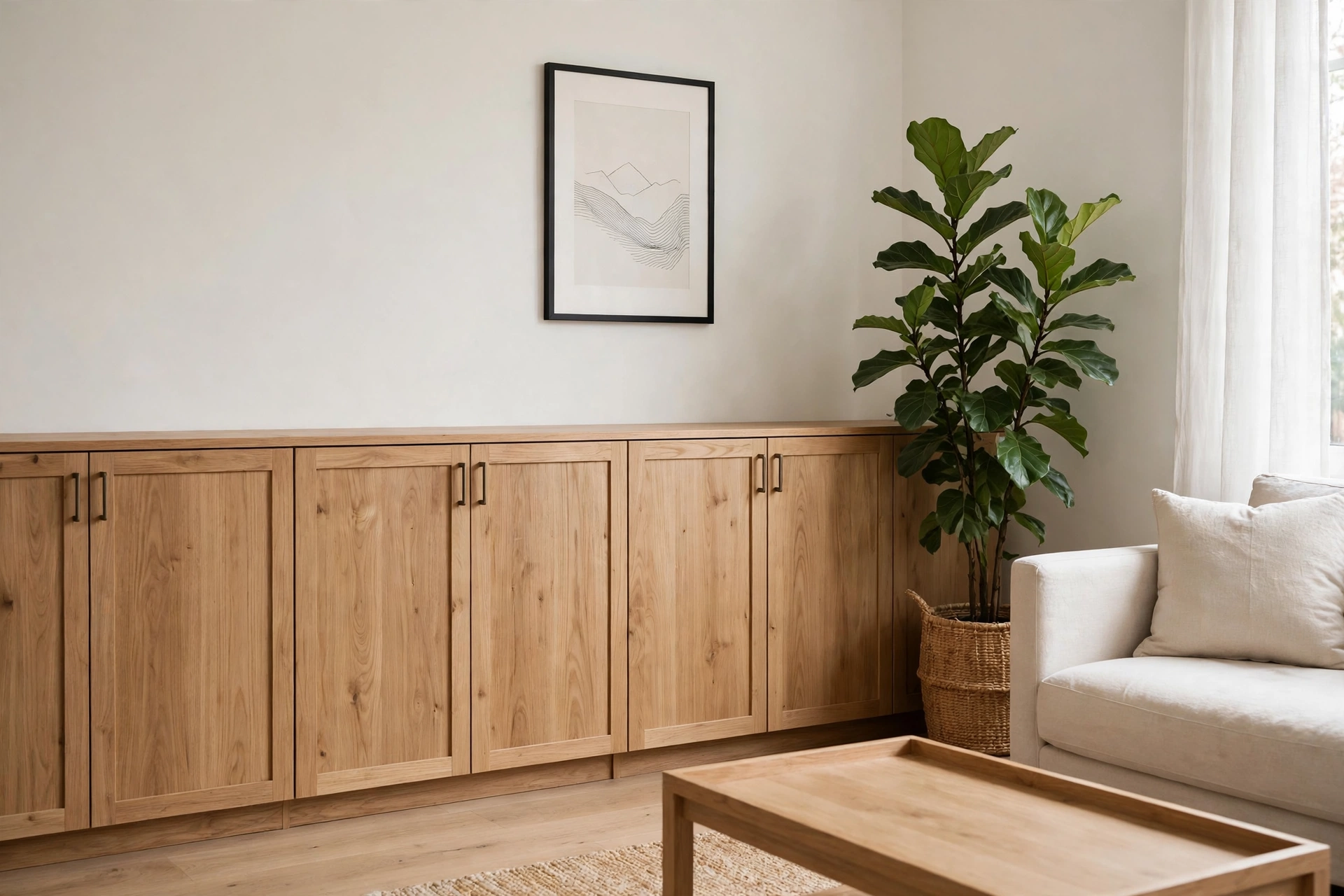
Minimalism only works when everyday clutter has somewhere to go. The essentials are closed storage that hides the mess: built-in shelving, furniture with hidden compartments, baskets for remotes and chargers, and under-bed drawers for out-of-season clothes. Surfaces stay clear because items live behind doors, not on top of tables.
Hidden storage is among the most underrated minimalist home decor essentials — without it, even a well-decorated room fills up again within weeks. Keep kitchen counters down to daily-use items only, and give every category one home — a lesson our Home Organization for Beginners guide covers in detail. Apply the one-in, one-out rule to new purchases so the room does not quietly refill. In the bathroom, the same idea works on a smaller scale; our Bathroom Organization for Beginners guide shows how three or four essentials on the counter is enough.
6. One Meaningful Focal Point per Room
A minimalist room needs one thing for the eye to rest on — not ten. Choose a single large, calm art piece instead of a busy wall of small prints, one statement light over the dining table, or one beautiful object on a shelf. A focal point gives the room character and stops it from feeling like a showroom. Choosing one focal point is one of the simplest minimalist home decor essentials, because it gives the room character without adding clutter.
The test for any decorative object is simple: would you notice if it were gone? If the answer is no, it is not earning its place. Meaningful pieces — art you chose, a handmade bowl, a photo that matters — beat generic decor every time. Rotate a few favorites seasonally if you like variety; the room stays fresh without getting fuller.
7. A Few Living Touches, Used Sparingly
Plants are the easiest way to bring life into a pared-back room, but restraint matters. One larger plant in a simple pot usually reads cleaner than a dozen small pots scattered around the room. The same goes for candles, books, and personal objects: a small number, chosen well, beats a collection.
Keep bedroom surfaces especially calm — a lamp, a book, and a small tray on the nightstand is plenty. A calm bedroom does more than look good; it helps you unwind at night, which is why it pairs so well with our Sleep Optimization guide. Living touches should make the room feel alive, not busy.
Mistakes to Avoid
- Chasing an all-white look that does not match how you actually live.
- Buying everything at once. Minimalism built slowly, one room at a time, lasts longer.
- Confusing empty with calm. A room with nothing in it feels bare, not peaceful — texture and one focal point fix that.
- Keeping decor that serves no function and brings no joy, just because it was a gift or was expensive.
- Organizing for photos instead of daily life. If a system is hard to maintain, it will fail within weeks.
How to Start This Weekend — Without Spending Much
You do not need a new furniture collection. Start with one room and do three things: remove everything from one surface and add back only the three most meaningful items; pick one color already in the room and repeat it in a cushion or throw; and move one lamp to where you actually sit in the evening. Then shop your own home — a favorite armchair, an inherited wooden table, or artwork you already own can be the starting point.
For budget updates, secondhand wood furniture, a coat of neutral paint, and thrifted ceramics give you quality pieces for far less than new. Tackle one room, live with it for a week, and only then move to the next. That slow, room-by-room approach is how these minimalist home decor essentials actually stick.
If you remember one thing from these minimalist home decor essentials, let it be this: minimalism is not about owning as little as possible. It is about choosing fewer, better pieces, giving each one a purpose and a place, and leaving enough empty space for everyday life to happen. A calm home is not an empty home — it is an intentional one.