

Wondering how to stay hydrated? This simple guide shows how to stay hydrated with small, practical habits you can actually keep.
Why Hydration Matters
Water runs almost everything in your body: it carries nutrients, regulates temperature, cushions joints, supports digestion, and keeps your kidneys working. When you’re short on fluid, the effects show up quickly — tiredness, headaches, trouble focusing, dry mouth, and muscle cramps.
Staying hydrated isn’t complicated, but it is easy to neglect: busy days, long meetings, and hot weather all quietly drain your fluid. The good news is that a few simple habits cover most of it.
How Much Water Do You Actually Need?
There is no single number that fits everyone. General reference values for total daily fluid (from all drinks and foods) are around 2.7 litres for women and 3.7 litres for men — but your needs rise with heat, exercise, illness, and sweating, and fall on cool, quiet days.
Forget rigid glass-counting. Two checks matter more than any fixed target:
- Urine colour: Pale, straw-coloured urine usually means you’re drinking enough. Dark yellow or amber means drink more. (Some foods and B vitamins can temporarily change urine colour.)
- Thirst: For most healthy adults, thirst is a reasonable guide — drink when you’re thirsty, and don’t wait until you’re very thirsty. Older adults may have a weaker thirst response and benefit from drinking on a schedule.
If you exercise hard or spend long hours in heat, you’ll need more fluid — and to replace what you sweat, not just water alone in extreme cases.
7 Simple Habits to Stay Hydrated
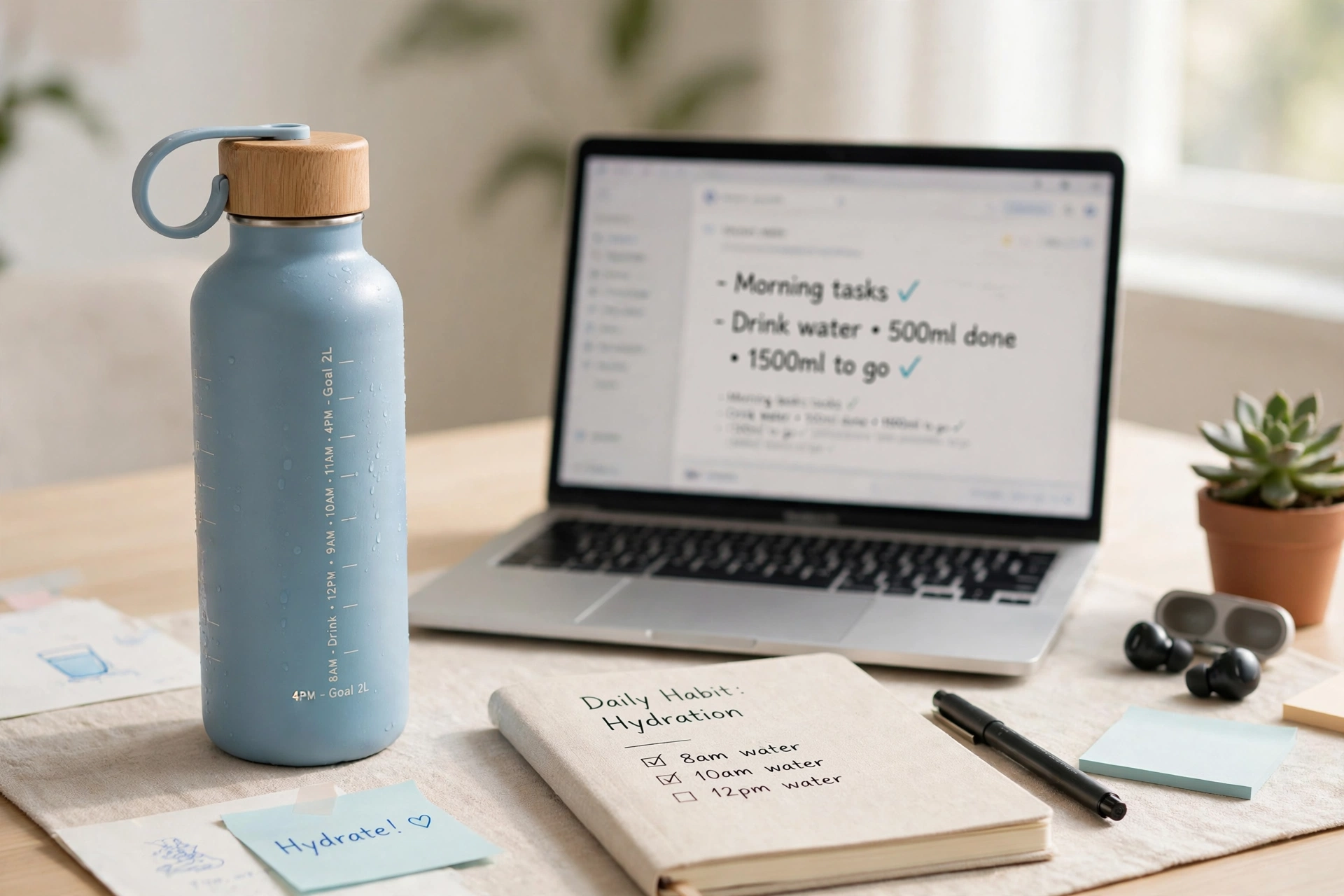
- Start with water in the morning
After a night without fluids, a large glass of water first thing is the easiest hydration habit there is. Keep a glass or bottle by your bed so it’s automatic. - Carry a water bottle
Keeping water within reach is the single most effective trick. If it’s on your desk, in your bag, or in the car, you’ll drink it; if it’s in another room, you won’t. A reusable bottle also lets you see roughly how much you’ve had. - Sip through the day, don’t chug at night
Small, regular sips beat one giant bottle at 9pm. Tie drinking to existing habits: a glass with each meal, one when you sit down to work, one before a walk. - Eat your water too
Roughly a fifth of daily fluid comes from food. Cucumber, lettuce, celery, tomatoes, watermelon, oranges, and soups all contribute meaningfully. A diet rich in fruits and vegetables hydrates you while it feeds you.
- Make water taste good
If plain water bores you, infuse it: lemon, cucumber, mint, or berries. Herbal tea counts too. Enjoyable water gets drunk; boring water gets ignored. - Drink more when you sweat
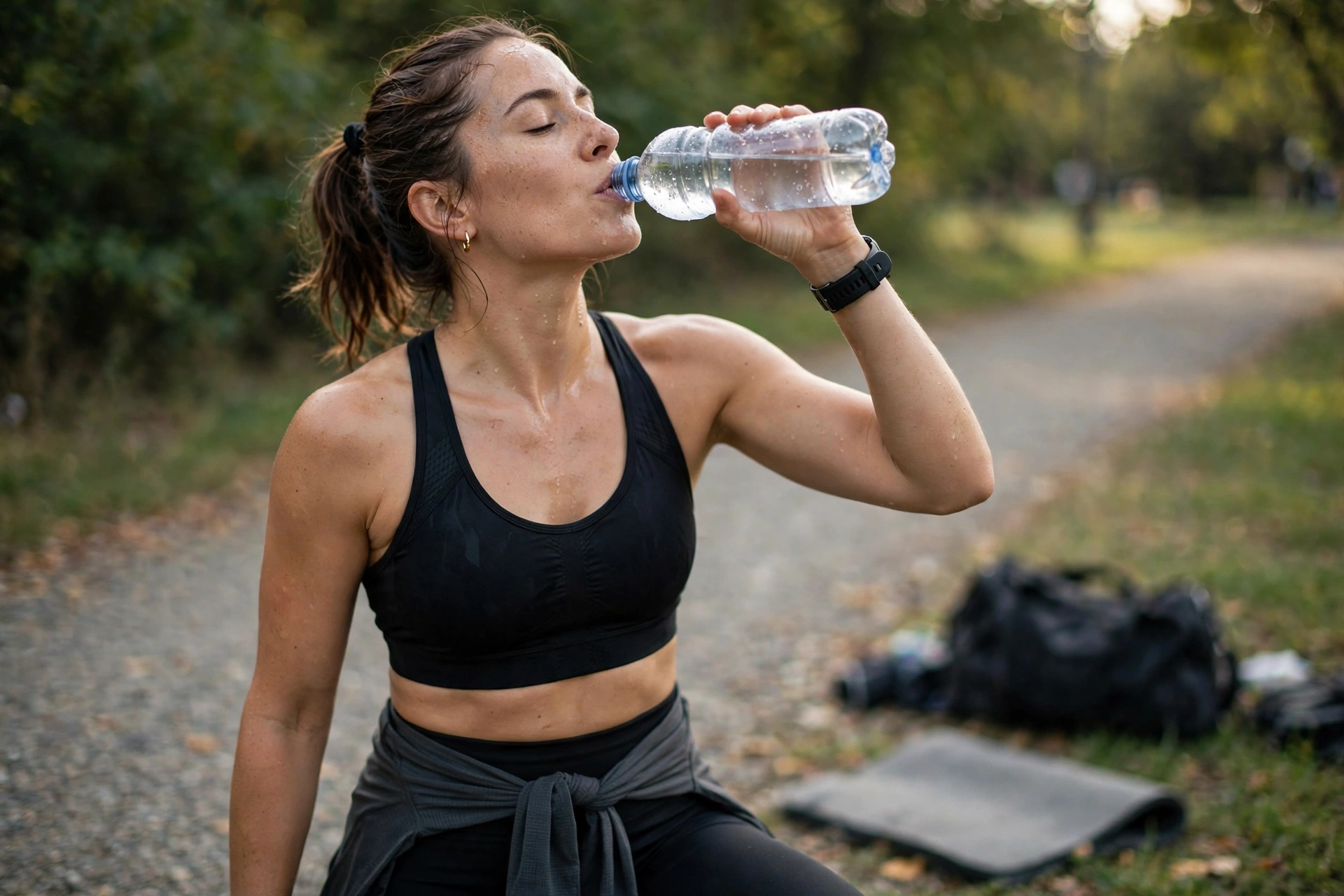
Exercise, hot weather, and physical work all increase fluid loss. Drink before you start, sip during, and top up after. For long, sweaty sessions (over an hour), an electrolyte drink can help replace salts — for ordinary days, water and food are enough. - Watch alcohol and sugary drinks
Alcohol is genuinely dehydrating, especially spirits — pair drinks with water if you drink. Sugary drinks count toward fluid, but they add sugar and energy crashes; water remains the better default.

Signs You’re Not Drinking Enough
Early signs of dehydration are easy to miss:
- Dry mouth and lips
- Dark yellow urine, or urinating less often
- Headache or lightheadedness
- Tiredness and trouble focusing
- Muscle cramps
- Feeling unusually irritable
If these show up, drink water steadily and rest. Seek medical help promptly for serious symptoms: confusion, fainting, very low urine output, or a fast heartbeat — and for vomiting or diarrhoea, where fluid loss needs proper attention.
Hydration Myths to Ignore
- “Everyone needs exactly eight glasses a day.” The eight-glass rule is a slogan, not a measured requirement. Body size, food, weather, and sweat change the day.
- “Coffee and tea dehydrate you.” At normal intakes, coffee and tea count toward your fluid — the water in them outweighs their mild diuretic effect. Only alcohol is reliably dehydrating.
- “If you’re thirsty, it’s already too late.” Thirst is a normal cue, not an emergency. Sip when you notice it; you don’t need to chug a bottle to catch up.
- “Clear urine all day means you’re doing it right.” Pale yellow is the calmer target. Forcing clear urine by drinking very large amounts isn’t healthier.
- “You need special or alkaline water.” Your kidneys and lungs already handle acid–base balance. If fancy water helps you drink because you like the taste, fine — it’s not a treatment.
- “You need electrolyte packets every day.” Most people doing ordinary life replace fluid fine with water and food. Electrolytes matter for long, sweaty exercise or illness — not for a normal workday.
Final Thoughts
How to stay hydrated comes down to something unglamorous: water nearby, sipped often, checked by pale urine and normal thirst, with more when you sweat. No app, no gallon jug, no magic number required.
Start tomorrow with two habits: water by your bed, and a bottle on your desk. That’s a hydration plan — and it’s one you’ll actually keep.
This article shares general wellness information, not medical advice. If you have a condition affecting fluid intake — such as kidney, heart, or liver disease — or you take medication that affects fluids, follow your clinician’s guidance.