
What Stress Actually Is
If you are learning how to manage stress, this guide offers simple, practical steps you can use every day.
Stress is your body’s response to pressure — a deadline, a difficult conversation, a bill, a lack of sleep. In short bursts it’s useful: stress hormones like cortisol and adrenaline sharpen focus and energy for a challenge. The problem starts when stress stays switched on for weeks: sleep suffers, digestion changes, muscles stay tense, mood drops, and immunity weakens.
You can’t remove all stress from life. But you can change how you respond to it — and small, daily practices genuinely shift the balance over time. Managing stress isn’t about feeling calm all the time; it’s about recovering faster and keeping stress from running your days.
7 Techniques That Actually Help
These approaches show how to manage stress in real life, not just in theory.
1. Slow your breathing
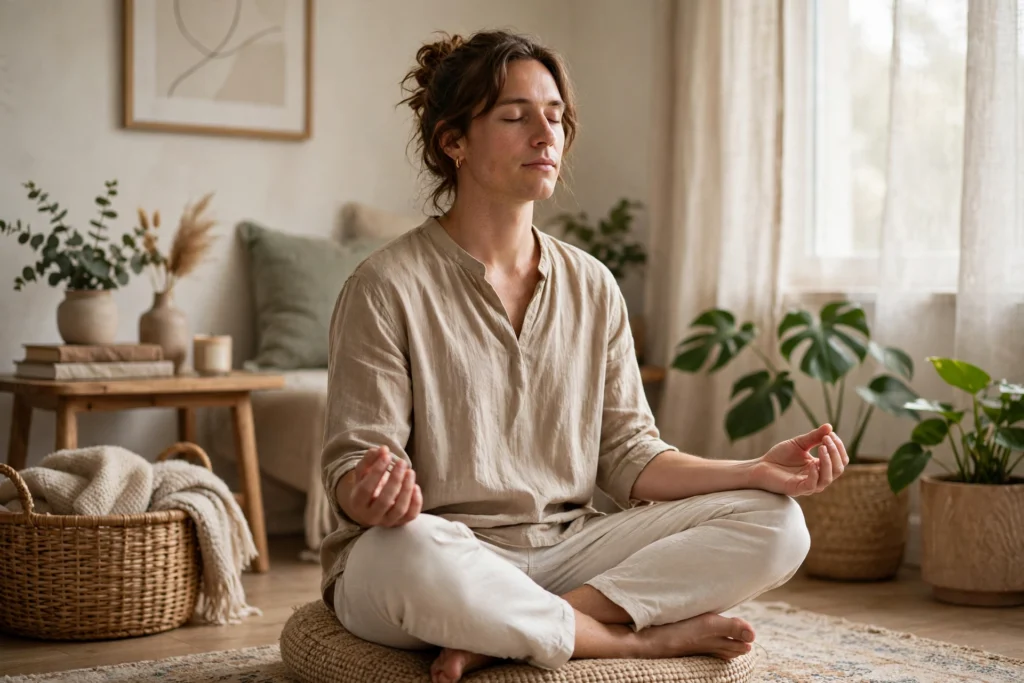
The fastest in-the-moment tool: slow breathing with a long exhale. Try this — breathe in for 4 counts, out for 6–8 counts, for five minutes. Long exhales signal your nervous system to calm down, lowering heart rate and easing the fight-or-flight response. Use it before a difficult call, in traffic, or when your mind races at night.

2. Move your body
Physical activity is one of the most reliable stress relievers there is. A short walk, stretching, dancing, or a workout all release endorphins and burn off stress hormones. Even 10–15 minutes of brisk walking during a stressful day can lift your mood and clear your head. Movement doesn’t need to be intense — it needs to be regular.

3. Protect your sleep
Stress and poor sleep feed each other: stress keeps you awake, and tiredness makes everything feel more stressful. A consistent bedtime and wake time, screens off before bed, and a short wind-down (reading, gentle stretching, breathing) break the cycle. Sleep is not a luxury you earn after handling stress — it’s one of the main tools for handling it.
4. Write it down
Journaling turns vague worry into something you can see and deal with. Two formats work well: a gratitude note (three good things from the day) and a worry dump (write worries down, then one small next step for each). Writing for even a few minutes improves emotional clarity and helps your brain let go at night.

5. Set boundaries
Chronic stress often comes from saying yes to everything. Boundaries are practical, not selfish: protect your mornings, limit after-hours messages, say no to non-essential commitments, and schedule rest like you schedule work. Digital boundaries count too — news and social media first thing, and all evening, keep your nervous system on alert.
6. Connect with people
Social support is one of the strongest buffers against stress. Sharing a worry halves its weight, and a quick chat with a friend or family member can reset a bad day. If you’re withdrawing when stressed — a common pattern — connection is exactly the medicine, even when it feels effortful.
7. Solve one small piece
Rumination grows when problems feel huge and vague. Break a stressor into the smallest actionable step and do just that step: one email, one call, one decision. Progress, even tiny progress, restores a sense of control — and control is the opposite of helplessness, which is where stress thrives.
A Simple Daily Stress Routine
You don’t need an hour of meditation. A realistic day looks like this:
- Morning: 3 minutes of slow breathing, phone untouched for the first 15 minutes
- Midday: A 10-minute walk or stretch break, away from screens
- Afternoon: One small problem-solving step on whatever is worrying you most
- Evening: Gratitude note, screens off an hour before bed, gentle wind-down
Five to fifteen minutes of practice a day, done consistently, beats an occasional weekend of intensive relaxation. This routine is a simple way to practise how to manage stress every day.
Stress Management Myths to Ignore
- “I don’t have time.” Even five minutes a day helps — breathing, a walk, a note. Stress relief doesn’t require a spa day.
- “Stress relief is selfish.” Managing your stress helps you show up better for everyone else. An exhausted, reactive person helps no one.
- “Only expensive products work.” The best techniques — breathing, walking, journaling, sleep — are free.
- “If I don’t feel better instantly, it’s not working.” Like fitness, benefits build over weeks. Judge a technique after a month, not a day.
- “Stress is just part of life, why bother?” You have more control than it feels like, and small steps compound.
Stress vs Anxiety: What’s the Difference?
Stress usually responds to an external pressure and eases when that pressure passes. Anxiety can persist even without a clear trigger, and when it becomes ongoing and hard to control, it may be a diagnosable condition. Prolonged stress can contribute to anxiety over time — which is why managing stress early matters.
When to Seek Professional Support
Self-help covers everyday stress, but get professional support if stress persists for weeks, significantly interferes with work, sleep, or relationships, or comes with panic, persistent low mood, or thoughts of harming yourself. A clinician or therapist can teach techniques like cognitive behavioural therapy and check whether something else needs attention. Seeking help early is strength, not failure — and if you ever feel you might act on thoughts of harming yourself, seek immediate help from emergency services or a crisis line.
Final Thoughts
How to manage stress isn’t a mystery: breathe slowly, move daily, sleep consistently, write worries down, guard your time, stay connected, and solve one small piece at a time. None of these is dramatic. Together, repeated daily, they change how stress moves through your life.
Start today with one technique — five minutes of slow breathing. That’s enough for day one.
Learning how to manage stress is a skill that improves with practice.
This article shares general wellness information, not medical advice. If stress is persistent, overwhelming, or affecting your health, talk to a clinician.