Why Packing Light Changes the Trip
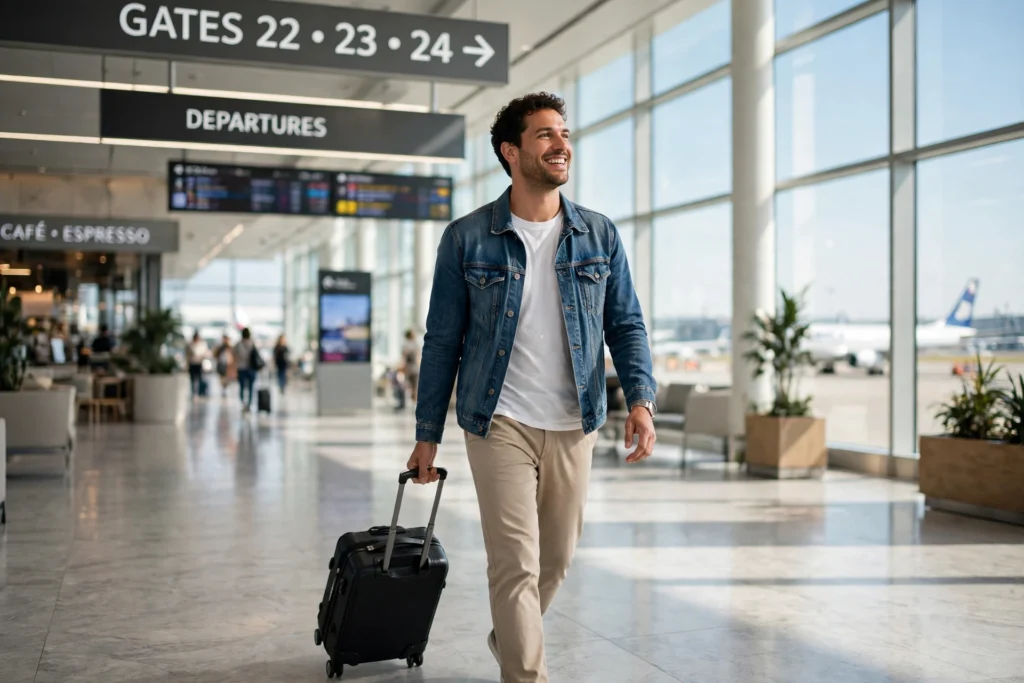
Packing light is not about suffering with less. It is about removing the parts of travel that drain you: the checked-bag queue, the overweight fee, the suitcase you drag up cobbled streets, the daily decision fatigue of too many outfits.
One bag that you can carry comfortably changes how you move. You skip baggage claim, change plans easily, and walk out of the station while everyone else is still waiting at the carousel. The freedom is the point — the smaller bag is just how you get it.
And here is the secret most packing guides miss: packing light is a system, not willpower. With the right system, anyone can do it.
The One-Week Rule
The single most useful packing rule: pack for one week, no matter how long the trip is.
A two-week trip does not need two weeks of clothes. It needs one week of clothes and a laundry plan. Wash once mid-trip — at your accommodation, a laundromat, or a wash-and-fold service — and your bag works for a month as easily as for a week.
This rule alone cuts most overpacking in half. If your trip is shorter than a week, pack for the actual days. If it is longer, pack for seven days and plan one wash.
Build a Capsule Wardrobe

A capsule wardrobe is a small set of clothes where everything matches everything else. That is the whole trick: fewer pieces, more combinations.
Start with a palette. Pick two neutrals (for example navy and white, or black and grey) plus one accent colour. Every piece you pack should work with at least two others.
A sample one-week capsule:
- 3–4 tops (mix of short and long sleeve)
- 2 bottoms (one comfortable, one slightly smarter)
- 1 layer (a light jacket, cardigan, or sweater)
- 1 outer layer for weather (rain jacket or coat, worn on the plane)
- Underwear and socks for the week (quick-dry fabrics help)
- 2 pairs of shoes maximum — one walking pair, one for everything else
With this, 3 tops and 2 bottoms alone create 6+ outfit combinations before you add layers and accessories. A scarf or a different accessory changes a look without adding bulk.
Choose fabrics that behave. Wrinkle-resistant, quick-dry fabrics are worth more than fashionable ones on a trip. Test before you go: wash a top in a sink, roll it in a towel, hang it overnight. If it is still damp in the morning, it is not a travel piece.
How to Pack It: Rolling, Cubes, and Layers
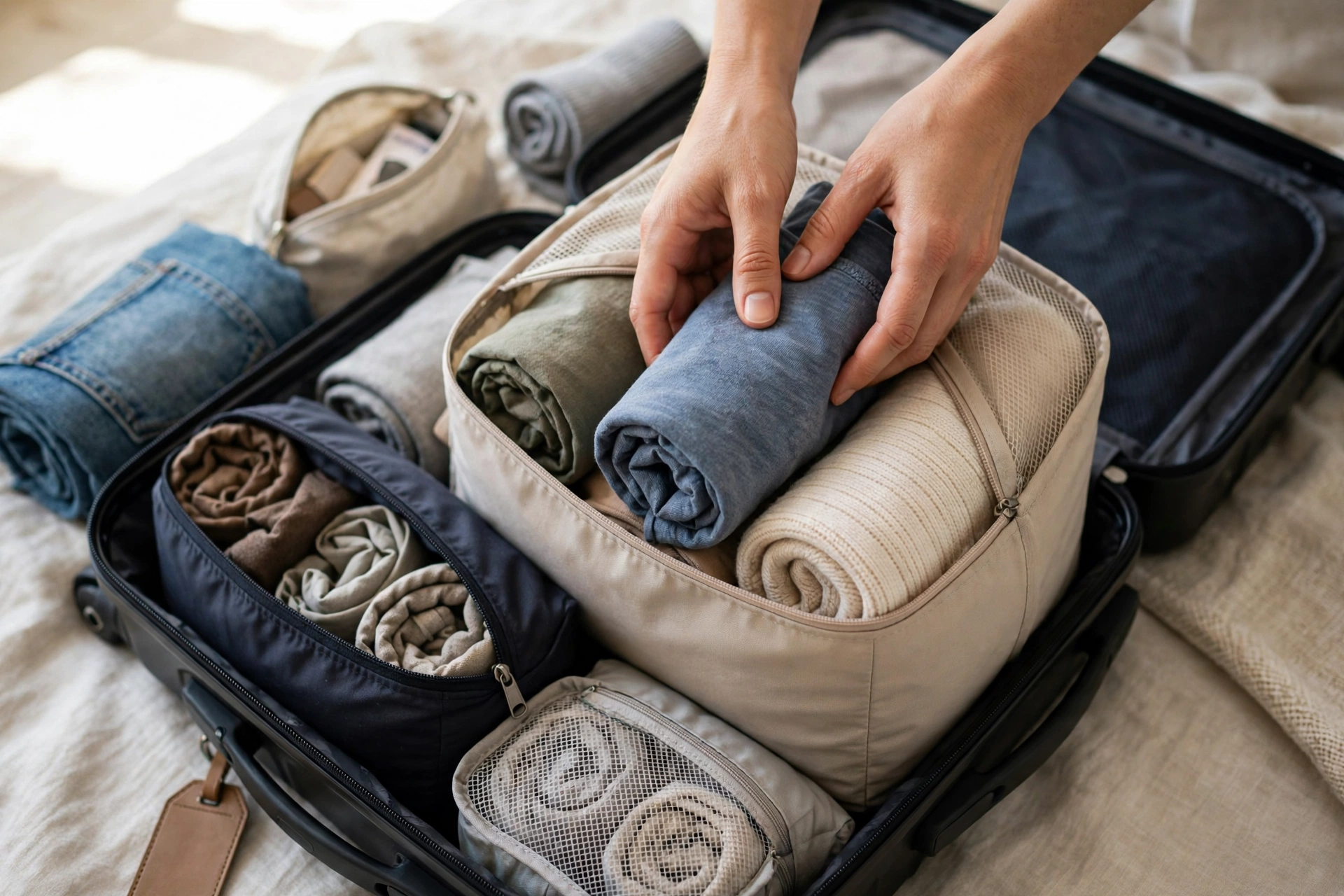
Roll soft clothes, fold structured ones. Rolling knits, t-shirts, and casual items saves space and reduces wrinkles. Fold anything with structure, like a blazer, flat.
Use packing cubes. One cube for tops, one for bottoms, one for underwear and socks. Cubes compress the load and keep your bag organised — you can pull out one cube without exploding the whole bag.
Wear the bulky stuff. Your heaviest shoes, your jacket, and your bulkiest layer go on your body on travel days, not in the bag. This alone can free up a third of a carry-on.
Fill the dead space. Socks inside shoes, small items inside gaps between rolled clothes. Every empty pocket of space is wasted capacity.
Liquids last, and small. Keep toiletries in one small pouch: travel sizes, solid bars where possible (shampoo bars, solid deodorant), and multi-use products. If it doesn’t fit in one pouch, you have too much.
Packing Light for Different Trips
City breaks: One good walking shoe that goes with everything, a daypack, and a compact umbrella. Style matters here, so pick pieces that look smart as well as comfortable.
Beach trips: Fewer clothes go further — swimwear, cover-ups, light fabrics, and sun protection. Sandals plus one walking pair.
Hiking and adventure: Performance gear only — moisture-wicking layers, a lightweight rain jacket, durable footwear, a small first-aid kit, and a refillable water bottle.
Winter trips: Packing light in winter is possible with layering: a thermal base layer, a warm mid-layer, and one good weather-resistant coat worn on the plane. Keep everything neutral so pieces combine.
What NOT to Pack
The fastest way to lighten a bag is to remove the usual suspects:
- “Just in case” outfits — if you can’t picture exactly when you’ll wear it, leave it
- Extra shoes — two pairs maximum; the third pair almost always goes unworn
- Full-size toiletries — heavy, leaky, and buyable at your destination
- Duplicate pieces — two black tops solving the same problem? Pick one
- Heavy denim and bulky sweaters — slow to dry, heavy to carry
- Valuables you can’t afford to lose — expensive jewellery and irreplaceable items stay home
- Books and bulky gadgets — an e-reader and a phone cover most needs
The Trial Pack
Two weeks before your trip, do a trial pack. Pack everything, carry the bag around your home for ten minutes, then remove three to five items. Travellers who trial-pack consistently cut several items they would never have used — and several pounds of dead weight.
Also check your airline’s carry-on size and weight limits before you pack, not at the gate. Budget airlines enforce smaller limits than major carriers, and a bag that flies free on one airline gets charged on another.
Laundry on the Go

Laundry is what makes one bag work for any length of trip:
- Pack a few detergent sheets and a sink stopper for quick sink washes
- Wash underwear, socks, and one top mid-week; do a full wash weekly
- Use laundromats or wash-and-fold services where available — they are cheap and fast in most destinations
- Hang clothes to dry overnight; quick-dry fabrics are dry by morning
A simple weekly rhythm: wear, rotate, wash on day five, restart clean. That loop extends a carry-on indefinitely.
Common Packing Light Mistakes
- Packing for the trip you wish you were taking, not the one you booked
- Skipping the trial pack and discovering the problem at the airport
- Ignoring the weather forecast and packing for hope instead
- Bringing outfits for every occasion instead of versatile pieces
- Forgetting laundry exists — and therefore packing for the whole trip
- Packing before checking your airline’s bag rules
Final Thoughts
Packing light is not a talent. It is a system: one week of clothes, a capsule that matches, laundry once a week, and a trial pack before you go. Learn it once, and every trip after it gets easier — lighter bag, faster airports, and more energy for the trip itself.
Next time you stand over a suitcase, ask one question of every item: will I definitely use this, or am I packing it out of fear? Keep the first kind. Leave the second kind home.
Once you start packing light, you will wonder why you ever carried more. Packing light turns travel into the easy, unhurried experience it should be.