
What Budget Travel Really Means
Budget travel is not about spending as little as possible. It is about spending wisely — putting money where it improves the trip and cutting it where it doesn’t.
The travellers who travel cheapest are rarely the ones who suffer most. They are the ones who plan around the five big costs — flights, stays, food, transport, and activities — and who check the total price of every choice, not just the headline price.
The 5 Big Costs (and How to Cut Each)
1. Flights: Flexibility Is the Discount
Flights are usually the biggest single expense, and flexibility is the biggest lever:
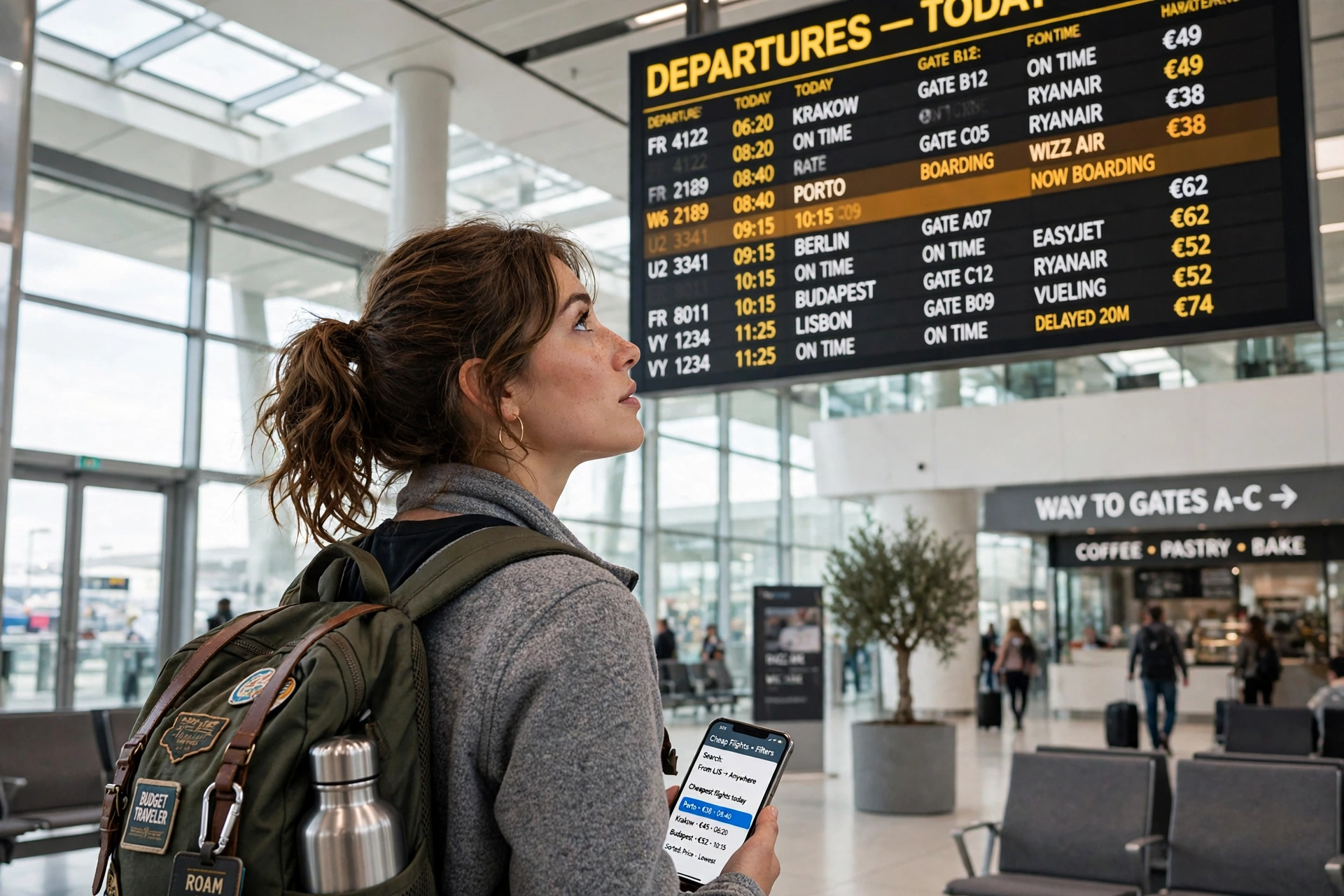
- Compare flexible dates — shifting by a few days often changes the fare significantly
- Compare nearby airports and total route costs, including transfers
- Set price alerts and book ahead rather than last-minute when you can
- Fly midweek when schedules allow
- Always check baggage fees before you celebrate a low fare — a cheap ticket with expensive bags is not cheap
The rule: compare the total cost of getting there, not the fare alone.
2. Stays: Location Beats Luxury
Accommodation is the second big cost, and the best savings come from type and location, not from suffering:
- Hostels with private rooms give privacy at a fraction of hotel prices, plus social spaces
- Guesthouses and small apartments often include kitchens and local tips
- Staying slightly outside the centre, near good transport, is usually far cheaper than the centre itself
- Longer stays often earn weekly discounts
- Check cancellation rules and recent reviews before booking — a cheap room in the wrong area costs you in transport and time
3. Food: Eat Like a Local
Food is where budget trips either shine or bleed money:

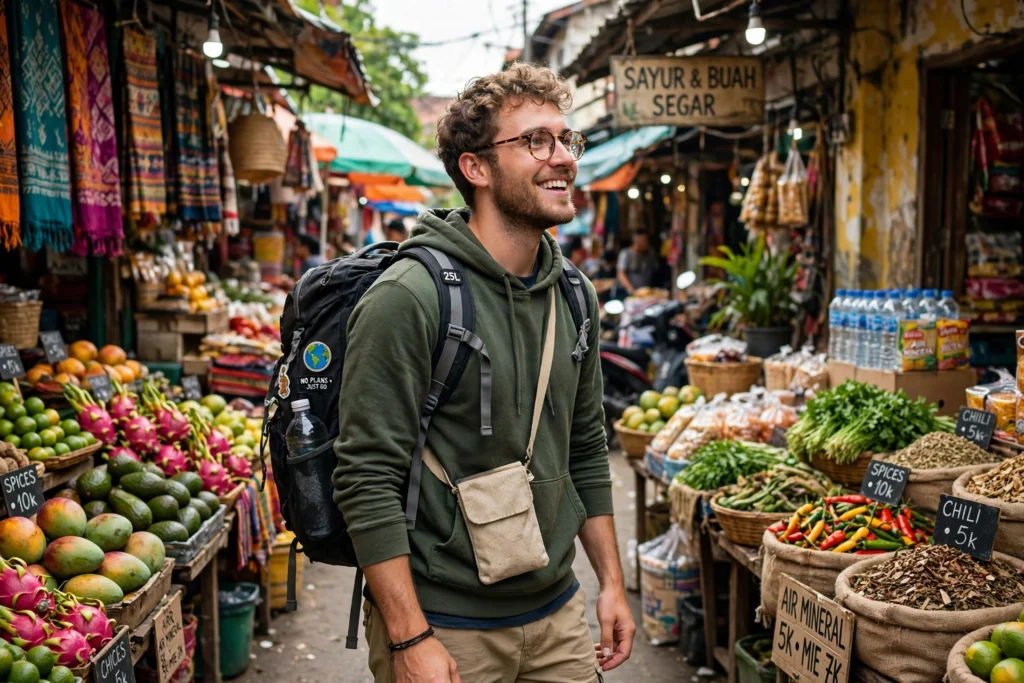
- Eat where locals eat: street food, markets, food halls, and small family restaurants
- Avoid tourist-zone restaurants for every meal — walk a few blocks from the attraction
- Cook some meals if your stay has a kitchen; even breakfast alone saves daily
- Carry snacks for travel days, when convenience food is most expensive
- Plan one special meal instead of several expensive average ones
Local food is usually cheaper, tastier, and more memorable than tourist menus. That is a rare triple win.
4. Local Transport: Walk, Then Ride
- Walk when distances are short — it is free and it is the best way to experience a place
- Use public transport and day passes instead of taxis
- Check airport transfer costs before booking a flight — a cheap flight to a far airport can cost more overall
- Consider overnight transport on longer routes: it saves a night’s accommodation
5. Activities: Free First, Paid Selectively
- Prioritise free attractions: parks, markets, walking tours, viewpoints, free museum days
- Pick one or two paid experiences you genuinely want, and skip the rest
- Book tours independently rather than through hotels or resorts, where markups are common
- Check for city passes only if you will actually use enough included attractions to beat the price
The Total-Cost Test
Before paying for anything that claims to be cheap, ask three questions:
- What is missing? Bags, taxes, transfers, entry fees, meals, data.
- What can fail? Late arrival, bad location, strict ticket rules, bad weather.
- What fixes it? Insurance, data, a better base, flexible timing.
Budget travel is not about spending the least at every step. That is how beginners accidentally buy worse trips. It is about knowing which cheap choices stay cheap after the trip begins.
Hidden Costs That Ruin Budgets
Watch for these — they quietly add up:

- Baggage and seat fees on low-cost fares
- Resort and cleaning fees added after the nightly rate
- Airport currency exchange markups — use ATMs or a no-fee card instead
- Paying in your home currency abroad — always choose the local currency
- Roaming charges — get a local eSIM or plan before landing
- Skipping insurance — one medical issue or disruption can cost more than the whole trip
- Tourist-zone prices — a few blocks’ walk often halves the bill
- Forgetting transfers, visas, and local taxes in the budget
Add a buffer of 10–20% to your planned budget for the things you cannot foresee. A budget with no buffer is a plan waiting to break.
When to Travel: Shoulder Season
The single easiest budget lever is timing. Travelling in shoulder season — the weeks just before and after peak season — usually means lower flight and accommodation prices, fewer crowds, and better availability. Check local weather and closures first, but for most destinations the shoulder season offers nearly the same experience for noticeably less money.
A Simple Budget Travel Plan
- Set a total trip budget, then split it across the five big costs
- Book flights and stays with flexible dates, comparing total costs
- Choose a base with good transport and a kitchen or breakfast
- Plan one paid experience per stay; fill the rest with free ones
- Eat local, walk more, and track spending loosely each evening
- Keep insurance, document copies, and an emergency fund separate from daily spending
You do not need to follow every tip. Pick the five to ten that fit your travel style, and the savings will fund your next trip.
Final Thoughts
Budget travel done well doesn’t feel like sacrifice. It feels like freedom: more trips, longer trips, and money left for the experiences that actually matter. Spend on what you’ll remember, cut what you won’t, and always check the total price.
The world is not expensive. Lack of a plan is.