Why Choose the Train?
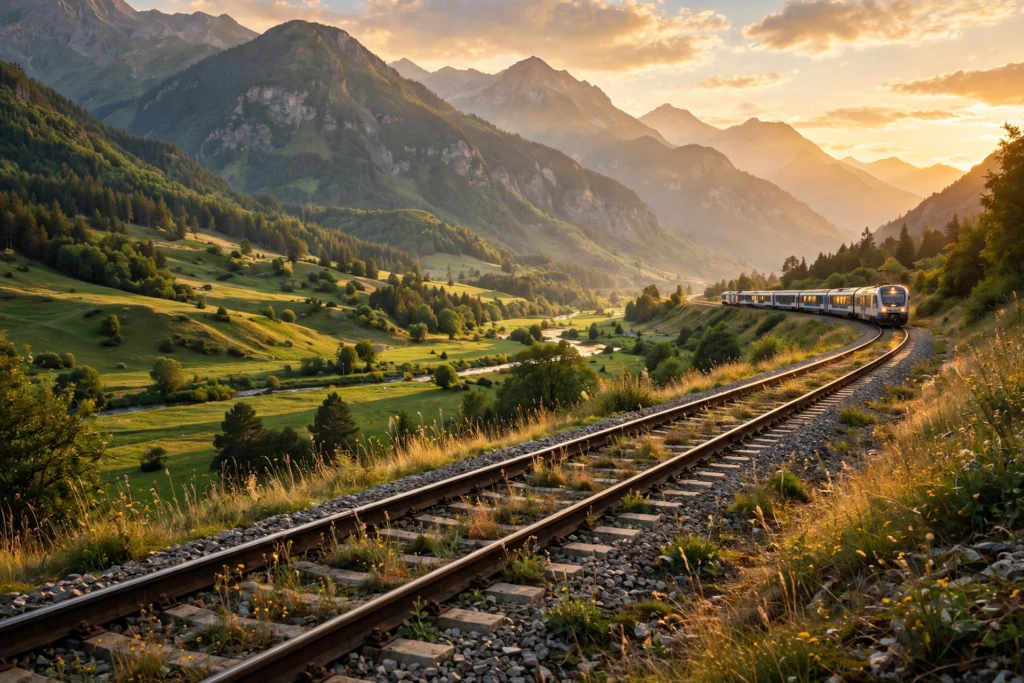
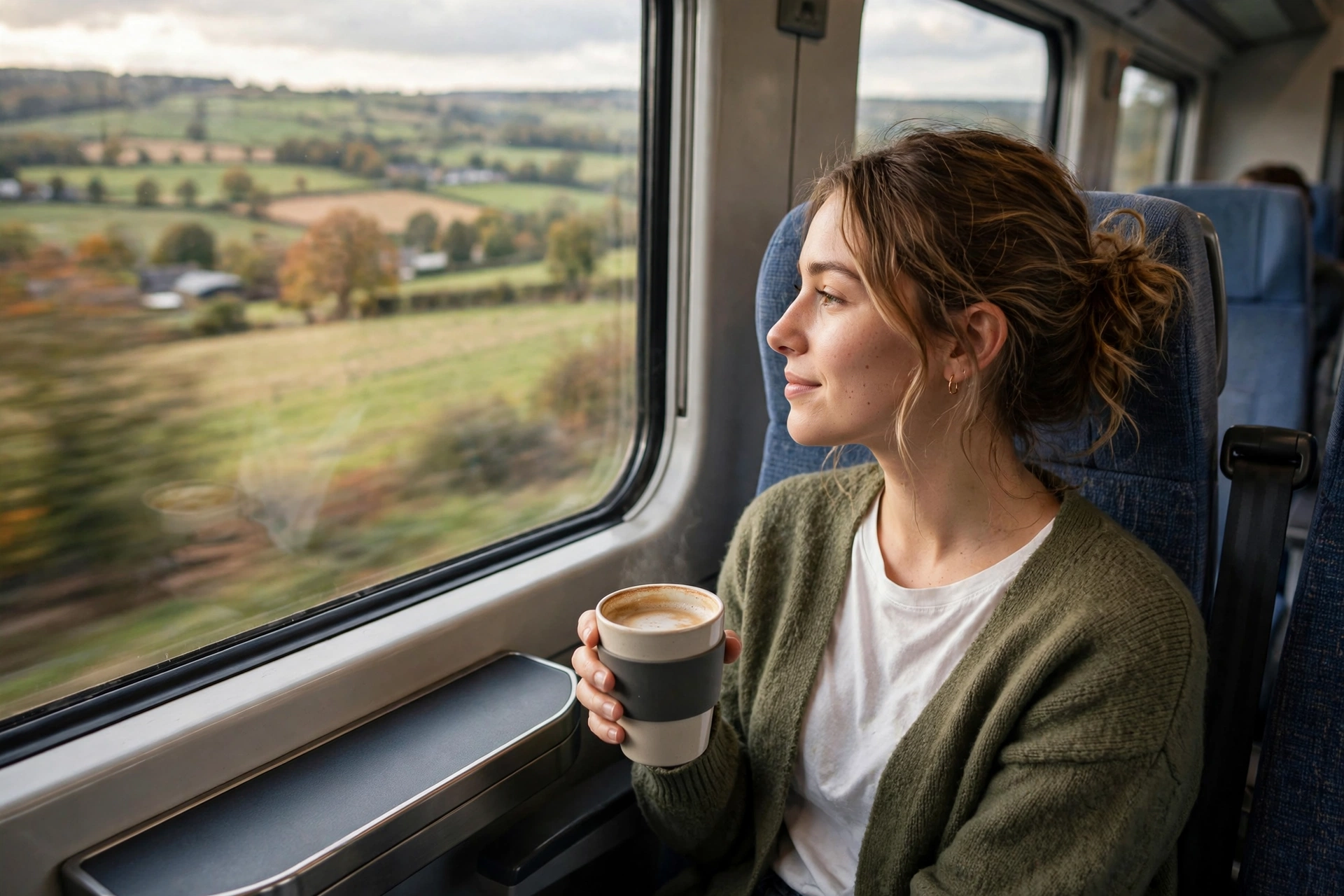
Train travel is having a comeback, and it is easy to understand why. You arrive at the station, walk on, sit down with space to breathe, and watch the landscape change outside the window. No airport queues, no liquid limits, no seatbelt signs for hours.
The train’s advantages are practical, not just romantic:
- City centre to city centre: Stations are usually in the middle of town, while airports are often far outside it. Door-to-door time is often closer than the flight time suggests.
- More space and freedom: You can stand up, walk to the café car, stretch your legs, and work at a table.
- Simpler luggage: Trains are generally far more generous with bags than airlines — no weighing at check-in, no surprise fees.
- The journey is part of the trip: A train ride through mountains, coast, or countryside is an experience in itself, not dead time.
- Lower stress: Miss a train and there is usually another one. Arrive 15–30 minutes before departure and you’re fine.
Flying still wins for very long distances, islands, and tight schedules. But for medium distances, the train is often the calmer, simpler choice.
Train Travel vs. Flying: An Honest Comparison
| Factor | Train | Plane |
|---|---|---|
| Door-to-door time (medium distances) | Often similar | Faster in the air, slower overall with transfers and security |
| Comfort | More legroom, walk around freely | Tighter seats, seatbelt periods |
| Luggage | Generous, rarely weighed | Strict limits and fees |
| Booking stress | Usually simple, flexible | More rules, more add-ons |
| Scenery | The landscape is the entertainment | Clouds and seatbacks |
| Best for | Medium distances, scenic routes, relaxed trips | Long distances, islands, tight schedules |
The best approach is often a mix: trains for the journeys that can be enjoyed, flights for the ones that can’t.
How to Book Train Tickets

Book direct when you can. Official railway websites and apps usually give the most accurate fares and the easiest changes. Third-party sites can add fees and complicate refunds.
Book early for the best fares. Most railways release tickets weeks or months ahead, and the cheapest fares sell first. For popular routes and overnight trains, early booking also secures the best seats and berths.
Compare train types. On the same route, a slower train can cost much less than a fast one. If you’re not in a hurry, the slower option is often the better deal.
Consider rail passes if you’re planning several journeys in one region — but do the maths first. A pass only saves money if you’ll actually use enough journeys to beat individual ticket prices.
Check the details before paying: departure and arrival stations (some cities have several), changes required, seat reservations included or extra, and cancellation rules.
Seats, Couchettes, and Sleepers: What’s the Difference?
For daytime trips, you’ll usually book a seat — sometimes with a choice of window or aisle, first or second class.
For overnight trips, you have options:
- Seat: The cheapest option, but sleeping upright is hard. Best only for short overnight stretches.
- Couchette: A bunk in a shared compartment, usually 4–6 berths, with bedding included. Budget-friendly and the classic night-train experience.
- Sleeper cabin: A proper bed in a private or shared cabin, sometimes with a washbasin. More expensive, much more comfortable.
- Private compartment: Pay to occupy a whole compartment alone. Great for families, couples, or anyone who wants a locking door.
Check your confirmation carefully: it should explicitly say “couchette” or “sleeper/berth.” If it only says “seat reservation,” you haven’t booked a bed.
Overnight Train Tips

Overnight trains are one of travel’s great experiences — you go to sleep in one city and wake up in another, saving a hotel night. A little preparation makes them much better:
- Pack an overnight kit: earplugs, eye mask, warm socks, sleepwear, toothbrush, and basic toiletries
- Keep valuables close: passport, phone, and wallet in a small bag that stays with you in your bunk
- Wear slip-on shoes for middle-of-the-night trips down the corridor
- Set an alarm for 30 minutes before arrival — trains sometimes arrive early
- Book direct routes where possible — changing trains in the middle of the night ruins sleep
- Bring snacks and water — dining cars have limited hours and options
Light sleepers should consider a private cabin; the upgrade is often worth it for a good night’s sleep.
What to Pack for Train Travel
Trains are forgiving with luggage, but packing light still makes everything easier — especially at stations with stairs and changes:
- One bag you can carry comfortably, plus a small daypack
- Layers for changing temperatures between carriages and platforms
- Snacks, water, and a refillable bottle
- Entertainment: a book, downloaded shows or music, a journal
- A power bank — outlets exist on many trains but aren’t guaranteed
- Important documents and medication in an easy-access bag
Train Etiquette: The Unwritten Rules
- Keep phone calls short and quiet, or step between carriages
- Use headphones for all audio — no exceptions
- Keep bags off seats when the train is busy
- In quiet carriages, stay quiet — that’s the deal
- Offer help with heavy bags; accept it graciously
- In shared sleeping compartments, be considerate after lights-out
Common First-Timer Mistakes
- Booking the wrong station: Some cities have several stations — check which one your train uses
- Cutting connections too tight: Trains can be delayed; leave buffer time between connections
- Assuming Wi-Fi will work: It exists on many trains but is unreliable — download everything offline
- Booking a seat when you wanted a bed: Check for “couchette” or “sleeper” on your confirmation
- Overpacking: Generous luggage rules don’t mean you should bring everything — stations still have stairs
- Skipping insurance: Train journeys need travel insurance just like any trip
Final Thoughts
Train travel rewards a simple shift in thinking: treat the journey as part of the holiday, not an obstacle before it. Book early, pack light, choose a window seat, and let the landscape do the entertaining.
Start with one medium-distance journey — a route with scenery, a café car, and no rush. You may find that the train becomes your default way to travel, not just an alternative to flying.
For first-timers, train travel is simplest on a short, scenic route, and train travel rewards a relaxed pace. Try train travel once without rushing, and you may find train travel becomes your favourite way to explore.